
گۆڕینی JPG بۆ PDF
وێنەکانت لە چەند چرکەیەکدا بگۆڕە بۆ فایلە دەقییەکان وەک pdf یان txt بە خزمەتگوزاری گۆڕەری ئێمە!
Belgeya ji bo wergerandinê bar bike an jî biavêje
Mezinahiya pelê herî zêde 1 GB
- OCR بۆ سکان و وێنەکان
- 108 زمان
- شێوازی ڕەسەن ناگۆڕدرێت
شۆڕشگێڕی پەیوەندییەکان
JPG چییە؟
JPG، کە بە JPEG (Joint Photographic Experts Group) ناسراوە، یەکێکە لە فۆرمەتە وێنەییەکانی زۆرترین بەکارھێنراو لە جیهاندا، کە بە هاوسەنگی کارای نێوان کوالێتی وێنە و قەبارەی فایلدا بەرز دەنرخێندرێت. JPG کە لە سەرەتای ساڵانی 1990 ەوە پەرەی پێدراوە، بە خێرایی بووەتە ستاندارد بۆ وێنە دیجیتاڵییەکان بەهۆی ئەلگۆریتمی کورتکردنەوەی لەدەستدان، کە قەبارەی فایلەکان بە شێوەیەکی بەرچاو کەم دەکاتەوە لە کاتێکدا ئاستێکی قبوڵکراوی ڕوونی بینین دەپارێزێت. ئەم کورتکردنەوەیە ڕێگە بە فایلەکانی JPG دەدات کە وێنەی ئاڵۆز و کوالێتی بەرز وەک وێنەکان پاشەکەوت بکەن، کە ئەمەش دەکاتە ئاسان بۆ هاوبەشی و بارکردنیان لەسەر ئینتەرنێت، کە تێیدا سنووردارکردنی قەبارەی فایل و کاتەکانی بارکردن زۆرجار گرنگن. توانای کورتکردنەوەی فایلە وێنەییە گەورەکان بێ ئەوەی ڕوونیان بە شێوەیەکی بەرچاو کاریگەری بکات، JPG بە تایبەتی بۆ دیزاینی وێب، سۆشیال میدیا، وێنەگرتنی دیجیتاڵی، و هاوبەشی وێنەی ڕۆژانە بەسوود دەکات.
باڵادەستی JPG لە جیهانی دیجیتاڵیدا بۆ بوارە پیشەییەکان وەک وێنەگرتن، دیزاینی گرافیک، و بازاریش درێژ دەبێتەوە. قەبارەی بچووکی فایلەکەی دەکاتە هەڵبژاردەیەکی نایاب بۆ بارکردنی وێنە بۆ وێبسایتەکان، کەمکردنەوەی بارگرانی بەنداوێژ لە کاتێکدا ناوەڕۆکی بینراوی سەرنجڕاکێش پێشکەش دەکات. جگە لەوەش، JPG پشتگیری لە تەواوی ڕەنگەکان دەکات، کە ڕێگە دەدات بە وێنەی دەوڵەمەند و ورد، بە تایبەتی لەو دۆخانەی کە گرتە و گۆڕانکاری ڕەنگی ئاڵۆز تێیدایە، وەک وێنەی سێو و دیمەن. بەڵام، JPG کەمتر گونجاوە بۆ وێنەکان کە پێویستیان بە لێوارە تیژ یان وردی بەرز هەیە، وەک لۆگۆ یان دیزاینی پڕ لە دەق، کە تێیدا فۆرمەتەکانی وەک PNG یان SVG باشترن. بە گشتی، JPG فۆرمەتێکی بنەڕەتی بۆ وێنەی دیجیتاڵی دەمێنێتەوە، کە چارەسەرێکی پراکتیکی بۆ هەردوو بەکارھێنەرانی ئاسایی و پیشەییەکان پێشکەش دەکات کە بەدوای بەڕێوەبردنی کارای پاشەکەوتکردن و هاوبەشی وێنەدا دەگەڕێن بێ ئەوەی زۆر لە کوالێتی بدەن.

ئاشنابە لەگەڵ DocTranslator!
DocTranslator karûbarek wergerandina serhêl a sofîstîke ye ku dihêle bikarhêneran cûrbecûr formatên belgeyan, di nav de Word, PDF, û PowerPoint, bar bikin û wan wergerînin zimanên cihê. Bi karanîna motora Google Translate, DocTranslator bi taybetî ji bo belgeyan hatî çêkirin û taybetmendiyên zêde vedihewîne ku wê ji karûbarên wergerandina standard re guncaniktir dike.
PDF چییە؟
PDF (شێوازی دۆکیومێنتە کراوەکان) یەکێکە لە بەرفراوانترین شێوازە فایلە بەکارهاتووەکان بۆ هاوبەشیکردن و پێشکەشکردنی دۆکیومێنتەکان بە شێوەیەکی یەکگرتوو و سەربەخۆ لە پلاتفۆرم. لەلایەن Adobe ەوە لە سەرەتای ساڵانی ١٩٩٠کاندا پەرەی پێدراوە، PDF ەکان ڕێکخستنی دۆکیومێنتێک دەپارێزن، دڵنیادەبێتەوە کە هەمان شێوە دەردەکەوێت بێ گوێدانە ئەو ئامرازە، نەرمامێرە، یان سیستەمە کارپێکراوەی کە بۆ بینینی بەکاردێت. ئەمەش PDF دەکاتە نموونەیی بۆ هاوبەشیکردنی دۆکیومێنتە فەرمییەکان، گرێبەستەکان، کتێبە ئەلیکترۆنییەکان، ڕاپۆرتەکان، و پێشکەشکارییەکان، کە پاراستنی داڕشتنی ڕەسەن، فۆنتەکان، و وێنەکان گرنگە. بە پێچەوانەی شێوازە فایلەکانی تر، PDF ەکان دەتوانن دەق، وێنە، لینک، فۆرم، و تەنانەت توخمە میدیاییەکان وەک ڤیدیۆ و تایبەتمەندی چالاک بکەن. یەکێک لە سوودە سەرەکییەکانی PDF ەکان بریتییە لە توانای قفڵکردن یان سنووردارکردنی دەستکاریکردن، کە وایان دەکات هەڵبژاردەیەکی باش بن بۆ دۆکیومێنتە یاساییەکان و هاوبەشیکردنی پارێزراو.
جگە لەوەش، PDF ەکان بە شێوەیەکی زۆر کورت دەکرێنەوە، قەبارەی فایل کەم دەکەنەوە لە کاتێکدا کوالێتی دەپارێزن، کە ئەمەش بۆ هاوبەشی دۆکومێنتە گەورەکان لە ڕێگەی ئیمەیل یان پلاتفۆرمە ئۆنلاینەکانەوە بەسوودە. فۆرمەتەکە بە شێوەیەکی بەرفراوان دەستڕاگەیشتووە، زۆربەی ئامێرە مۆدێرنەکان بینەری PDF ی ناوپێکەوتوویان هەیە، و زۆرێک لە وێبسایتەکان پشتگیری لە خوێندنەوەی PDF دەکەن بێ بەرنامەی زیادە. PDF ەکان دەتوانرێت وشەی نهێنی پارێزراو یان کرپتۆگرافی بکرێن بۆ پاراستنی زیادە، کە ئەمەش دەکاتە فۆرمەتێکی متمانەپێکراو بۆ زانیاری هەستیار. چ بۆ بەکارھێنانی کەسی، ئەکادیمی، یان بازرگانی، فۆرمەتی PDF ڕێگەیەکی فرە و باوەڕپێکراو بۆ بڵاوکردنەوە و پاشەکەوتکردنی دۆکومێنتەکان بە شێوەیەک کە ڕوونی بینین و یەکپارچەیی زانیاری دابین دەکات.

ئایا بەدوای ڕێگەیەکدا دەگەڕێیت بۆ گۆڕینی فایلێکی JPG بۆ فایلێکی PDF؟
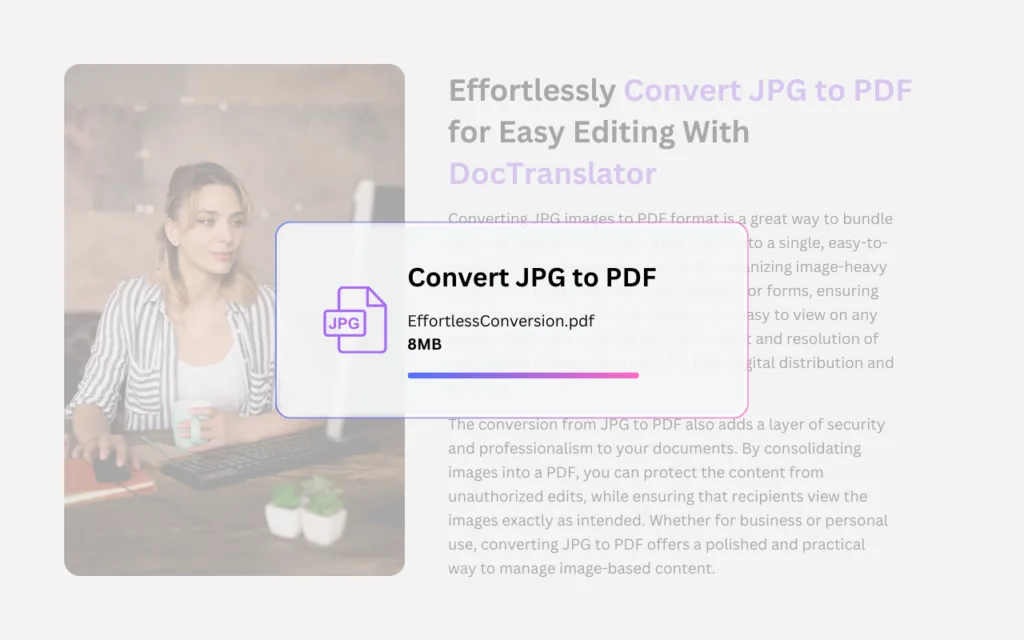
کەرەستەی "JPG بۆ PDF گۆڕەر"ی DocTranslator ڕێگەیەکی خێرا و کارامە پێشکەش دەکات بۆ گۆڕینی وێنەکان بۆ شێوازێکی ڕێکخراو و پیشەیی PDF. ئەم کەرەستەیە بە تایبەتی بۆ تاک یان بازرگانان بەسوودە کە پێویستیان بە کۆکردنەوەی چەندین وێنەی JPG هەیە، وەک وێنە، دۆکیومێنتە چاپکراوەکان، یان دیزاینەکان، بۆ ناو یەک دۆکیومێنتی PDFی ڕێکخراو. پرۆسەی گۆڕینەکە سادە و ڕوونە، کوالێتی وێنەی بنەڕەتی دەپارێزێت لە کاتێکدا JPGەکان ڕێکدەخات بۆ PDFێکی جوان و ئاسان بۆ هاوبەشکردن. ئەم شێوازە بۆ ئەو بارودۆخانە گونجاوە کە پێویستت بە پێشکەشکردنی وێنەکانە بە شێوەیەکی فەرمیتر یان پارێزراوتر، وەک بۆ گرێبەستەکان، پێشکەشکارییەکان، پۆرتفۆلیۆکان، یان دۆکیومێنتەکان. چ بۆ ڕاپۆرتی پیشەیی یان ئەرشیفی کەسی، "JPG بۆ PDF گۆڕەر"ی DocTranslator یارمەتی بەکارهێنەران دەدات بۆ ڕێکخستنی مامەڵەکردنیان لەگەڵ وێنەکان، گۆڕینی فایلە بڵاوەکان بۆ PDFی یەکگرتوو و باش ڕێکخراو بە ئاسانی.
JPG بۆ PDF و ئەوەی دەتوانین بیکەین
DocTranslator.com ئامرازێکی وەرگێڕانی بەڵگەنامەی ئۆتۆماتیکییە کە هەر PDF، Word یان Excelێک بۆ زیاتر لە 120 زمان وەردەگێڕێت. دروستکراوە بە سادەیی، ئەم ئامرازە نزمترین نرخەکانی جیهان پێشکەش دەکات بە نرخی کەمتر لە 0.005$ بۆ هەر وشەیەک. ئەوە بەشێکە لە تێچووی وەرگێڕانی مرۆڤی پیشەیی.
بەکارهێنەرانی DocTranslator.com دەتوانن بە خێرایی هەر راپۆرتێکی بانکی وەرگێڕن، چ لە MS Word, PDF, Excel یان PowerPoint بێت، لە ئینگلیزییەوە بۆ ئیسپانی و بە پێچەوانەوە. لە کۆتاییدا، DocTranslator پشتگیری زیاتر لە 120 زمان دەکات، لەوانە: ئینگلیزی، ئیسپانی، فەرەنسی، ئەڵمانی، پورتوگالی، ئیتاڵی، ژاپۆنی، کانتۆنی، ماندرین و کۆری.
پێویستت بە وەرگێڕانی ماڵپەڕێکی تەواو هەیە نەک بەڵگەنامەیەک؟ هاوبەشی ئێمە ConveyThis.com وەرگێڕانی تەواوی ماڵپەڕەکە بەڕێوەدەبات، کە کارێکی جیاوازە لە وەرگێڕانی فایلێک.
چۆن کاردەکات
Gava 1: Hesabek Belaş Çêbike
گەشتەکەی وەرگێڕانت بە دروستکردنی هەژمارێکی بێبەرامبەر لەسەر پلاتفۆرمەکەمان دەست پێ بکە. تەنها چەند چرکەیەک دەخایەنێت بۆ زانیارییە سەرەکییەکانی خۆت دابین بکەیت و ئیمەیڵەکەت پشتڕاست بکەیتەوە. ئەم هەژمارە وەک ناوەندی تایبەتی تۆ بۆ بارکردن، چاودێریکردن، و بەڕێوەبردنی هەموو پڕۆژەکانی وەرگێڕانت کاردەکات.
Gava 2: Pelê Barke
Piştî têketinê, dema barkirina belgeya xwe ye. Pergala me cûrbecûr formatan piştgirî dike, di nav de MS Word, Excel, PowerPoint, TXT, InDesign, û CSV. Tenê pelê xwe bikişînin û berdin an jî vebijarka "Bigere" bikar bînin da ku pelê ji cîhaza xwe hilbijêrin.
Gava 3: Zimanê Orjînal û Armanc Hilbijêre
زمانێک دیاری بکە کە بەڵگەنامە ڕەسەنەکەت پێی نووسراوە. پاشان، زمانی مەبەست هەڵبژێرە کە دەتەوێت بەڵگەنامەکە وەرگێڕدرێت بۆی. لەگەڵ لیستی فراوانی زمانە پاڵپشتیکراوەکانمان، تۆ هاوتاکردنێکی نموونەیی بۆ بینەرانت دەدۆزیتەوە، چ بۆ پێشنیارێکی بازرگانی بێت یان بانگەشەیەکی داھێنانە.
Gava 4: Li Ser Bihaya Wergerandinê Bixe û Daxîne
دوای دیاریکردنی پێشانگاکانی زمانی خۆت، کرتە بکە لەسەر دوگمەی "بارکردن" بۆ دەستپێکردنی پرۆسەکە. دابنیشە و پشوو بدە لە کاتێکدا سیستەمی وەرگێڕانی پێشکەوتوومان لەسەر فایلەکەت کاردەکات، شێوازی ڕەسەنی دەستکاری نەکراو دەپارێزێت و لە هەمان کاتدا وەرگێڕانێکی ورد دابین دەکات.
پرسیارە باوەکان
چۆن JPG بکەم بە PDF؟
وێنەی JPGـەکەت لەگەڵ گۆڕەری سەرەوە بار بکە و کرتە بکە لە "گۆڕین بۆ PDF". گۆڕەری JPG بۆ PDF لەلایەن DocTranslatorـەوە وێنەکەت دەکات بە PDFـێکی ڕێکخراو لە ماوەی چەند چرکەیەکدا، ئامادە بۆ دابەزاندن.
ئایا دەتوانم چەند وێنەی JPG لە یەک PDFدا کۆبکەمەوە؟
بەڵێ. ئامرازەکە بە تایبەتی بەسوودە بۆ کۆکردنەوەی چەندین وێنەی JPG، وەک وێنەکان، بەڵگەنامە سکانکراوەکان، یان دیزاینەکان، لە یەک بەڵگەنامەی PDFدا، کە ڕێکخراوە.
ئایا گۆڕین بۆ PDF کوالێتی وێنەکەم کەم دەکاتەوە؟
نەخێر. پرۆسەی گۆڕینەکە کوالێتی ڕەسەنی وێنەکە دەپارێزێت لە کاتێکدا JPGـەکانت لە PDFـێکی جوان و ئاسان بۆ هاوبەشی پێکردن ڕێکدەخات.
Jêgirtina JPG û PDF çi ye?
JPG (JPEG) formatek wêne ye ku ji bo hevsengiya kalîteya wêne û mezinahiya pelê, pêçandina windabûyî bikar tîne. PDF (Portable Document Format) formata belgeyek diparêze da ku ew li ser her cîhaz, nermalav, an pergala xebitandinê wekî hev xuya bike, ku ew ji bo parvekirin û pêşkêşkirina wêneya we îdeal dike.
Çima wêneya JPG veguherînin PDF?
PDF dema ku hûn hewce ne ku wêne bi rengekî fermîtir an ewletir pêşkêş bikin, wekî ji bo peyman, pêşkêşî, portfolyo, an belgeyan îdeal e. PDF-an jî dikarin ji bo ewlehiya zêde bi şîfreyê werin parastin an şîfre kirin û ji bo parvekirina hêsan bi e-nameyê an platformên serhêl pir hatine pêçandin.
Kîjan cîhaz dikarin PDF-a ku ez diafirînim vekin?
Hema hema her yek. Piraniya cîhazên nûjen bi temaşevanên PDF-ê yên çêkirî têne, û gelek gerokên webê PDF-ê bêyî nermalava zêde piştgirî dikin, ji ber vê yekê pelê weya veguherandî hêsan e ku meriv vekirî û parve bike.
ئێستا فایلەکەت وەرگێڕە!
ئەمڕۆ ناوت تۆمار بکە و هێزی DocTranslatorـت بدۆزەرەوە و چەندێک جیاوازی دروست دەکات بۆ تۆ و بازرگانییەکەت.
هاوبەشەکانمان




Zêdetir Amûrên PDF & Xizmetên Wergerandinê
ئامرازەکانی PDF