人工智能驱动 · 120+ 种语言

Translate PDF to Finnish

Convert PDFs to Finnish with vowel harmony applied consistently across all suffixes, all 15 grammatical cases handled correctly, and the 29-letter Finnish alphabet rendered accurately including a-ring, a-umlaut, and o-umlaut. Original layout and formatting are preserved. Files up to 1 GB.

最大文件大小 1 GB 保留原格式
免费注册

上传或拖放要翻译的文档

最大文件大小 1 GB

.PDF .DOCX .PPTX .XLSX 。TXT .JPG .PNG .IDML .EPUB .HTML
南非语(Afrikaans)
阿尔巴尼亚语
阿姆哈拉语
阿拉伯
亚美尼亚
阿塞拜疆语(阿塞拜疆)
巴斯克
白俄罗斯
孟加拉
波斯尼亚语(波斯尼亚语)
保加利亚语
缅甸
加泰罗尼亚语
宿务语(Cebuano)
英语(英语)
中文 简体 (Chinese Simplified)
中文繁体(Chinese Traditional)
科西嘉人(Corsican)
克罗地亚语
捷克语(捷克)
丹麦语
荷兰语(荷兰语)
英语(英语)
世界语(Esperanto)
爱沙尼亚(爱沙尼亚语)
芬兰(芬兰语)
法语
弗里西亚人(弗里西亚人)
加利西亚语
格鲁吉亚
德语
希腊语
古吉拉特语
海地克里奥尔语(海地语)
豪萨语(Hausa)
夏威夷
希伯来语
印地语
苗族(Hmong)
匈牙利
冰岛语
伊博语(伊博)
印度尼西亚
爱尔兰语(爱尔兰语)
意大利语(意大利语)
日本人
爪哇语
卡纳达语
哈萨克语(哈萨克语)
高棉语
基尼亚卢旺达语(基尼亚卢旺达语)
韩语(Koean)
库尔德语(Kurdish)
吉尔吉斯语(Kyrgyz)
老挝
拉丁裔
拉脱维亚语(Latvian)
立陶宛语
卢森堡语(卢森堡)
马其顿
马达加斯加语(Malagasy)
马来语(Malay)
马拉雅拉姆语
马耳他语
毛利语(Maori)
马拉地语
蒙古语(蒙古语)
尼泊尔语
挪威
奥里亚语(Odia)
波斯语
抛光
葡萄牙语
旁遮普语
罗马尼亚语
俄语
萨摩亚语(萨摩亚语)
盖尔语(苏格兰语)
塞尔维亚语(塞尔维亚语)
塞索托语(Sesotho)
绍纳语(英语)
信德语
僧伽罗语
斯洛伐克语
斯洛文尼亚语
索马里语(索马里人)
Español(西班牙语)
巽他语(巽他族语)
斯瓦希里语(Swahili)
瑞典
他加禄语(Tagalog)
塔吉克语(Tajik)
泰米尔语(Tamil)
鞑靼
泰卢固语
泰国
土耳其
土库曼人(土库曼语)
乌克兰
乌尔都语
维吾尔族(维吾尔语)
乌兹别克语(Uzbek)
越南语
威尔士语(威尔士语)
科萨语(科萨语)
意第绪语
约鲁巴语(约鲁巴语)
祖鲁语(祖鲁)
南非语(Afrikaans)
阿尔巴尼亚语
阿姆哈拉语
阿拉伯
亚美尼亚
阿塞拜疆语(阿塞拜疆)
巴斯克
白俄罗斯
孟加拉
波斯尼亚语(波斯尼亚语)
保加利亚语
缅甸
加泰罗尼亚语
宿务语(Cebuano)
英语(英语)
中文 简体 (Chinese Simplified)
中文繁体(Chinese Traditional)
科西嘉人(Corsican)
克罗地亚语
捷克语(捷克)
丹麦语
荷兰语(荷兰语)
英语(英语)
世界语(Esperanto)
爱沙尼亚(爱沙尼亚语)
芬兰(芬兰语)
法语
弗里西亚人(弗里西亚人)
加利西亚语
格鲁吉亚
德语
希腊语
古吉拉特语
海地克里奥尔语(海地语)
豪萨语(Hausa)
夏威夷
希伯来语
印地语
苗族(Hmong)
匈牙利
冰岛语
伊博语(伊博)
印度尼西亚
爱尔兰语(爱尔兰语)
意大利语(意大利语)
日本人
爪哇语
卡纳达语
哈萨克语(哈萨克语)
高棉语
基尼亚卢旺达语(基尼亚卢旺达语)
韩语(Koean)
库尔德语(Kurdish)
吉尔吉斯语(Kyrgyz)
老挝
拉丁裔
拉脱维亚语(Latvian)
立陶宛语
卢森堡语(卢森堡)
马其顿
马达加斯加语(Malagasy)
马来语(Malay)
马拉雅拉姆语
马耳他语
毛利语(Maori)
马拉地语
蒙古语(蒙古语)
尼泊尔语
挪威
奥里亚语(Odia)
波斯语
抛光
葡萄牙语
旁遮普语
罗马尼亚语
俄语
萨摩亚语(萨摩亚语)
盖尔语(苏格兰语)
塞尔维亚语(塞尔维亚语)
塞索托语(Sesotho)
绍纳语(英语)
信德语
僧伽罗语
斯洛伐克语
斯洛文尼亚语
索马里语(索马里人)
Español(西班牙语)
巽他语(巽他族语)
斯瓦希里语(Swahili)
瑞典
他加禄语(Tagalog)
塔吉克语(Tajik)
泰米尔语(Tamil)
鞑靼
泰卢固语
泰国
土耳其
土库曼人(土库曼语)
乌克兰
乌尔都语
维吾尔族(维吾尔语)
乌兹别克语(Uzbek)
越南语
威尔士语(威尔士语)
科萨语(科萨语)
意第绪语
约鲁巴语(约鲁巴语)
祖鲁语(祖鲁)
阿拉伯 葡萄牙语 俄语 意大利语 韩国人 荷兰语 抛光 土耳其 瑞典 英语 西班牙语 法语 德语 中国人 日本人 孟加拉 越南语 泰国 希腊语 希伯来语 阿拉伯 葡萄牙语 俄语 意大利语 韩国人 荷兰语 抛光 土耳其 瑞典 英语 西班牙语 法语 德语 中国人 日本人 孟加拉 越南语 泰国 希腊语 希伯来语

What happens when you translate a PDF into Finnish

Finnish belongs to the Finno-Ugric language family, which places it in a fundamentally different category from almost every other language used in European documents. While nearly all other EU languages descend from Proto-Indo-European, Finnish is related to Estonian and, more distantly, Hungarian. Its vocabulary, grammar, and sound system bear no resemblance to English, German, French, or the Slavic languages. When translating a PDF into Finnish, a translation engine cannot draw on cognates, shared root words, or overlapping grammatical patterns. Every structural element of the output must be constructed on Finnish terms from scratch.

The most distinctive feature of Finnish grammar is its 15 grammatical cases. Finnish has the nominative case plus 14 additional cases that cover meanings English expresses entirely through prepositions and word order. Locative cases indicate whether something is on a surface, inside an enclosed space, or in motion toward or away from a location. Possessive cases mark ownership and belonging. The translative case marks a change of state or condition. The essive case marks a temporary state or role. Each of these cases is expressed not by a separate word but by a suffix attached directly to the noun. A translation engine that handles Finnish correctly must select the right case ending for every noun in every sentence, which depends on the semantic role of that noun within the clause.

Finnish is also agglutinative, meaning complex meanings are built by stacking suffixes onto a root word. The single Finnish word "talossanikin" means "in my house too" - a four-word English phrase expressed as one word: "talo" (house) plus "-ssa" (inessive case, meaning "in") plus "-ni" (possessive suffix, meaning "my") plus "-kin" (additive clitic, meaning "too"). This structure means Finnish text can be significantly more compact in some contexts, but individual words are much longer. Text expansion in Finnish translations runs unevenly: some English multi-word phrases collapse into single Finnish words, while other constructions expand by 15 to 30 percent as prepositional content is absorbed into suffix chains. This non-linear expansion pattern affects PDF layout in ways that require dynamic text flow rather than fixed character-count substitution.

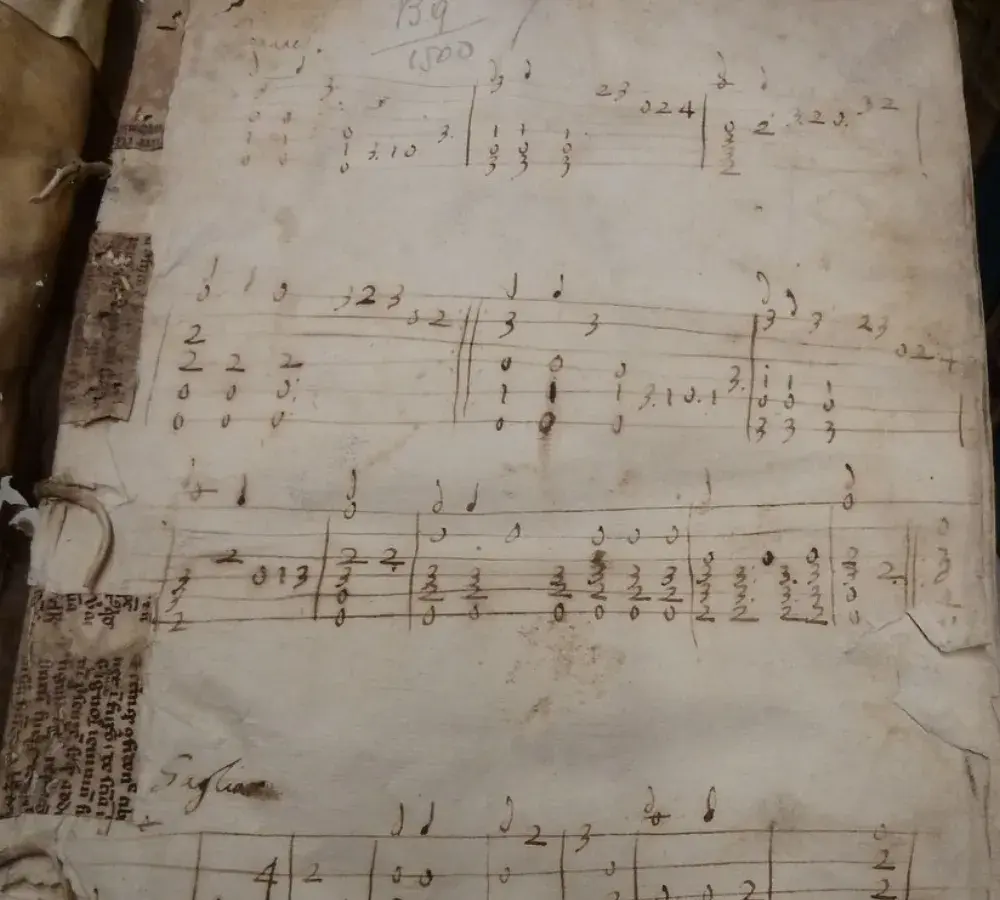
Historical Nordic manuscript with dense handwritten text representing Finnish, a Finno-Ugric language with 15 grammatical cases

Finnish vowel harmony and the 29-letter alphabet

Finnish has a vowel harmony system that governs which vowels may appear together within a single word. Vowels are divided into two harmony classes: back vowels (a, o, u) and front vowels (the umlaut forms of a and o, plus y). Within any native Finnish word, all vowels must come from the same harmony class. When a suffix is added to a word, the vowels in that suffix change to match the harmony class of the root. The inessive case suffix, for example, is "-ssa" after a back-vowel root but uses the front-vowel form after a front-vowel root. A translation engine must apply this rule consistently across every inflected form in the output document, or the text will read as incorrect to any native Finnish speaker.

The Finnish alphabet has 29 letters: the standard 26 Latin letters plus a-ring, a-umlaut, and o-umlaut. These three additional letters are not decorative variants - they represent distinct phonemes and distinct vowels in the harmony system. Rendering a Finnish PDF without these characters, or substituting plain "a" and "o" for the umlaut forms, produces text that is both visually incorrect and digitally unsearchable in Finnish. Finnish vocabulary is almost entirely distinct from Indo-European languages, and technical terminology is typically calqued from native Finnish roots rather than borrowed. "Tietokone" (computer) literally means "knowledge machine," built from "tieto" (knowledge, information) and "kone" (machine). "Puhelin" (telephone) comes from "puhua" (to speak). This calquing tradition means Finnish technical documents use Finnish-root words where English documents use internationally recognizable Latin or Greek terms, requiring translation engines to map between these parallel terminological systems in both directions.

Documents commonly translated between English and Finnish

Finnish is the official language of Finland alongside Swedish, and Finland has been an EU member since 1995. Finnish has approximately 5.5 million native speakers. This creates regular cross-border document flows involving Finnish-language PDFs. The most common document types include:

  • Finnish personal identity documents - including the henkilokortti (national identity card) and Finnish personal number documents required for residence registration and government services
  • Helsinki University degrees and academic transcripts submitted for credential recognition in EU countries, the UK, and North America
  • Nokia and other Finnish company employment contracts, non-disclosure agreements, and corporate governance documents requiring English translation for multinational teams or foreign investors
  • Finnish driving licenses submitted for exchange when relocating to another EU country or outside the EU
  • Birth certificates, marriage certificates, and family register extracts required for visa applications, immigration proceedings, and civil status recognition
  • Finnish tax documents, pension records, and social insurance statements needed when Finns move abroad or establish eligibility for cross-border benefits
  • Technical manuals and product documentation originating from Finnish engineering, manufacturing, and telecommunications companies requiring translation into English for international markets

AI translation is well suited for reading and understanding Finnish-language PDFs, preparing working drafts, and processing large volumes of technical documentation. Submissions to immigration authorities, government agencies, or courts require a 认证翻译 completed and signed by a qualified human translator.

English to Finnish PDF translation pricing

从 7 天的试用开始,随着翻译需求的增长而升级。

7天试用期

最受欢迎
今天2美元

试用期结束后,每月收费 14.99 美元。

  • 7 天完整试用期
  • 试写限制:10页或3000字
  • 0。005美元/字AI翻译
  • 120多种语言
  • PDF、DOCX、XLSX、PPTX、IDML、TXT、JPG、PNG、CSV、JSON
  • 团队访问权限和自定义词汇表
  • 电子邮件支持

月度

受欢迎的
每月 14.99 美元

原价 29。99 美元,现享 50% 折扣

  • 每月100页或3万字
  • 0。005美元/字AI翻译
  • 120多种语言
  • 无限文件存储
  • PDF、DOCX、XLSX、PPTX、IDML、TXT、JPG、PNG、CSV、JSON
  • 团队访问权限和自定义词汇表
  • 优先电子邮件支持
🎉 最超值:每年节省 44。88 美元

年度的

节省25%
每年135美元

~每月 11。25 美元,比每月节省 25%

  • 每月100页或3万字
  • 0。005美元/字AI翻译
  • 120多种语言
  • 无限文件存储
  • PDF、DOCX、XLSX、PPTX、IDML、TXT、JPG、PNG、CSV、JSON
  • 团队访问权限和自定义词汇表
  • 优先电子邮件支持
所需步骤

How to translate your PDF to Finnish

01

创建免费帐户

报名 使用您的电子邮件访问在线翻译仪表板。

02

上传您的 PDF 文件

拖放文件或浏览选择文件。付费套餐支持最大 1GB 的文件。

03

Choose Finnish as target language

Select the source language of your PDF and set Finnish as the target. The output will include all Finnish special characters - a-ring, a-umlaut, and o-umlaut - with vowel harmony applied correctly across all suffix forms.

04

翻译并下载

Click "Translate" and wait a few moments. Your translated PDF will be ready to download in Finnish with the original layout preserved.

English to Finnish PDF translation FAQ

How does Finnish vowel harmony affect the quality of PDF translation?

Finnish vowel harmony requires that all vowels within a word belong to the same harmony class - either back vowels (a, o, u) or front vowels (the umlaut forms of a and o, plus y). Every suffix added to a Finnish word must match the harmony class of the root. A translation engine generating Finnish output must apply this rule across every inflected form in the document. Errors in vowel harmony - using a back-vowel suffix on a front-vowel root or vice versa - produce text that is immediately recognizable as incorrect to any native Finnish speaker.

Will the Finnish special characters a-ring, a-umlaut, and o-umlaut render correctly in my PDF?

Yes. The Finnish alphabet has 29 letters, and the three characters beyond the standard Latin 26 - a-ring, a-umlaut, and o-umlaut - are full members of the Finnish alphabet, not decorative additions. They represent distinct phonemes and distinct vowels in the harmony system. DocTranslator outputs these characters using the correct Unicode code points, so the translated PDF is both visually correct and fully searchable and sortable in Finnish.

How do Finnish grammatical cases affect text length in translated PDFs?

Finnish has 15 grammatical cases. Instead of using prepositions like "in," "on," "from," or "toward," Finnish attaches case suffixes directly to nouns. This means some English multi-word phrases compress into a single Finnish word, while other constructions expand. The effect on a translated document is non-linear text expansion - some sections may become more compact, others up to 30 percent longer - which DocTranslator handles by reflowing text dynamically rather than using fixed character-count substitution.

What Finnish personal documents are most commonly translated for immigration or relocation?

The most frequently translated Finnish documents are the henkilokortti (national identity card), Finnish personal number documents, Helsinki University degree certificates and transcripts, Finnish driving licenses, birth and marriage certificates from the Finnish Population Information System, and tax and pension records. For submissions to immigration authorities or foreign government agencies, a 认证翻译 是必需的,而不是人工智能生成的草稿。

How are Finnish technical terms handled in PDF translation?

Finnish vocabulary is almost entirely distinct from Indo-European languages, and Finnish technical terminology is typically calqued from native roots rather than borrowed from Latin or Greek. "Tietokone" (computer) literally means "knowledge machine." "Puhelin" (telephone) comes from "puhua" (to speak). A translation engine must handle both directions: calqued Finnish terms going into English, and international technical terms being rendered into their established Finnish equivalents when translating into Finnish.

Can I translate Finnish employment contracts and corporate documents from Nokia or other Finnish companies?

Yes. Finnish employment contracts, non-disclosure agreements, shareholder agreements, and corporate governance documents are among the most commonly translated Finnish-language PDFs in international business contexts. DocTranslator handles both directions: Finnish originals into English for multinational teams and investors, and English contracts into Finnish for Finnish employees or local compliance purposes. For legally binding translations intended for court or regulatory submission, a qualified human translator should review the output.

How large a Finnish PDF can I translate?

Up to 1 GB or 5,000 pages on Monthly and Annual plans. The $2 7-day trial covers up to 10 pages or 3,000 words, which is sufficient to verify how Finnish special characters, vowel harmony suffix forms, and the agglutinative word structures in your specific document type are handled before committing to a full translation.

Translate your PDF to Finnish today

DocTranslator converts PDFs to Finnish online, applying vowel harmony consistently across all suffix forms, rendering all 29 letters of the Finnish alphabet including a-ring, a-umlaut, and o-umlaut, and preserving your document layout. Files up to 1 GB.

我们的伙伴

Accenture
Bloomberg
Citrix
P&G
SAP