人工智能驱动 · 120+ 种语言

Translate PDF to Irish

Convert PDFs to Irish (Gaeilge) with fada diacritics rendered correctly on all long vowels. Consonant mutations, VSO word order, and verbal noun constructions are handled by the translation engine. Layout and formatting are preserved. Files up to 1 GB.

最大文件大小 1 GB 保留原格式
免费注册

上传或拖放要翻译的文档

最大文件大小 1 GB

.PDF .DOCX .PPTX .XLSX 。TXT .JPG .PNG .IDML .EPUB .HTML
南非语(Afrikaans)
阿尔巴尼亚语
阿姆哈拉语
阿拉伯
亚美尼亚
阿塞拜疆语(阿塞拜疆)
巴斯克
白俄罗斯
孟加拉
波斯尼亚语(波斯尼亚语)
保加利亚语
缅甸
加泰罗尼亚语
宿务语(Cebuano)
英语(英语)
中文 简体 (Chinese Simplified)
中文繁体(Chinese Traditional)
科西嘉人(Corsican)
克罗地亚语
捷克语(捷克)
丹麦语
荷兰语(荷兰语)
英语(英语)
世界语(Esperanto)
爱沙尼亚(爱沙尼亚语)
芬兰(芬兰语)
法语
弗里西亚人(弗里西亚人)
加利西亚语
格鲁吉亚
德语
希腊语
古吉拉特语
海地克里奥尔语(海地语)
豪萨语(Hausa)
夏威夷
希伯来语
印地语
苗族(Hmong)
匈牙利
冰岛语
伊博语(伊博)
印度尼西亚
爱尔兰语(爱尔兰语)
意大利语(意大利语)
日本人
爪哇语
卡纳达语
哈萨克语(哈萨克语)
高棉语
基尼亚卢旺达语(基尼亚卢旺达语)
韩语(Koean)
库尔德语(Kurdish)
吉尔吉斯语(Kyrgyz)
老挝
拉丁裔
拉脱维亚语(Latvian)
立陶宛语
卢森堡语(卢森堡)
马其顿
马达加斯加语(Malagasy)
马来语(Malay)
马拉雅拉姆语
马耳他语
毛利语(Maori)
马拉地语
蒙古语(蒙古语)
尼泊尔语
挪威
奥里亚语(Odia)
波斯语
抛光
葡萄牙语
旁遮普语
罗马尼亚语
俄语
萨摩亚语(萨摩亚语)
盖尔语(苏格兰语)
塞尔维亚语(塞尔维亚语)
塞索托语(Sesotho)
绍纳语(英语)
信德语
僧伽罗语
斯洛伐克语
斯洛文尼亚语
索马里语(索马里人)
Español(西班牙语)
巽他语(巽他族语)
斯瓦希里语(Swahili)
瑞典
他加禄语(Tagalog)
塔吉克语(Tajik)
泰米尔语(Tamil)
鞑靼
泰卢固语
泰国
土耳其
土库曼人(土库曼语)
乌克兰
乌尔都语
维吾尔族(维吾尔语)
乌兹别克语(Uzbek)
越南语
威尔士语(威尔士语)
科萨语(科萨语)
意第绪语
约鲁巴语(约鲁巴语)
祖鲁语(祖鲁)
南非语(Afrikaans)
阿尔巴尼亚语
阿姆哈拉语
阿拉伯
亚美尼亚
阿塞拜疆语(阿塞拜疆)
巴斯克
白俄罗斯
孟加拉
波斯尼亚语(波斯尼亚语)
保加利亚语
缅甸
加泰罗尼亚语
宿务语(Cebuano)
英语(英语)
中文 简体 (Chinese Simplified)
中文繁体(Chinese Traditional)
科西嘉人(Corsican)
克罗地亚语
捷克语(捷克)
丹麦语
荷兰语(荷兰语)
英语(英语)
世界语(Esperanto)
爱沙尼亚(爱沙尼亚语)
芬兰(芬兰语)
法语
弗里西亚人(弗里西亚人)
加利西亚语
格鲁吉亚
德语
希腊语
古吉拉特语
海地克里奥尔语(海地语)
豪萨语(Hausa)
夏威夷
希伯来语
印地语
苗族(Hmong)
匈牙利
冰岛语
伊博语(伊博)
印度尼西亚
爱尔兰语(爱尔兰语)
意大利语(意大利语)
日本人
爪哇语
卡纳达语
哈萨克语(哈萨克语)
高棉语
基尼亚卢旺达语(基尼亚卢旺达语)
韩语(Koean)
库尔德语(Kurdish)
吉尔吉斯语(Kyrgyz)
老挝
拉丁裔
拉脱维亚语(Latvian)
立陶宛语
卢森堡语(卢森堡)
马其顿
马达加斯加语(Malagasy)
马来语(Malay)
马拉雅拉姆语
马耳他语
毛利语(Maori)
马拉地语
蒙古语(蒙古语)
尼泊尔语
挪威
奥里亚语(Odia)
波斯语
抛光
葡萄牙语
旁遮普语
罗马尼亚语
俄语
萨摩亚语(萨摩亚语)
盖尔语(苏格兰语)
塞尔维亚语(塞尔维亚语)
塞索托语(Sesotho)
绍纳语(英语)
信德语
僧伽罗语
斯洛伐克语
斯洛文尼亚语
索马里语(索马里人)
Español(西班牙语)
巽他语(巽他族语)
斯瓦希里语(Swahili)
瑞典
他加禄语(Tagalog)
塔吉克语(Tajik)
泰米尔语(Tamil)
鞑靼
泰卢固语
泰国
土耳其
土库曼人(土库曼语)
乌克兰
乌尔都语
维吾尔族(维吾尔语)
乌兹别克语(Uzbek)
越南语
威尔士语(威尔士语)
科萨语(科萨语)
意第绪语
约鲁巴语(约鲁巴语)
祖鲁语(祖鲁)
阿拉伯 葡萄牙语 俄语 意大利语 韩国人 荷兰语 抛光 土耳其 瑞典 英语 西班牙语 法语 德语 中国人 日本人 孟加拉 越南语 泰国 希腊语 希伯来语 阿拉伯 葡萄牙语 俄语 意大利语 韩国人 荷兰语 抛光 土耳其 瑞典 英语 西班牙语 法语 德语 中国人 日本人 孟加拉 越南语 泰国 希腊语 希伯来语

What happens when you translate a PDF into Irish

Irish (Gaeilge) uses the Latin alphabet in a reduced form of only 18 letters. The letters j, k, q, v, w, x, y, and z are absent from the native Irish alphabet. The single diacritic mark used in Irish is the fada, an acute accent placed over vowels (a, e, i, o, u) to indicate that the vowel is long. The fada is not decorative; it changes both pronunciation and meaning. The word "ma" means "if" while "ma" with a fada on the a means "mother." A PDF translation that strips fada marks produces text that is not just visually degraded but semantically wrong. DocTranslator preserves all five accented vowel forms across the output document so that long-vowel distinctions are never lost when a PDF is converted into Irish.

Irish grammar presents challenges that go beyond the alphabet. Irish is a VSO language, meaning the verb comes first in a sentence, followed by the subject, and then the object. This is the opposite of English word order and requires the translation engine to restructure sentence syntax, not merely substitute words. Irish also has a consonant mutation system unlike anything in the major western European languages. Two types of mutation exist: lenition, which adds the letter h after an initial consonant to change its sound (the word "bad" meaning "boat" becomes "a bhad" meaning "his boat"), and eclipsis, which prepends a new consonant before the initial consonant of a word (the same word becomes "i mbad" meaning "in a boat"). These mutations change both spelling and pronunciation depending on grammatical context, and they apply systematically to initial consonants in response to preceding words such as possessives, prepositions, and certain verb forms.

Irish has more than 73,000 daily speakers concentrated in the Gaeltacht regions of western, northern, and southern Ireland, and over 1.8 million people across the island of Ireland have some proficiency in the language. Irish is the first official language of the Republic of Ireland under Article 8 of the Constitution, and it became an official language of the European Union in 2007, meaning that all EU legal acts must be published in Irish. This combination of constitutional status, EU membership, and a large diaspora in the United States, the United Kingdom, Canada, and Australia creates steady demand for Irish-language document translation across government, academic, and legal contexts.

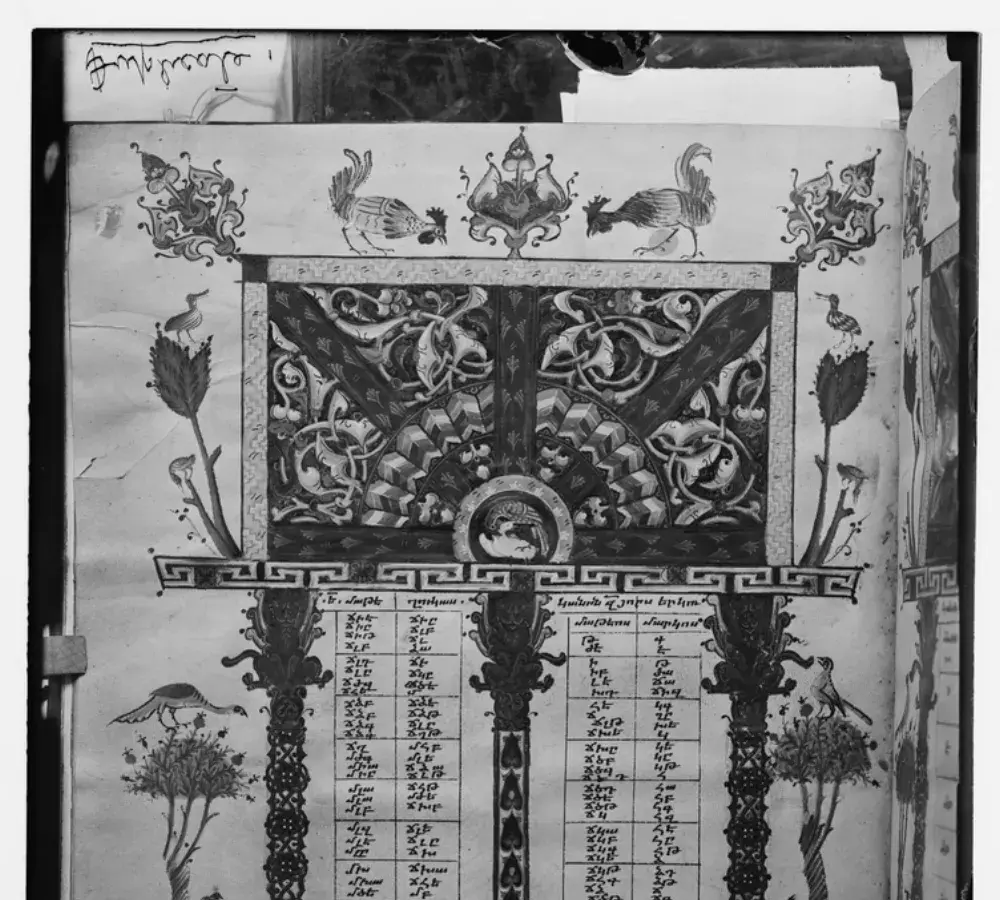
Celtic illuminated manuscript page in the tradition of the Book of Kells representing Irish Gaelic

Irish has no words for "yes" or "no"

One of the most structurally distinctive features of Irish is the complete absence of words for "yes" and "no." In Irish, agreement and disagreement are expressed by repeating the verb of the question in its affirmative or negative form. If someone asks "An bhfuil tu go maith?" (Are you well?), the affirmative reply is "Ta" (I am) and the negative is "Nil" (I am not). This means that direct question-and-answer structures in English documents - such as yes/no checkbox fields, survey forms, and legal declarations with affirmative/negative options - cannot be translated with a single fixed word. The translation engine must read the surrounding verb context to produce the correct Irish response form, which is one reason why translating interactive or form-based PDF documents into Irish requires careful linguistic handling.

Irish also has no infinitive verb form. Where English uses "to translate," "to submit," or "to certify," Irish uses the verbal noun, a form that functions as both a noun and a verbal construction. The verbal noun in Irish is the base form found in dictionaries, and it appears in constructions with the verb "to be" plus a preposition to convey ongoing or intended action. This structural difference means that procedural documents, instructions, and legal obligations written in English with infinitives must be reworked into verbal-noun constructions in Irish to read naturally. Documents translated from English into Irish for official Irish government publications follow this pattern by constitutional and legislative convention.

Documents people translate between English and Irish

Ireland's constitutional requirement that all official government publications be bilingual in Irish and English, combined with Irish being an official EU language, generates a broad range of document types that cross the Irish-English language boundary. Common document types include:

  • Irish government documents, including Acts of the Oireachtas (parliament), statutory instruments, and public notices, which are required by law to appear in both Irish and English
  • EU legal acts and regulations published in Irish, required since Irish became a full EU working language, for cross-referencing with the English-language versions
  • Trinity College Dublin and National University of Ireland degree certificates and academic transcripts for diaspora students applying to employers or graduate programs in the US, UK, and Australia
  • Birth, marriage, and death certificates issued by the General Register Office of Ireland, which carry Irish and English text and are submitted to US and UK immigration authorities
  • Irish driving licenses submitted for exchange in countries that require a translated version alongside the original document
  • Gaeltacht community organization documents, heritage language program materials, and Irish-medium school communications translated into English for non-Irish-speaking parents and international partners

AI translation is well suited to reading a document, preparing a working draft, or understanding the content of an unfamiliar Irish-language PDF. Official submissions to immigration authorities, courts, or government offices typically require a 认证翻译 reviewed and signed by a qualified human translator. For Irish diaspora members submitting Irish-language civil documents to US Citizenship and Immigration Services, certified translation is a formal requirement. See our 美国公民及移民服务局翻译服务 page for details on what certification means and when it is required.

English to Irish PDF translation pricing

从 7 天的试用开始,随着翻译需求的增长而升级。

7天试用期

最受欢迎
今天2美元

试用期结束后,每月收费 14.99 美元。

  • 7 天完整试用期
  • 试写限制:10页或3000字
  • 0。005美元/字AI翻译
  • 120多种语言
  • PDF、DOCX、XLSX、PPTX、IDML、TXT、JPG、PNG、CSV、JSON
  • 团队访问权限和自定义词汇表
  • 电子邮件支持

月度

受欢迎的
每月 14.99 美元

原价 29。99 美元,现享 50% 折扣

  • 每月100页或3万字
  • 0。005美元/字AI翻译
  • 120多种语言
  • 无限文件存储
  • PDF、DOCX、XLSX、PPTX、IDML、TXT、JPG、PNG、CSV、JSON
  • 团队访问权限和自定义词汇表
  • 优先电子邮件支持
🎉 最超值:每年节省 44。88 美元

年度的

节省25%
每年135美元

~每月 11。25 美元,比每月节省 25%

  • 每月100页或3万字
  • 0。005美元/字AI翻译
  • 120多种语言
  • 无限文件存储
  • PDF、DOCX、XLSX、PPTX、IDML、TXT、JPG、PNG、CSV、JSON
  • 团队访问权限和自定义词汇表
  • 优先电子邮件支持
所需步骤

How to translate your PDF to Irish

01

创建免费帐户

报名 使用您的电子邮件访问在线翻译仪表板。

02

上传您的 PDF 文件

拖放文件或浏览选择文件。付费套餐支持最大 1GB 的文件。

03

Choose Irish as target language

Select the original language of your PDF and set Irish (Gaeilge) as the target language. The output will include all fada diacritics rendered correctly on long vowels throughout the document.

04

翻译并下载

Click "Translate" and wait a few moments. Your translated PDF will be ready to download in Irish with the original layout preserved.

English to Irish PDF translation FAQ

Will fada diacritics render correctly in the translated Irish PDF?

Yes. The fada is the only diacritic used in Irish and appears on any of the five vowels (a, e, i, o, u) to mark long vowel sounds. Stripping fada marks changes the meaning of words, so correct Unicode rendering is essential. DocTranslator outputs all accented Irish vowel forms correctly so that the translated document is both visually accurate and semantically correct.

How does the Irish consonant mutation system affect PDF translation?

Irish has two initial consonant mutations: lenition (which inserts h after the first consonant of a word) and eclipsis (which prepends a new consonant before the first consonant). Both mutations are triggered grammatically by preceding words such as possessive pronouns, prepositions, and certain particles. These mutations change spelling, not just pronunciation, so a translation engine must apply them correctly in context. The word "bad" (boat) can appear as "bad," "a bhad" (his boat), or "i mbad" (in a boat) depending on the grammatical construction.

How does Irish handle "yes" and "no" in translated documents?

Irish has no single words for "yes" or "no." Affirmation and negation are expressed by repeating the verb of the question in positive or negative form. This means that translated documents containing yes/no options, checkboxes, or direct affirmative/negative declarations require the surrounding verb context to produce the correct Irish form. For straightforward prose documents, this distinction affects how questions and responses in dialogues, instruction forms, and legal declarations are rendered in the Irish-language version.

What Irish government documents commonly need translation?

The Irish Constitution requires all official government publications to appear in both Irish and English. Acts of the Oireachtas, statutory instruments, and public notices are all bilingual by law. EU legal acts are also published in Irish since it became a full EU working language. Within the diaspora context, Irish birth certificates, marriage certificates, and National University of Ireland degree certificates are among the documents most frequently translated into English for submission to employers and immigration authorities in the US, UK, and Australia.

Do I need a certified translation of my Irish document for USCIS?

Yes, if you are submitting an Irish-language civil document - such as a birth certificate or marriage certificate - to US Citizenship and Immigration Services, a certified translation is required. AI-generated translation is well suited for understanding the content of the document, but official USCIS submissions must include a translation accompanied by a signed certification of accuracy from a qualified translator. See our 美国公民及移民服务局翻译服务 page for full requirements.

How large an Irish PDF can I translate?

Up to 1 GB or 5,000 pages on Monthly and Annual plans. The $2 7-day trial covers up to 10 pages or 3,000 words, which is sufficient to verify that fada diacritics, consonant mutations, and document formatting are handled correctly on a sample before processing a full document.

Can I translate from Irish into English as well as from English into Irish?

Yes. The Irish-English pair works in both directions. Translating an Irish-language PDF into English is common for diaspora members sharing official Irish documents with non-Irish-speaking employers, universities, and government authorities in the US, UK, Canada, and Australia, as well as for organizations working with Irish-medium school materials or Gaeltacht community documents that need to be accessible to English-speaking stakeholders.

Translate your PDF to Irish today

DocTranslator converts PDFs to Irish (Gaeilge) online, rendering all fada diacritics correctly on long vowels, preserving your document layout, and supporting files up to 1 GB.

我们的伙伴

Accenture
Bloomberg
Citrix
P&G
SAP