AI 기반 · 120+ 언어

Translate PDF to Lithuanian

Convert PDFs to Lithuanian with all nine special Latin characters rendered correctly: a-ogonek, ch, e-ogonek, e-dot, i-ogonek, sh, u-ogonek, u-macron, and zh. Seven grammatical cases and highly inflected verb forms are handled accurately. Layout and formatting are preserved. Files up to 1 GB.

최대 파일 크기 1GB 원본 형식 유지함
무료 가입

번역을 위해 문서를 업로드하거나 드롭하세요

최대. 파일 크기 1GB

.PDF .DOCX .PPTX . XLSX .TXT .JPG .PNG . IDML . EPUB .HTML
아프리칸스어 (아프리칸스어)
쉬킵 (알바니아어)
አማርኛ (암하라어)
العربية (아랍어)
Հայերեն (아르메니아어)
아제르바이잔 딜리 (아제르바이잔)
에우스카라 (바스크어)
벨라루스카야 (벨라루스어)
বাংলা (벵골어)
보산스키 (보스니아어)
Български (불가리아어)
မြန်မာဘာသာ (버마어)
카탈라(카탈루냐어)
세부아노어 (세부아노)
치체와(치체와)
中文 简体 (중국어 간체)
中文 繁體 (중국어 번체)
코르수(코르시카)
흐르바츠키 (크로아티아어)
체슈티나 (체코어)
덴마크어 (Dansk)
네덜란드(네덜란드어)
영어 (영어)
에스페란토 (에스페란토)
에스티 (에스토니아어)
수오미 (핀란드어)
프랑스어 (프랑스어)
프리스크 (프리슬란트어)
갈레고(갈리시아어)
ქართული (조지아어)
독일어 (독일어)
Ελληνικά (그리스어)
ગુજરાતી (구자라트어)
크레올 아이시옌 (아이티어)
하우사(하우사)
하와이 오렐로 (하와이어)
עברית (히브리어)
हिंदी (힌디어)
흐붑 (몽족)
마자르어 (헝가리어)
이슬렌스카 (아이슬란드어)
이그보족 (이그보족)
인도네시아 바하사 (인도네시아어)
게일어(아일랜드어)
이탈리아어(이탈리아어)
일본어 (일본어)
바사 자와(자바어)
ಕನ್ನಡ (칸나다어)
Қазақ тілі (카자흐어)
ខ្មែរ (크메르어)
이키냐르완다 (키냐르완다)
한국어 (한국어)
쿠르디 (쿠르드어)
키르기스어 Кыргызча
ລາວ (라오스어)
라티나 (라틴어)
라트비에슈 (라트비아어)
리투비우 (리투아니아어)
Lëtzebuergesch (룩셈브)
마케도니아어 마케덴어(Македонски)
마다가스카르 (말다가스카르)
말레이어 말라유어(말레이어)
മലയാളം (말라얄람어)
몰티 (몰타어)
테 레오 마오리(마오리)
मराठी (마라티어)
Монгол хэл (몽골어)
नेपाली (네팔어)
노르스크 (노르웨이어)
ଓଡ଼ିଆ (오디아어)
فارسی (페르시아어)
폴스키 (폴란드어)
포르투게스 (포르투갈어)
ਪੰਜਾਬੀ (펀자브어)
로마나 (루마니아어)
루시스키(러시아어)
가가나 사모아 (사모아)
가이들리그 (스코틀랜드어)
Српски (세르비아어)
세소토 (세소토)
쇼나 (쇼나)
سنڌي (신드어)
සිංහල (신할라어)
슬로벤치나 (슬로바키아어)
슬로벤슈치나 (슬로베니아어)
수말리 (소말리)
에스파뇰 (스페인어)
바사 순다 (순다어)
스와힐리어 (스와힐리어)
스벤스카 (스웨덴어)
타갈로그어 (타갈로그)
토치코 (타지크)
தமிழ் (타밀어)
타트아르차(타타르)
తెలుగు (텔루구어)
ไทย (태국어)
튀르크체 (터키어)
튀르크멘체 (투르크멘)
우크라이나 어(우크라이나어)
اردو (우르두어)
ئۇيغۇرچە (위구르어)
오즈벡차 (우즈벡어)
티앙 비엣 (베트남어)
쿰레이그 (웨일스어)
이시코사(코사)
ייִדיש (이디시어)
요루바 (요루바)
isiZulu (줄루)
아프리칸스어 (아프리칸스어)
쉬킵 (알바니아어)
አማርኛ (암하라어)
العربية (아랍어)
Հայերեն (아르메니아어)
아제르바이잔 딜리 (아제르바이잔)
에우스카라 (바스크어)
벨라루스카야 (벨라루스어)
বাংলা (벵골어)
보산스키 (보스니아어)
Български (불가리아어)
မြန်မာဘာသာ (버마어)
카탈라(카탈루냐어)
세부아노어 (세부아노)
치체와(치체와)
中文 简体 (중국어 간체)
中文 繁體 (중국어 번체)
코르수(코르시카)
흐르바츠키 (크로아티아어)
체슈티나 (체코어)
덴마크어 (Dansk)
네덜란드(네덜란드어)
영어 (영어)
에스페란토 (에스페란토)
에스티 (에스토니아어)
수오미 (핀란드어)
프랑스어 (프랑스어)
프리스크 (프리슬란트어)
갈레고(갈리시아어)
ქართული (조지아어)
독일어 (독일어)
Ελληνικά (그리스어)
ગુજરાતી (구자라트어)
크레올 아이시옌 (아이티어)
하우사(하우사)
하와이 오렐로 (하와이어)
עברית (히브리어)
हिंदी (힌디어)
흐붑 (몽족)
마자르어 (헝가리어)
이슬렌스카 (아이슬란드어)
이그보족 (이그보족)
인도네시아 바하사 (인도네시아어)
게일어(아일랜드어)
이탈리아어(이탈리아어)
일본어 (일본어)
바사 자와(자바어)
ಕನ್ನಡ (칸나다어)
Қазақ тілі (카자흐어)
ខ្មែរ (크메르어)
이키냐르완다 (키냐르완다)
한국어 (한국어)
쿠르디 (쿠르드어)
키르기스어 Кыргызча
ລາວ (라오스어)
라티나 (라틴어)
라트비에슈 (라트비아어)
리투비우 (리투아니아어)
Lëtzebuergesch (룩셈브)
마케도니아어 마케덴어(Македонски)
마다가스카르 (말다가스카르)
말레이어 말라유어(말레이어)
മലയാളം (말라얄람어)
몰티 (몰타어)
테 레오 마오리(마오리)
मराठी (마라티어)
Монгол хэл (몽골어)
नेपाली (네팔어)
노르스크 (노르웨이어)
ଓଡ଼ିଆ (오디아어)
فارسی (페르시아어)
폴스키 (폴란드어)
포르투게스 (포르투갈어)
ਪੰਜਾਬੀ (펀자브어)
로마나 (루마니아어)
루시스키(러시아어)
가가나 사모아 (사모아)
가이들리그 (스코틀랜드어)
Српски (세르비아어)
세소토 (세소토)
쇼나 (쇼나)
سنڌي (신드어)
සිංහල (신할라어)
슬로벤치나 (슬로바키아어)
슬로벤슈치나 (슬로베니아어)
수말리 (소말리)
에스파뇰 (스페인어)
바사 순다 (순다어)
스와힐리어 (스와힐리어)
스벤스카 (스웨덴어)
타갈로그어 (타갈로그)
토치코 (타지크)
தமிழ் (타밀어)
타트아르차(타타르)
తెలుగు (텔루구어)
ไทย (태국어)
튀르크체 (터키어)
튀르크멘체 (투르크멘)
우크라이나 어(우크라이나어)
اردو (우르두어)
ئۇيغۇرچە (위구르어)
오즈벡차 (우즈벡어)
티앙 비엣 (베트남어)
쿰레이그 (웨일스어)
이시코사(코사)
ייִדיש (이디시어)
요루바 (요루바)
isiZulu (줄루)
아랍어 포르투갈어 러시아어 이탈리아어 한국 네덜란드어 폴란드어 터키어 스웨덴어 영어 스페인어 프랑스어 독일어 중국어 일본어 힌디어 벵골어 베트남어 태국 그리스어 히브리어 아랍어 포르투갈어 러시아어 이탈리아어 한국 네덜란드어 폴란드어 터키어 스웨덴어 영어 스페인어 프랑스어 독일어 중국어 일본어 힌디어 벵골어 베트남어 태국 그리스어 히브리어

What happens when you translate a PDF into Lithuanian

Lithuanian uses the Latin alphabet but with nine characters that do not appear in the basic 26-letter set. These are a-ogonek (a with a small hook beneath, representing a long front vowel), e-ogonek (same hook on e), i-ogonek (on i), u-ogonek (on u), e-dot (e with a dot above), u-macron (u with a bar above), and the digraphs ch, sh, and zh, which each represent a single consonant sound. A PDF translation that substitutes plain vowels for these ogonek and macron forms produces text that is both visually wrong and orthographically incorrect, because each modified character represents a distinct vowel length or quality. DocTranslator preserves the correct Unicode code points for all nine Lithuanian special characters, so the translated document is searchable and meets the orthographic standard required for official use.

Lithuanian grammar is highly inflected. Nouns, pronouns, adjectives, and numerals all decline across seven grammatical cases: nominative, genitive, dative, accusative, instrumental, locative, and vocative. Every noun belongs to one of several declension classes, and adjectives agree in gender, number, and case with the noun they modify. Verbs carry information about tense, mood, person, number, and voice through their endings, meaning that a single Lithuanian verb form can correspond to a full clause in English. AI translation models trained on Lithuanian text handle these patterns well enough for most technical and legal documents, but the complexity of the morphology means that even small errors in case assignment can change the legal meaning of a sentence. For documents intended for submission to a government authority, a human review step is recommended after the initial AI draft.

Lithuanian is spoken by around 3 million native speakers. The vast majority live in Lithuania, which joined the European Union in 2004 and became an official EU language the same year. A significant diaspora has formed in the United Kingdom, where approximately 250,000 Lithuanian speakers reside, generating steady demand for translation of Lithuanian identity documents, educational credentials, and civil status certificates into English. Additional diaspora communities exist in Ireland, Germany, Norway, and the United States.

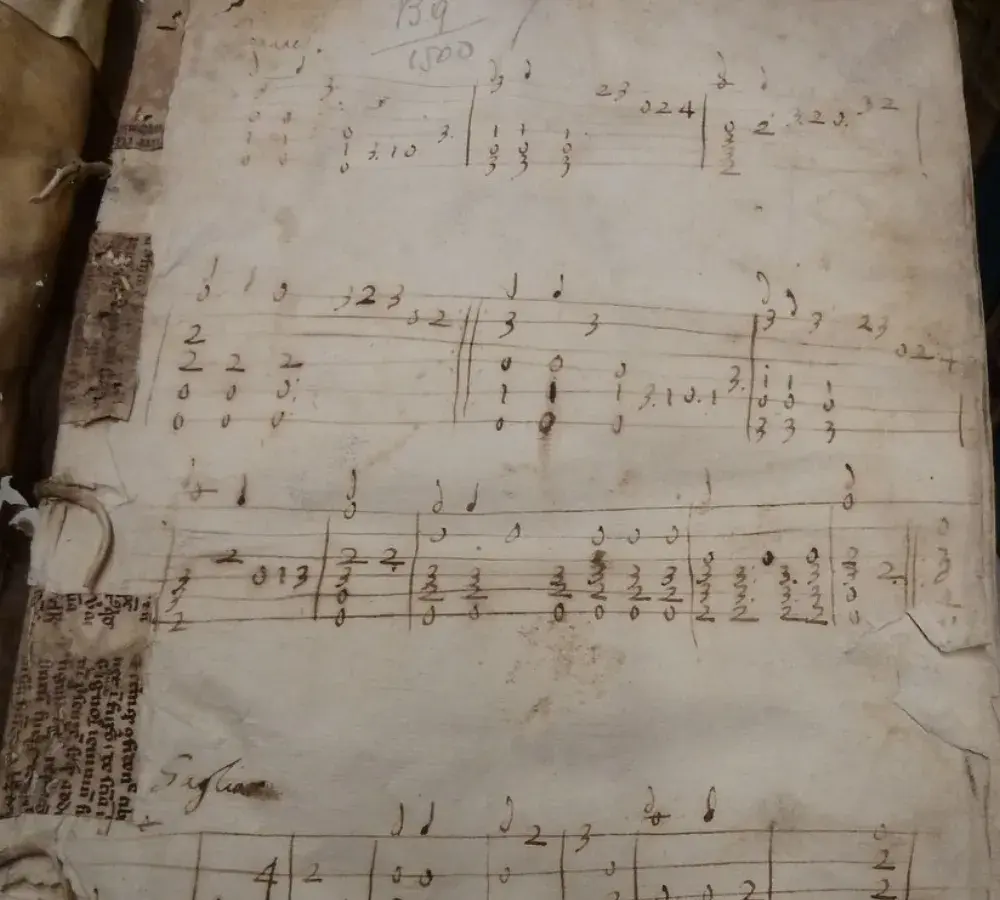
Medieval handwritten manuscript from the Baltic European tradition representing Lithuanian

The most conservative living Indo-European language

Lithuanian holds a unique position in historical linguistics. It is the living Indo-European language that has preserved the most features of reconstructed Proto-Indo-European, the common ancestor of most European languages spoken several thousand years ago. Linguists who study ancient IE phonology use Lithuanian as a primary reference, because its vowel system, its pitch accent, and several of its grammatical patterns have survived largely intact while other branches simplified or lost them. The comparison often cited is that Lithuanian "daug" (much) parallels Sanskrit "bahutah" and Latin "multum" in ways that reveal the original IE root without the layers of change accumulated over millennia in most other branches.

Lithuanian pitch accent is a particularly distinctive feature. Long syllables in Lithuanian carry one of two accent types: a falling tone and a rising tone. These two accents distinguish word meanings that would otherwise be spelled identically. The pitch distinctions are real and phonemically significant, but they are not written in standard Lithuanian orthography. A reader familiar with the language infers the correct pitch from context and word knowledge. Translated PDFs output by DocTranslator follow this standard: the text is written in the conventional orthography without diacritic accent marks, exactly as Lithuanian documents are produced natively.

Documents people translate between English and Lithuanian

Lithuania's EU membership and its large UK diaspora create consistent cross-border document flows in both directions. The most common document types translated between Lithuanian and English include:

  • Lithuanian national identity cards and passports for residence registration and immigration applications in the United Kingdom, Ireland, and other EU member states
  • Vilnius University diplomas and academic transcripts - Vilnius University was founded in 1579 and is the oldest university in the Baltic states - translated for credential recognition by foreign employers and universities
  • Birth certificates, marriage certificates, and divorce certificates for civil status recognition across EU jurisdictions or for UK immigration purposes
  • EU legislative documents and administrative decisions published in Lithuanian as an official EU language that need to be made accessible in English
  • Employment contracts and labour law documents for Lithuanian workers at UK and EU employers, where both parties need to understand their obligations
  • Medical records and healthcare documents for Lithuanian nationals seeking treatment or continuing care abroad

AI translation is well suited for reading a document, preparing a working draft, or understanding the content of a Lithuanian-language PDF. Submissions to a government office, immigration authority, or court typically require a 인증 번역 reviewed and signed by a qualified human translator. For US federal agencies, USCIS-certified translation must include a signed statement of translator competency.

English to Lithuanian PDF translation pricing

7 일 평가판부터 시작하여 번역 요구 사항이 증가함에 따라 업그레이드하십시오.

7일 시험

가장 인기 있는 작품
오늘 2달러

재판 종료 후 월 14.99달러

  • 7일간의 완전 접근 시험
  • 시험 제한: 10페이지 또는 3,000단어
  • $0.005/단어 AI 번역
  • 120+ 언어
  • PDF, DOCX, XLSX, PPTX, IDML, TXT, JPG, PNG, CSV, JSON
  • 팀 접근 및 맞춤 용어집
  • 이메일 지원

월간

인기
월 $14.99

정가 $29.99, 현재 50% 할인

  • 월 100페이지 또는 30,000단어
  • $0.005/단어 AI 번역
  • 120+ 언어
  • 무제한 파일 저장
  • PDF, DOCX, XLSX, PPTX, IDML, TXT, JPG, PNG, CSV, JSON
  • 팀 접근 및 맞춤 용어집
  • 우선 이메일 지원
🎉 최고의 가치: $44.88/년 절약

연감

25% 절약
연간 135달러

~$11.25/월, 월 대비 25% 할인

  • 월 100페이지 또는 30,000단어
  • $0.005/단어 AI 번역
  • 120+ 언어
  • 무제한 파일 저장
  • PDF, DOCX, XLSX, PPTX, IDML, TXT, JPG, PNG, CSV, JSON
  • 팀 접근 및 맞춤 용어집
  • 우선 이메일 지원
필요한 단계

How to translate your PDF to Lithuanian

01

무료 계정을 만드세요

가입하기 온라인 번역 대시보드에 액세스하려면 이메일을 사용하세요.

02

PDF 파일을 업로드하세요

파일을 드래그 앤 드롭하거나 탐색해서 선택하세요. 유료 요금제에서는 최대 1GB까지 파일을 지원합니다.

03

Choose Lithuanian as target language

Select the original language of your PDF and set Lithuanian as the target language. All nine special Lithuanian characters including ogonek vowels, e-dot, and u-macron will be rendered correctly in the output.

04

번역 및 다운로드

Click "Translate" and wait a few moments. Your translated PDF will be ready to download in Lithuanian with the original layout preserved.

English to Lithuanian PDF translation FAQ

Will the nine special Lithuanian characters render correctly in the translated PDF?

Yes. Lithuanian uses nine characters not found in the basic Latin alphabet: a-ogonek, ch, e-ogonek, e-dot, i-ogonek, sh, u-ogonek, u-macron, and zh. Each ogonek vowel and the macron form represent distinct vowel qualities or lengths that are phonemically significant. DocTranslator outputs the correct Unicode code points for all nine characters so the translated text is both visually correct and digitally searchable.

How does Lithuanian pitch accent affect PDF translation?

Lithuanian has two types of pitch accent - falling and rising - on long syllables. These pitch distinctions differentiate word meanings, but they are not written in standard Lithuanian orthography. Readers infer the correct pitch from context. DocTranslator follows the standard written convention and does not add diacritic accent marks to the output, which matches how native Lithuanian documents are produced.

How do the seven grammatical cases in Lithuanian affect translation quality?

Lithuanian nouns, pronouns, and adjectives inflect across seven cases: nominative, genitive, dative, accusative, instrumental, locative, and vocative. Adjectives must also agree in gender, number, and case with the nouns they modify. AI models trained on sufficient Lithuanian text handle these patterns correctly for most document types, but documents with dense legal or technical noun phrases benefit from human review after the initial AI draft, since case errors can shift the meaning of a clause.

Why is Lithuanian described as the most conservative Indo-European language?

Lithuanian has preserved more features of reconstructed Proto-Indo-European than any other living language in the family. Its vowel system, pitch accent, and several grammatical patterns survived largely unchanged through millennia during which other branches simplified or restructured theirs. Historical linguists use Lithuanian as a reference language when studying ancient IE phonology precisely because these archaic features are still in active use in a living written standard.

What Lithuanian documents are most commonly translated for UK immigration?

Approximately 250,000 Lithuanian speakers live in the United Kingdom, making this one of the largest Lithuanian diaspora communities. The most frequently translated documents for UK immigration and residency purposes are Lithuanian national identity cards, passports, birth certificates, marriage certificates, and Vilnius University academic transcripts. For submissions to the Home Office or other UK authorities, a 인증 번역 with a signed translator statement is required rather than an AI-generated draft.

How large a Lithuanian PDF can I translate?

Up to 1 GB or 5,000 pages on Monthly and Annual plans. The $2 7-day trial covers up to 10 pages or 3,000 words, which is enough to check how Lithuanian ogonek characters, u-macron, and inflected word forms are handled on a sample document before committing to a full file.

Can I translate from Lithuanian into English as well as from English into Lithuanian?

Yes. The Lithuanian-English pair works in both directions. Translating a Lithuanian PDF into English is common for UK and EU employers reviewing Lithuanian employment records or academic credentials, and for Lithuanian nationals sharing identity or civil status documents with English-speaking authorities. Translating English documents into Lithuanian is common for EU legislative material, contracts, and healthcare information distributed to Lithuanian-speaking users.

Translate your PDF to Lithuanian today

DocTranslator converts PDFs to Lithuanian online, rendering all nine special characters including ogonek vowels and u-macron correctly, preserving your document layout, and supporting files up to 1 GB.

우리의 파트너들

Accenture
Bloomberg
Citrix
P&G
SAP