AI 기반 · 120+ 언어

Translate PDF to Swahili

Convert PDFs to Swahili with Bantu noun class agreement, agglutinative verb forms, and Arabic loanword vocabulary handled correctly. Latin script with no diacritics means clean rendering across all PDF viewers. Layout and formatting are preserved. Files up to 1 GB.

최대 파일 크기 1GB 원본 형식 유지함
무료 가입

번역을 위해 문서를 업로드하거나 드롭하세요

최대. 파일 크기 1GB

.PDF .DOCX .PPTX . XLSX .TXT .JPG .PNG . IDML . EPUB .HTML
아프리칸스어 (아프리칸스어)
쉬킵 (알바니아어)
አማርኛ (암하라어)
العربية (아랍어)
Հայերեն (아르메니아어)
아제르바이잔 딜리 (아제르바이잔)
에우스카라 (바스크어)
벨라루스카야 (벨라루스어)
বাংলা (벵골어)
보산스키 (보스니아어)
Български (불가리아어)
မြန်မာဘာသာ (버마어)
카탈라(카탈루냐어)
세부아노어 (세부아노)
치체와(치체와)
中文 简体 (중국어 간체)
中文 繁體 (중국어 번체)
코르수(코르시카)
흐르바츠키 (크로아티아어)
체슈티나 (체코어)
덴마크어 (Dansk)
네덜란드(네덜란드어)
영어 (영어)
에스페란토 (에스페란토)
에스티 (에스토니아어)
수오미 (핀란드어)
프랑스어 (프랑스어)
프리스크 (프리슬란트어)
갈레고(갈리시아어)
ქართული (조지아어)
독일어 (독일어)
Ελληνικά (그리스어)
ગુજરાતી (구자라트어)
크레올 아이시옌 (아이티어)
하우사(하우사)
하와이 오렐로 (하와이어)
עברית (히브리어)
हिंदी (힌디어)
흐붑 (몽족)
마자르어 (헝가리어)
이슬렌스카 (아이슬란드어)
이그보족 (이그보족)
인도네시아 바하사 (인도네시아어)
게일어(아일랜드어)
이탈리아어(이탈리아어)
일본어 (일본어)
바사 자와(자바어)
ಕನ್ನಡ (칸나다어)
Қазақ тілі (카자흐어)
ខ្មែរ (크메르어)
이키냐르완다 (키냐르완다)
한국어 (한국어)
쿠르디 (쿠르드어)
키르기스어 Кыргызча
ລາວ (라오스어)
라티나 (라틴어)
라트비에슈 (라트비아어)
리투비우 (리투아니아어)
Lëtzebuergesch (룩셈브)
마케도니아어 마케덴어(Македонски)
마다가스카르 (말다가스카르)
말레이어 말라유어(말레이어)
മലയാളം (말라얄람어)
몰티 (몰타어)
테 레오 마오리(마오리)
मराठी (마라티어)
Монгол хэл (몽골어)
नेपाली (네팔어)
노르스크 (노르웨이어)
ଓଡ଼ିଆ (오디아어)
فارسی (페르시아어)
폴스키 (폴란드어)
포르투게스 (포르투갈어)
ਪੰਜਾਬੀ (펀자브어)
로마나 (루마니아어)
루시스키(러시아어)
가가나 사모아 (사모아)
가이들리그 (스코틀랜드어)
Српски (세르비아어)
세소토 (세소토)
쇼나 (쇼나)
سنڌي (신드어)
සිංහල (신할라어)
슬로벤치나 (슬로바키아어)
슬로벤슈치나 (슬로베니아어)
수말리 (소말리)
에스파뇰 (스페인어)
바사 순다 (순다어)
스와힐리어 (스와힐리어)
스벤스카 (스웨덴어)
타갈로그어 (타갈로그)
토치코 (타지크)
தமிழ் (타밀어)
타트아르차(타타르)
తెలుగు (텔루구어)
ไทย (태국어)
튀르크체 (터키어)
튀르크멘체 (투르크멘)
우크라이나 어(우크라이나어)
اردو (우르두어)
ئۇيغۇرچە (위구르어)
오즈벡차 (우즈벡어)
티앙 비엣 (베트남어)
쿰레이그 (웨일스어)
이시코사(코사)
ייִדיש (이디시어)
요루바 (요루바)
isiZulu (줄루)
아프리칸스어 (아프리칸스어)
쉬킵 (알바니아어)
አማርኛ (암하라어)
العربية (아랍어)
Հայերեն (아르메니아어)
아제르바이잔 딜리 (아제르바이잔)
에우스카라 (바스크어)
벨라루스카야 (벨라루스어)
বাংলা (벵골어)
보산스키 (보스니아어)
Български (불가리아어)
မြန်မာဘာသာ (버마어)
카탈라(카탈루냐어)
세부아노어 (세부아노)
치체와(치체와)
中文 简体 (중국어 간체)
中文 繁體 (중국어 번체)
코르수(코르시카)
흐르바츠키 (크로아티아어)
체슈티나 (체코어)
덴마크어 (Dansk)
네덜란드(네덜란드어)
영어 (영어)
에스페란토 (에스페란토)
에스티 (에스토니아어)
수오미 (핀란드어)
프랑스어 (프랑스어)
프리스크 (프리슬란트어)
갈레고(갈리시아어)
ქართული (조지아어)
독일어 (독일어)
Ελληνικά (그리스어)
ગુજરાતી (구자라트어)
크레올 아이시옌 (아이티어)
하우사(하우사)
하와이 오렐로 (하와이어)
עברית (히브리어)
हिंदी (힌디어)
흐붑 (몽족)
마자르어 (헝가리어)
이슬렌스카 (아이슬란드어)
이그보족 (이그보족)
인도네시아 바하사 (인도네시아어)
게일어(아일랜드어)
이탈리아어(이탈리아어)
일본어 (일본어)
바사 자와(자바어)
ಕನ್ನಡ (칸나다어)
Қазақ тілі (카자흐어)
ខ្មែរ (크메르어)
이키냐르완다 (키냐르완다)
한국어 (한국어)
쿠르디 (쿠르드어)
키르기스어 Кыргызча
ລາວ (라오스어)
라티나 (라틴어)
라트비에슈 (라트비아어)
리투비우 (리투아니아어)
Lëtzebuergesch (룩셈브)
마케도니아어 마케덴어(Македонски)
마다가스카르 (말다가스카르)
말레이어 말라유어(말레이어)
മലയാളം (말라얄람어)
몰티 (몰타어)
테 레오 마오리(마오리)
मराठी (마라티어)
Монгол хэл (몽골어)
नेपाली (네팔어)
노르스크 (노르웨이어)
ଓଡ଼ିଆ (오디아어)
فارسی (페르시아어)
폴스키 (폴란드어)
포르투게스 (포르투갈어)
ਪੰਜਾਬੀ (펀자브어)
로마나 (루마니아어)
루시스키(러시아어)
가가나 사모아 (사모아)
가이들리그 (스코틀랜드어)
Српски (세르비아어)
세소토 (세소토)
쇼나 (쇼나)
سنڌي (신드어)
සිංහල (신할라어)
슬로벤치나 (슬로바키아어)
슬로벤슈치나 (슬로베니아어)
수말리 (소말리)
에스파뇰 (스페인어)
바사 순다 (순다어)
스와힐리어 (스와힐리어)
스벤스카 (스웨덴어)
타갈로그어 (타갈로그)
토치코 (타지크)
தமிழ் (타밀어)
타트아르차(타타르)
తెలుగు (텔루구어)
ไทย (태국어)
튀르크체 (터키어)
튀르크멘체 (투르크멘)
우크라이나 어(우크라이나어)
اردو (우르두어)
ئۇيغۇرچە (위구르어)
오즈벡차 (우즈벡어)
티앙 비엣 (베트남어)
쿰레이그 (웨일스어)
이시코사(코사)
ייִדיש (이디시어)
요루바 (요루바)
isiZulu (줄루)
아랍어 포르투갈어 러시아어 이탈리아어 한국 네덜란드어 폴란드어 터키어 스웨덴어 영어 스페인어 프랑스어 독일어 중국어 일본어 힌디어 벵골어 베트남어 태국 그리스어 히브리어 아랍어 포르투갈어 러시아어 이탈리아어 한국 네덜란드어 폴란드어 터키어 스웨덴어 영어 스페인어 프랑스어 독일어 중국어 일본어 힌디어 벵골어 베트남어 태국 그리스어 히브리어

What happens when you translate a PDF into Swahili

Swahili is written in the Latin alphabet with no diacritical marks, which means that translating a PDF into Swahili avoids the font-rendering problems common with Arabic, Thai, or Vietnamese output. Every letter in Swahili maps directly to a standard ASCII character, so the translated text displays correctly in any PDF viewer on any operating system without font substitution or encoding issues. The challenge in Swahili translation is not script rendering but grammatical structure. Swahili is a Bantu language with a noun class system that governs agreement across nouns, verbs, adjectives, pronouns, and demonstratives simultaneously. There are more than eight grammatical noun classes, each assigned a prefix that must be echoed by every word in the sentence that refers to that noun. Translating a sentence correctly requires assigning the right class to each noun and applying the matching prefix to every agreeing element throughout the sentence.

Swahili verbs are agglutinative, meaning that tense, subject, object, and negation are all fused into a single verb form rather than expressed through separate auxiliary words. The verb "nitakusaidia" (I will help you) contains the subject prefix "ni-" (I), the future tense marker "-ta-", the object prefix "-ku-" (you), and the root "-saidia" (help), all in one unbroken word. A translation engine must decompose and reconstruct these multi-morpheme forms correctly for the output to be grammatically natural. Around 35 percent of the Swahili vocabulary is derived from Arabic, the legacy of centuries of Indian Ocean trade between East Africa and the Arabian Peninsula. These loanwords appear frequently in legal, commercial, and religious documents and must be recognized and reproduced correctly rather than back-translated into awkward constructions.

Swahili is spoken by more than 200 million people across East and Central Africa. It is an official language of Tanzania, Kenya, Uganda, Rwanda, and the Democratic Republic of Congo, and it serves as the working language of the East African Community. Tanzania has the largest concentration of native speakers, with Swahili as the primary language of public life, education, and government. In Kenya it is co-official with English and used across all formal institutions. The language carries no grammatical tones, which distinguishes it from many other African languages and simplifies the challenge of text-based translation compared with tonal Bantu languages such as Zulu or Shona.

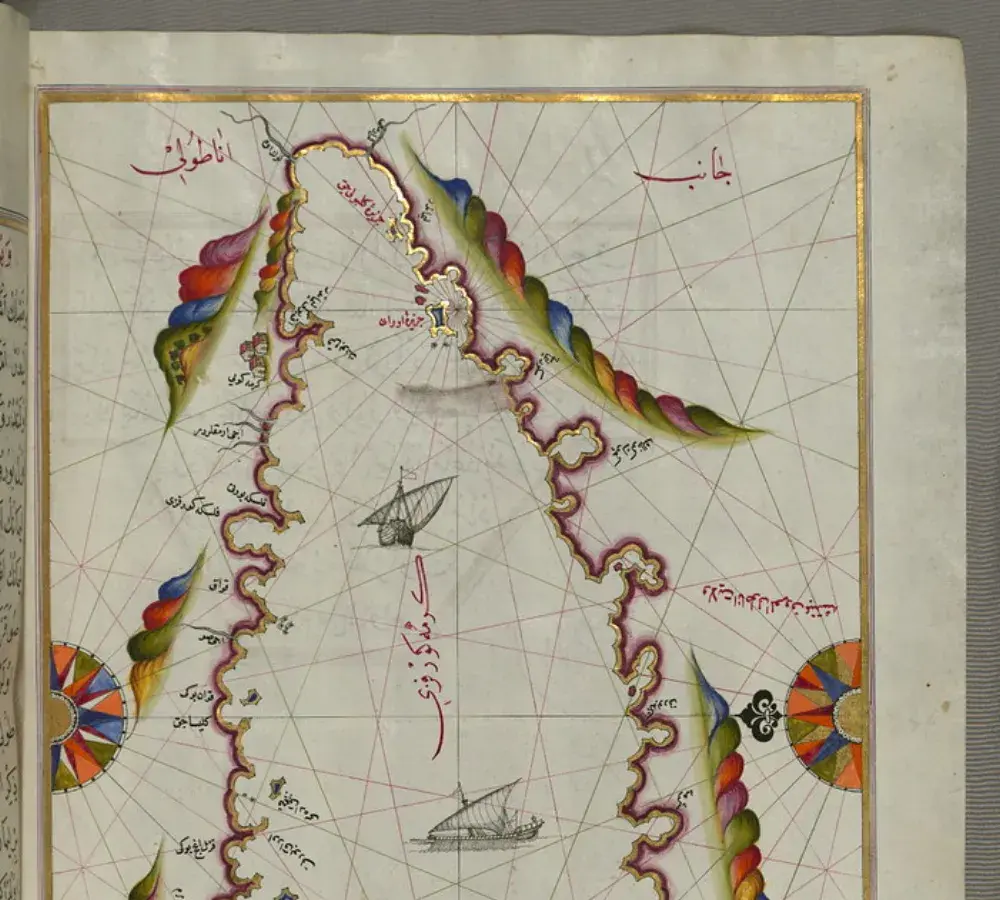
Historic manuscript document representing the East African written tradition behind Swahili texts

Swahili's written tradition stretches back to the 13th century

Before the adoption of the Latin alphabet in the colonial period, Swahili was written in the Arabic script, known in this form as Ajami. Coastal manuscripts from Lamu, Zanzibar, and Mombasa dating to the 13th century record poetry, religious commentary, and trade law in Swahili rendered phonetically in Arabic letters. This pre-colonial written tradition is one of the oldest in sub-Saharan Africa and is the source of the extensive Arabic loanword layer in modern Swahili vocabulary. Words for concepts such as law (sheria, from Arabic shari'a), time (saa, from Arabic sa'a), and trade (biashara, from Arabic bi al-ishara) entered the language through this centuries-long written and commercial contact.

Today all official Swahili documents use the Latin alphabet, and the language has a standardized written form maintained by bodies such as the Baraza la Kiswahili la Taifa (BAKITA) in Tanzania and the Chama cha Kiswahili cha Taifa (CHAKITA) in Kenya. Government forms, court documents, NGO sector reports, and East African Community trade documents are produced in this standardized written register. For translators and translation tools, the practical task is always with modern Latin-script Swahili. Historical Ajami documents require specialist scholarly handling rather than automated translation.

Documents people translate between English and Swahili

The combination of Swahili's role as the East African Community working language, its official status in five countries, and a growing diaspora in the United Kingdom and Canada creates consistent demand for document translation in both directions. The most common document types include:

  • East African Community trade documents, cross-border commercial contracts, and regional regulatory filings produced in Swahili for businesses operating across Tanzania, Kenya, Uganda, Rwanda, and the DRC
  • Kenyan and Tanzanian government forms including national identity cards, birth certificates, and marriage certificates required for immigration procedures in the UK and Canada
  • NGO sector reports, community health studies, and development program documents produced by organizations working in East African Swahili-speaking communities
  • Academic transcripts and diplomas from Tanzanian and Kenyan universities submitted for credential recognition in English-speaking countries
  • Legal documents including court orders, property deeds, and power of attorney instruments originating from Tanzanian or Kenyan courts
  • Medical records and clinical trial documentation produced by healthcare providers in Tanzania or Kenya for review by international partners

AI translation produces useful working drafts for reading and understanding Swahili-language PDFs. Official submissions to immigration authorities, courts, or government offices typically require a 인증 번역 prepared and signed by a qualified human translator. For USCIS submissions in particular, see the USCIS 번역 요구 사항 guide before submitting any Swahili document for immigration purposes.

Swahili PDF translation pricing

7 일 평가판부터 시작하여 번역 요구 사항이 증가함에 따라 업그레이드하십시오.

7일 시험

가장 인기 있는 작품
오늘 2달러

재판 종료 후 월 14.99달러

  • 7일간의 완전 접근 시험
  • 시험 제한: 10페이지 또는 3,000단어
  • $0.005/단어 AI 번역
  • 120+ 언어
  • PDF, DOCX, XLSX, PPTX, IDML, TXT, JPG, PNG, CSV, JSON
  • 팀 접근 및 맞춤 용어집
  • 이메일 지원

월간

인기
월 $14.99

정가 $29.99, 현재 50% 할인

  • 월 100페이지 또는 30,000단어
  • $0.005/단어 AI 번역
  • 120+ 언어
  • 무제한 파일 저장
  • PDF, DOCX, XLSX, PPTX, IDML, TXT, JPG, PNG, CSV, JSON
  • 팀 접근 및 맞춤 용어집
  • 우선 이메일 지원
🎉 최고의 가치: $44.88/년 절약

연감

25% 절약
연간 135달러

~$11.25/월, 월 대비 25% 할인

  • 월 100페이지 또는 30,000단어
  • $0.005/단어 AI 번역
  • 120+ 언어
  • 무제한 파일 저장
  • PDF, DOCX, XLSX, PPTX, IDML, TXT, JPG, PNG, CSV, JSON
  • 팀 접근 및 맞춤 용어집
  • 우선 이메일 지원
필요한 단계

How to translate your PDF to Swahili

01

무료 계정을 만드세요

가입하기 온라인 번역 대시보드에 액세스하려면 이메일을 사용하세요.

02

PDF 파일을 업로드하세요

파일을 드래그 앤 드롭하거나 탐색해서 선택하세요. 유료 요금제에서는 최대 1GB까지 파일을 지원합니다.

03

Choose Swahili as target language

Select the original language of your PDF and set Swahili as the target language. The output will handle noun class agreement and agglutinative verb forms in standard written Swahili.

04

번역 및 다운로드

Click "Translate" and wait a few moments. Your translated PDF will be ready to download in Swahili with the original layout preserved.

English to Swahili PDF translation FAQ

Does Swahili use any special characters that cause PDF rendering problems?

No. Swahili is written entirely in the standard Latin alphabet with no diacritical marks and no characters outside the basic ASCII range. Every letter in written Swahili corresponds to a standard keyboard character, so translated PDFs display correctly in any viewer on any operating system without font substitution, encoding mismatches, or right-to-left rendering issues. This makes Swahili one of the technically simplest African languages to render in PDF output.

How does the Bantu noun class system affect Swahili PDF translation quality?

Swahili has more than eight grammatical noun classes, each carrying a specific prefix. Every noun belongs to one class, and that class prefix must be mirrored by the verb, adjective, pronoun, and demonstrative in the same sentence. For example, the class-3 noun "mti" (tree) takes the prefix "mi-" in the plural ("miti") and triggers "u-" agreement on adjectives and verbs. An AI model that correctly assigns noun classes and propagates prefix agreement throughout a sentence produces natural-sounding Swahili. Models trained on large Swahili corpora handle standard document vocabulary well.

Is there a register or dialect difference I need to account for in translated Swahili documents?

Standard written Swahili, sometimes called Kiswahili Sanifu, is the form used in official documents, government forms, newspapers, and academic publications across Tanzania, Kenya, Uganda, Rwanda, and the DRC. It is based on the Zanzibar dialect and is maintained by standardization bodies in both Tanzania and Kenya. Colloquial Swahili varies significantly by region, with Sheng (a Nairobi urban mix of Swahili and English) being a prominent example. DocTranslator outputs standard written Swahili, which is appropriate for all formal document types.

What Swahili documents are most commonly translated for immigration purposes?

The most frequent document types are Kenyan and Tanzanian birth certificates, national identity cards, marriage and divorce certificates, and police clearance certificates submitted for visa and residency applications in the United Kingdom and Canada. East African diaspora communities in the UK are particularly large from Kenya, Uganda, and Tanzania. For official immigration submissions, a 인증 번역 reviewed and signed by a qualified translator is required rather than an AI-generated draft.

How large a Swahili PDF can I translate, and is there a trial option?

Monthly and Annual plans support files up to 1 GB and up to 5,000 pages. The $2 7-day trial covers up to 10 pages or 3,000 words, which is enough to verify how a Swahili-language government form or NGO report is handled before committing to a full document. Because Swahili uses no diacritics, the trial output will appear correctly in any standard PDF viewer immediately.

Can I translate from Swahili into English as well as from English into Swahili?

Yes. The Swahili-English pair works in both directions. Translating a Swahili PDF into English is common for NGOs sharing field reports with international donors, for businesses reviewing East African Community trade documentation, and for diaspora members sharing Kenyan or Tanzanian government forms with English-speaking institutions. Translating from English into Swahili is common for organizations distributing materials to East African audiences and for businesses entering the East African market.

Why does Swahili contain so many Arabic-origin words, and does this affect translation?

Around 35 percent of the Swahili vocabulary is derived from Arabic, the result of centuries of trade between East African coastal cities and the Arabian Peninsula. Words for concepts such as law (sheria), time (saa), book (kitabu), trade (biashara), and religion (dini) all come from Arabic. These loanwords are fully integrated into Swahili grammar and behave like native words, taking Bantu noun class prefixes and Swahili verb agreement patterns. AI translation models trained on Swahili text handle these loanwords correctly as part of standard vocabulary rather than treating them as foreign insertions.

Translate your PDF to Swahili today

DocTranslator converts PDFs to Swahili online, handling Bantu noun class agreement, agglutinative verb forms, and Arabic loanword vocabulary, while preserving your document layout and supporting files up to 1 GB.

우리의 파트너들

Accenture
Bloomberg
Citrix
P&G
SAP