AI 기반 · 120+ 언어

Translate PDF to Bengali

Convert PDFs to and from Bengali online. Bengali script conjuncts and vowel diacritics are rendered correctly in the output, not broken into fragments. Files up to 1 GB.

최대 파일 크기 1GB 원본 형식 유지함
무료 가입

번역을 위해 문서를 업로드하거나 드롭하세요

최대. 파일 크기 1GB

.PDF .DOCX .PPTX . XLSX .TXT .JPG .PNG . IDML . EPUB .HTML
아프리칸스어 (아프리칸스어)
쉬킵 (알바니아어)
አማርኛ (암하라어)
العربية (아랍어)
Հայերեն (아르메니아어)
아제르바이잔 딜리 (아제르바이잔)
에우스카라 (바스크어)
벨라루스카야 (벨라루스어)
বাংলা (벵골어)
보산스키 (보스니아어)
Български (불가리아어)
မြန်မာဘာသာ (버마어)
카탈라(카탈루냐어)
세부아노어 (세부아노)
치체와(치체와)
中文 简体 (중국어 간체)
中文 繁體 (중국어 번체)
코르수(코르시카)
흐르바츠키 (크로아티아어)
체슈티나 (체코어)
덴마크어 (Dansk)
네덜란드(네덜란드어)
영어 (영어)
에스페란토 (에스페란토)
에스티 (에스토니아어)
수오미 (핀란드어)
프랑스어 (프랑스어)
프리스크 (프리슬란트어)
갈레고(갈리시아어)
ქართული (조지아어)
독일어 (독일어)
Ελληνικά (그리스어)
ગુજરાતી (구자라트어)
크레올 아이시옌 (아이티어)
하우사(하우사)
하와이 오렐로 (하와이어)
עברית (히브리어)
हिंदी (힌디어)
흐붑 (몽족)
마자르어 (헝가리어)
이슬렌스카 (아이슬란드어)
이그보족 (이그보족)
인도네시아 바하사 (인도네시아어)
게일어(아일랜드어)
이탈리아어(이탈리아어)
일본어 (일본어)
바사 자와(자바어)
ಕನ್ನಡ (칸나다어)
Қазақ тілі (카자흐어)
ខ្មែរ (크메르어)
이키냐르완다 (키냐르완다)
한국어 (한국어)
쿠르디 (쿠르드어)
키르기스어 Кыргызча
ລາວ (라오스어)
라티나 (라틴어)
라트비에슈 (라트비아어)
리투비우 (리투아니아어)
Lëtzebuergesch (룩셈브)
마케도니아어 마케덴어(Македонски)
마다가스카르 (말다가스카르)
말레이어 말라유어(말레이어)
മലയാളം (말라얄람어)
몰티 (몰타어)
테 레오 마오리(마오리)
मराठी (마라티어)
Монгол хэл (몽골어)
नेपाली (네팔어)
노르스크 (노르웨이어)
ଓଡ଼ିଆ (오디아어)
فارسی (페르시아어)
폴스키 (폴란드어)
포르투게스 (포르투갈어)
ਪੰਜਾਬੀ (펀자브어)
로마나 (루마니아어)
루시스키(러시아어)
가가나 사모아 (사모아)
가이들리그 (스코틀랜드어)
Српски (세르비아어)
세소토 (세소토)
쇼나 (쇼나)
سنڌي (신드어)
සිංහල (신할라어)
슬로벤치나 (슬로바키아어)
슬로벤슈치나 (슬로베니아어)
수말리 (소말리)
에스파뇰 (스페인어)
바사 순다 (순다어)
스와힐리어 (스와힐리어)
스벤스카 (스웨덴어)
타갈로그어 (타갈로그)
토치코 (타지크)
தமிழ் (타밀어)
타트아르차(타타르)
తెలుగు (텔루구어)
ไทย (태국어)
튀르크체 (터키어)
튀르크멘체 (투르크멘)
우크라이나 어(우크라이나어)
اردو (우르두어)
ئۇيغۇرچە (위구르어)
오즈벡차 (우즈벡어)
티앙 비엣 (베트남어)
쿰레이그 (웨일스어)
이시코사(코사)
ייִדיש (이디시어)
요루바 (요루바)
isiZulu (줄루)
아프리칸스어 (아프리칸스어)
쉬킵 (알바니아어)
አማርኛ (암하라어)
العربية (아랍어)
Հայերեն (아르메니아어)
아제르바이잔 딜리 (아제르바이잔)
에우스카라 (바스크어)
벨라루스카야 (벨라루스어)
বাংলা (벵골어)
보산스키 (보스니아어)
Български (불가리아어)
မြန်မာဘာသာ (버마어)
카탈라(카탈루냐어)
세부아노어 (세부아노)
치체와(치체와)
中文 简体 (중국어 간체)
中文 繁體 (중국어 번체)
코르수(코르시카)
흐르바츠키 (크로아티아어)
체슈티나 (체코어)
덴마크어 (Dansk)
네덜란드(네덜란드어)
영어 (영어)
에스페란토 (에스페란토)
에스티 (에스토니아어)
수오미 (핀란드어)
프랑스어 (프랑스어)
프리스크 (프리슬란트어)
갈레고(갈리시아어)
ქართული (조지아어)
독일어 (독일어)
Ελληνικά (그리스어)
ગુજરાતી (구자라트어)
크레올 아이시옌 (아이티어)
하우사(하우사)
하와이 오렐로 (하와이어)
עברית (히브리어)
हिंदी (힌디어)
흐붑 (몽족)
마자르어 (헝가리어)
이슬렌스카 (아이슬란드어)
이그보족 (이그보족)
인도네시아 바하사 (인도네시아어)
게일어(아일랜드어)
이탈리아어(이탈리아어)
일본어 (일본어)
바사 자와(자바어)
ಕನ್ನಡ (칸나다어)
Қазақ тілі (카자흐어)
ខ្មែរ (크메르어)
이키냐르완다 (키냐르완다)
한국어 (한국어)
쿠르디 (쿠르드어)
키르기스어 Кыргызча
ລາວ (라오스어)
라티나 (라틴어)
라트비에슈 (라트비아어)
리투비우 (리투아니아어)
Lëtzebuergesch (룩셈브)
마케도니아어 마케덴어(Македонски)
마다가스카르 (말다가스카르)
말레이어 말라유어(말레이어)
മലയാളം (말라얄람어)
몰티 (몰타어)
테 레오 마오리(마오리)
मराठी (마라티어)
Монгол хэл (몽골어)
नेपाली (네팔어)
노르스크 (노르웨이어)
ଓଡ଼ିଆ (오디아어)
فارسی (페르시아어)
폴스키 (폴란드어)
포르투게스 (포르투갈어)
ਪੰਜਾਬੀ (펀자브어)
로마나 (루마니아어)
루시스키(러시아어)
가가나 사모아 (사모아)
가이들리그 (스코틀랜드어)
Српски (세르비아어)
세소토 (세소토)
쇼나 (쇼나)
سنڌي (신드어)
සිංහල (신할라어)
슬로벤치나 (슬로바키아어)
슬로벤슈치나 (슬로베니아어)
수말리 (소말리)
에스파뇰 (스페인어)
바사 순다 (순다어)
스와힐리어 (스와힐리어)
스벤스카 (스웨덴어)
타갈로그어 (타갈로그)
토치코 (타지크)
தமிழ் (타밀어)
타트아르차(타타르)
తెలుగు (텔루구어)
ไทย (태국어)
튀르크체 (터키어)
튀르크멘체 (투르크멘)
우크라이나 어(우크라이나어)
اردو (우르두어)
ئۇيغۇرچە (위구르어)
오즈벡차 (우즈벡어)
티앙 비엣 (베트남어)
쿰레이그 (웨일스어)
이시코사(코사)
ייִדיש (이디시어)
요루바 (요루바)
isiZulu (줄루)
아랍어 포르투갈어 러시아어 이탈리아어 한국 네덜란드어 폴란드어 터키어 스웨덴어 영어 스페인어 프랑스어 독일어 중국어 일본어 힌디어 벵골어 베트남어 태국 그리스어 히브리어 아랍어 포르투갈어 러시아어 이탈리아어 한국 네덜란드어 폴란드어 터키어 스웨덴어 영어 스페인어 프랑스어 독일어 중국어 일본어 힌디어 벵골어 베트남어 태국 그리스어 히브리어

What happens when you translate a PDF into Bengali

Bengali uses the Bengali script, a Brahmic abugida that is closely related to Devanagari but visually distinct. One of the most immediately noticeable differences is the absence of an unbroken horizontal bar running through the tops of words. Devanagari connects letters with a continuous matra line; Bengali letters instead have a characteristic curved top stroke that does not join into a single bar across a word. This difference matters for PDF rendering because a font designed for Devanagari cannot substitute for Bengali: the letterforms are different, and using the wrong font produces illegible output. DocTranslator embeds a Bengali-specific font in the output PDF so the script renders as it should.

The more technically demanding aspect of a Bengali PDF translation is the handling of conjunct consonants, known as juktakkhors. Bengali has more than 50 vowel diacritics and a large set of consonant cluster forms. When two or more consonants appear together without an intervening vowel, they merge into a single combined glyph rather than sitting side by side. The combination of the consonants "k" and "sha" written as the ksha conjunct is one example: it is a single glyph, not two characters placed next to each other. A PDF renderer that does not support OpenType shaping rules for Bengali will display these clusters as broken fragments instead of the correct combined form. DocTranslator processes Bengali text through a shaping engine that handles these conjuncts properly.

Bengali is written left to right, so the page layout of an English PDF does not need to mirror the way it does for Arabic or Hebrew. However, line breaks require care because Bengali words can carry several attached vowel diacritics that must stay with the base consonant they modify. Bengali also has no uppercase or lowercase distinction: all characters exist in a single case. This affects how proper nouns and sentence beginnings are handled in translation. The translated output uses chalit bhasha, the modern standard register used in all current documents, media, and official correspondence in both Bangladesh and West Bengal. The older sadhu bhasha register is archaic and is not used in any contemporary document type.

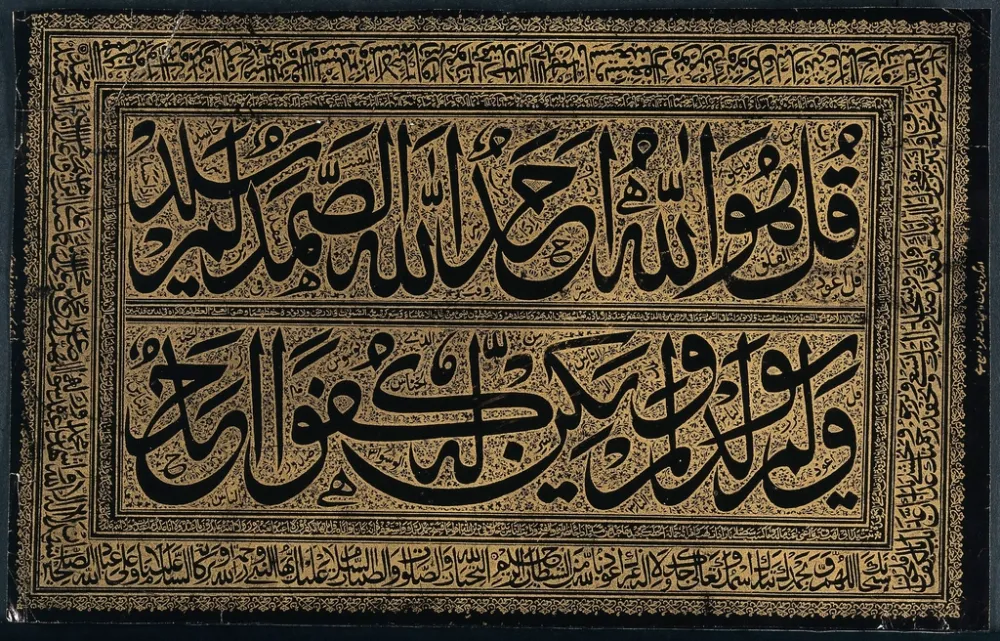
Gold Arabic calligraphy script on dark background, representing the Islamic manuscript tradition that is part of the Bengali-speaking world's written heritage

The fifth most spoken language in the world, with a script unlike any other

Bengali, also called Bangla, is spoken by more than 230 million people, making it the fifth most spoken language globally. It is the official language of Bangladesh, where more than 170 million people speak it, accounting for over 98 percent of the population. In India it is the official language of West Bengal, with around 100 million speakers. Large diaspora communities exist in the United Kingdom, particularly the Sylheti community concentrated in London and Birmingham, as well as in the United States, Italy, Saudi Arabia, and the UAE. The scale of the Bengali-speaking world means that document translation between English and Bengali covers a wide range of purposes: immigration paperwork, academic records, business contracts, and NGO development reports are all common.

The Bengali script itself is one of the more complex scripts in active use today. Unlike Latin-based scripts, it is an abugida: each consonant carries an inherent vowel sound that is modified or suppressed by diacritics attached above, below, before, or after the base character. A single rendered syllable in Bengali can involve a base consonant, a conjunct form fusing two or three consonants, and one or more attached vowel marks. The written standard for documents is consistent whether the document originates in Dhaka or Kolkata: dialectal differences in spoken Bengali do not affect the formal written register, which makes document translation straightforward in terms of register choice.

Documents people translate between English and Bengali

The Bengali-speaking population spans Bangladesh, West Bengal, and large diaspora communities in Europe, North America, and the Gulf. The document types that move between English and Bengali reflect this geography:

  • Bangladesh immigration and visa documents for applicants moving to the UK, US, or Gulf countries
  • Academic transcripts and certificates from Dhaka University, Jahangirnagar University, and other Bangladeshi institutions
  • Birth certificates and marriage certificates for Bangladeshi diaspora communities applying for residency or citizenship abroad
  • NGO and development-sector reports produced in Bangladesh for international donors and agencies
  • West Bengal state government documents, land records, and official correspondence
  • Medical reports and patient records for Bangladeshi patients receiving treatment abroad or in English-language health systems

AI-powered bangla pdf translation works well for reading, internal review, or producing a working draft of a document. When a translated Bengali document needs to be submitted to an immigration authority or government office, it typically must include a signed certification from a qualified human translator. See our 인증 번역 service for documents submitted to USCIS or other official bodies.

English to Bengali PDF translation pricing

7 일 평가판부터 시작하여 번역 요구 사항이 증가함에 따라 업그레이드하십시오.

7일 시험

가장 인기 있는 작품
오늘 2달러

재판 종료 후 월 14.99달러

  • 7일간의 완전 접근 시험
  • 시험 제한: 10페이지 또는 3,000단어
  • $0.005/단어 AI 번역
  • 120+ 언어
  • PDF, DOCX, XLSX, PPTX, IDML, TXT, JPG, PNG, CSV, JSON
  • 팀 접근 및 맞춤 용어집
  • 이메일 지원

월간

인기
월 $14.99

정가 $29.99, 현재 50% 할인

  • 월 100페이지 또는 30,000단어
  • $0.005/단어 AI 번역
  • 120+ 언어
  • 무제한 파일 저장
  • PDF, DOCX, XLSX, PPTX, IDML, TXT, JPG, PNG, CSV, JSON
  • 팀 접근 및 맞춤 용어집
  • 우선 이메일 지원
🎉 최고의 가치: $44.88/년 절약

연감

25% 절약
연간 135달러

~$11.25/월, 월 대비 25% 할인

  • 월 100페이지 또는 30,000단어
  • $0.005/단어 AI 번역
  • 120+ 언어
  • 무제한 파일 저장
  • PDF, DOCX, XLSX, PPTX, IDML, TXT, JPG, PNG, CSV, JSON
  • 팀 접근 및 맞춤 용어집
  • 우선 이메일 지원
필요한 단계

How to translate your PDF to Bengali

01

무료 계정을 만드세요

가입하기 온라인 번역 대시보드에 액세스하려면 이메일을 사용하세요.

02

PDF 파일을 업로드하세요

파일을 드래그 앤 드롭하거나 탐색해서 선택하세요. 유료 요금제에서는 최대 1GB까지 파일을 지원합니다.

03

Choose Bengali as target language

Select the original language of your PDF and set Bengali as the target language. The translator will handle Bengali script shaping and conjunct rendering automatically.

04

번역 및 다운로드

Click "Translate" and wait a few moments. Your translated PDF will be ready to download with correctly rendered Bengali script.

English to Bengali PDF translation FAQ

Will Bengali conjunct consonants render correctly in the PDF output?

Yes. Bengali has a large set of conjunct consonant forms called juktakkhors, where two or more consonants merge into a single combined glyph when no vowel separates them. DocTranslator processes Bengali text through an OpenType shaping engine that assembles these conjuncts correctly, so the output does not show broken characters.

Does Bengali use uppercase and lowercase letters?

No. Bengali script has no case distinction at all. Every character exists in a single form regardless of where it appears in a sentence. This means proper nouns, names, and the first word of a sentence are not visually distinguished by capitalisation in Bengali the way they are in English. The translation handles this correctly by following Bengali typographic conventions rather than attempting to carry over English capitalisation rules.

Which Bengali register does the translation use?

The translation outputs chalit bhasha, the modern standard register used in all current documents, news, government correspondence, and media in both Bangladesh and West Bengal. The older sadhu bhasha register is archaic and appears only in classical literature. For any document type, including academic transcripts, immigration papers, and business contracts, chalit bhasha is the correct and expected register.

Can I translate Bangladesh immigration documents from Bengali to English?

Yes. The translation pair works in both directions. Bengali-to-English is commonly used for Bangladesh visa applications, academic transcripts from Dhaka University or Jahangirnagar University, and birth and marriage certificates for diaspora communities applying for residency abroad. For official submissions to immigration authorities, a 인증 번역 reviewed and signed by a qualified human translator is typically required.

How large a Bengali PDF can I upload?

Up to 1 GB or 5,000 pages on Monthly and Annual plans. The 7-day trial for $2 covers up to 10 pages or 3,000 words, which is enough to verify that the Bengali script and conjuncts are rendering correctly in the output before committing to a full document.

Is the Bengali script related to Devanagari, and does that affect the translation?

Bengali script and Devanagari share a common origin as Brahmic scripts, but they are visually and technically distinct. The most noticeable structural difference is that Devanagari uses a continuous horizontal bar across the tops of words while Bengali letters have a curved top stroke without that joined bar. A Devanagari font cannot substitute for a Bengali font in a PDF. DocTranslator uses a dedicated Bengali font in the output so that the script renders correctly rather than falling back to an unsuitable Devanagari typeface.

Is Bengali the same as Sylheti, and will my document from a UK Bangladeshi community be understood?

Sylheti is a regional variety spoken by the large Bangladeshi community in the UK, particularly in London and Birmingham. It differs significantly from standard Bengali in vocabulary and pronunciation. However, for written documents, the standard written form of Bengali is used universally regardless of spoken dialect. A document translated into standard written Bengali will be fully understood by Sylheti speakers reading it, just as a British English reader understands standard written English regardless of their regional accent.

Translate your PDF to Bengali today

DocTranslator converts PDFs between English and Bengali online, correctly rendering Bengali script conjuncts and vowel diacritics so the output reads as proper Bangla rather than broken fragments. Files up to 1 GB supported.

우리의 파트너들

Accenture
Bloomberg
Citrix
P&G
SAP