AI搭載・120+言語

Translate PDF to Bengali

Convert PDFs to and from Bengali online. Bengali script conjuncts and vowel diacritics are rendered correctly in the output, not broken into fragments. Files up to 1 GB.

最大ファイルサイズ 1 GB 元の書式設定を維持します
無料サインアップ

翻訳するドキュメントをアップロードまたはドロップします

最大ファイルサイズ 1 GB

。PDF 。DOCX 。PPTX 。XLSX 。TXT 。JPG 。パプアニューギニア 。IDML 。EPUB 。HTML
アフリカーンス語(アフリカーンス語)
シュキップ(アルバニア語)
አማርኛ(アムハラ語)
العربية(アラビア語)
Հայերեն(アルメニア語)
Azərbaycan ディリ(アゼルバイジャン)
エウスカラ(バスク)
Беларуская(ベラルーシ語)
বাংলা(ベンガル語)
ボサンスキー(ボスニア語)
Български(ブルガリア語)
မြန်မာဘာသာ(ビルマ語)
カタルーニャ(カタルーニャ語)
セブアノ(セブアノ)
チチェワ(チチェワ)
中文简体(中国語簡体字)
中文繁體(中国の伝統)
コルス(コルシカ島)
フルヴァツキー(クロアチア語)
チェシュティナ(チェコ語)
ダンスク(デンマーク語)
オランダ(オランダ語)
英語(英語)
エスペラント語(エスペラント)
エスティ(エストニア語)
スオミ(フィンランド語)
フランセ(フランス語)
フリスク(フリジア語)
ガレゴ(ガリシア語)
ქართული(ジョージア語)
ドイツ語(ドイツ語)
Ελληνικά(ギリシャ語)
ગુજરાતી(グジャラート語)
クレイョル アイシェン(ハイチ人)
ハウサ語(ハウサ語)
オレロ ハワイ(ハワイ語)
עברית(ヘブライ語)
हिंदी(ヒンディー語)
フムーブ(モン族)
マジャル語(ハンガリー語)
イスレンスカ(アイスランド語)
イボ語(Igbo)
インドネシア語(インドネシア語)
ゲイルゲ(アイルランド語)
イタリアーノ(イタリア語)
日本語(日本語)
バサ ジャワ(ジャワ人)
ಕನ್ನಡ(カンナダ語)
Қазақ тілі(カザフスタン)
ខ្មែរ(クメール語)
イキニャルワンダ(キニャルワンダ)
한국어(韓国語)
クルディ(クルド語)
Кыргызча(キルギス)
ລາວ(ラオス人)
ラティーナ(ラテン語)
ラトヴィエシュ(ラトビア語)
リエトゥヴィウ(リトアニア語)
レッツェビュルゲシュ(ルクセンブルク)
Македонски(マケドニア語)
マダガスカル語(マダガスカル語)
Bahasa Melayu(マレー語)
മലയാളം(マラヤーラム語)
マルティ(マルタ語)
テ・レオ・マオリ(マオリ語)
मराठी(マラーティー語)
Монгол хэл(モンゴル語)
नेपाली(ネパール語)
ノルスク(ノルウェー語)
ଓଡ଼ିଆ(オディア)
فارسی(ペルシャ語)
ポルスキ(ポーランド語)
ポルトガル語(ポルトガル語)
ਪੰਜਾਬੀ(パンジャブ語)
ロマナ(ルーマニア語)
Русский(ロシア語)
ガガナ サモア(サモア語)
ガイドリグ(スコットランド語)
Српски(セルビア語)
セソト(セソト)
ショナ(ショナ)
سنڌي(シンディー語)
සිංහල(シンハラ語)
スロベニア語(スロバキア語)
スロベニア語(スロベニア語)
スーマリ(ソマリア)
エスパニョール(スペイン語)
バサ スンダ(スンダ語)
スワヒリ語(スワヒリ語)
スヴェンスカ(スウェーデン語)
タガログ語(タガログ語)
Тоҷикӣ(タジク語)
தமிழ்(タミル語)
Татарча(タタール語)
తెలుగు(テルグ語)
ไทย(タイ語)
トルコ語(トルコ語)
トルコ人(トルクメン人)
Українська(ウクライナ語)
اردو(ウルドゥー語)
ئۇيغۇرچە(ウイグル)
オズベクチャ(ウズベク語)
Tiếng Việt(ベトナム語)
シムラーグ(ウェールズ語)
イシコサ語(コサ語)
ייִדיש(イディッシュ語)
ヨルバ語(ヨルバ語)
イシズールー(ズールー語)
アフリカーンス語(アフリカーンス語)
シュキップ(アルバニア語)
አማርኛ(アムハラ語)
العربية(アラビア語)
Հայերեն(アルメニア語)
Azərbaycan ディリ(アゼルバイジャン)
エウスカラ(バスク)
Беларуская(ベラルーシ語)
বাংলা(ベンガル語)
ボサンスキー(ボスニア語)
Български(ブルガリア語)
မြန်မာဘာသာ(ビルマ語)
カタルーニャ(カタルーニャ語)
セブアノ(セブアノ)
チチェワ(チチェワ)
中文简体(中国語簡体字)
中文繁體(中国の伝統)
コルス(コルシカ島)
フルヴァツキー(クロアチア語)
チェシュティナ(チェコ語)
ダンスク(デンマーク語)
オランダ(オランダ語)
英語(英語)
エスペラント語(エスペラント)
エスティ(エストニア語)
スオミ(フィンランド語)
フランセ(フランス語)
フリスク(フリジア語)
ガレゴ(ガリシア語)
ქართული(ジョージア語)
ドイツ語(ドイツ語)
Ελληνικά(ギリシャ語)
ગુજરાતી(グジャラート語)
クレイョル アイシェン(ハイチ人)
ハウサ語(ハウサ語)
オレロ ハワイ(ハワイ語)
עברית(ヘブライ語)
हिंदी(ヒンディー語)
フムーブ(モン族)
マジャル語(ハンガリー語)
イスレンスカ(アイスランド語)
イボ語(Igbo)
インドネシア語(インドネシア語)
ゲイルゲ(アイルランド語)
イタリアーノ(イタリア語)
日本語(日本語)
バサ ジャワ(ジャワ人)
ಕನ್ನಡ(カンナダ語)
Қазақ тілі(カザフスタン)
ខ្មែរ(クメール語)
イキニャルワンダ(キニャルワンダ)
한국어(韓国語)
クルディ(クルド語)
Кыргызча(キルギス)
ລາວ(ラオス人)
ラティーナ(ラテン語)
ラトヴィエシュ(ラトビア語)
リエトゥヴィウ(リトアニア語)
レッツェビュルゲシュ(ルクセンブルク)
Македонски(マケドニア語)
マダガスカル語(マダガスカル語)
Bahasa Melayu(マレー語)
മലയാളം(マラヤーラム語)
マルティ(マルタ語)
テ・レオ・マオリ(マオリ語)
मराठी(マラーティー語)
Монгол хэл(モンゴル語)
नेपाली(ネパール語)
ノルスク(ノルウェー語)
ଓଡ଼ିଆ(オディア)
فارسی(ペルシャ語)
ポルスキ(ポーランド語)
ポルトガル語(ポルトガル語)
ਪੰਜਾਬੀ(パンジャブ語)
ロマナ(ルーマニア語)
Русский(ロシア語)
ガガナ サモア(サモア語)
ガイドリグ(スコットランド語)
Српски(セルビア語)
セソト(セソト)
ショナ(ショナ)
سنڌي(シンディー語)
සිංහල(シンハラ語)
スロベニア語(スロバキア語)
スロベニア語(スロベニア語)
スーマリ(ソマリア)
エスパニョール(スペイン語)
バサ スンダ(スンダ語)
スワヒリ語(スワヒリ語)
スヴェンスカ(スウェーデン語)
タガログ語(タガログ語)
Тоҷикӣ(タジク語)
தமிழ்(タミル語)
Татарча(タタール語)
తెలుగు(テルグ語)
ไทย(タイ語)
トルコ語(トルコ語)
トルコ人(トルクメン人)
Українська(ウクライナ語)
اردو(ウルドゥー語)
ئۇيغۇرچە(ウイグル)
オズベクチャ(ウズベク語)
Tiếng Việt(ベトナム語)
シムラーグ(ウェールズ語)
イシコサ語(コサ語)
ייִדיש(イディッシュ語)
ヨルバ語(ヨルバ語)
イシズールー(ズールー語)
アラビア語 ポルトガル語 ロシア イタリア語 韓国語 オランダ語 ポーランド語 トルコ語 スウェーデン語 英語 スペイン語 フランス語 ドイツ語 中国語 日本語 ヒンディー語 ベンガル語 ベトナム人 タイ語 ギリシャ語 ヘブライ語 アラビア語 ポルトガル語 ロシア イタリア語 韓国語 オランダ語 ポーランド語 トルコ語 スウェーデン語 英語 スペイン語 フランス語 ドイツ語 中国語 日本語 ヒンディー語 ベンガル語 ベトナム人 タイ語 ギリシャ語 ヘブライ語

What happens when you translate a PDF into Bengali

Bengali uses the Bengali script, a Brahmic abugida that is closely related to Devanagari but visually distinct. One of the most immediately noticeable differences is the absence of an unbroken horizontal bar running through the tops of words. Devanagari connects letters with a continuous matra line; Bengali letters instead have a characteristic curved top stroke that does not join into a single bar across a word. This difference matters for PDF rendering because a font designed for Devanagari cannot substitute for Bengali: the letterforms are different, and using the wrong font produces illegible output. DocTranslator embeds a Bengali-specific font in the output PDF so the script renders as it should.

The more technically demanding aspect of a Bengali PDF translation is the handling of conjunct consonants, known as juktakkhors. Bengali has more than 50 vowel diacritics and a large set of consonant cluster forms. When two or more consonants appear together without an intervening vowel, they merge into a single combined glyph rather than sitting side by side. The combination of the consonants "k" and "sha" written as the ksha conjunct is one example: it is a single glyph, not two characters placed next to each other. A PDF renderer that does not support OpenType shaping rules for Bengali will display these clusters as broken fragments instead of the correct combined form. DocTranslator processes Bengali text through a shaping engine that handles these conjuncts properly.

Bengali is written left to right, so the page layout of an English PDF does not need to mirror the way it does for Arabic or Hebrew. However, line breaks require care because Bengali words can carry several attached vowel diacritics that must stay with the base consonant they modify. Bengali also has no uppercase or lowercase distinction: all characters exist in a single case. This affects how proper nouns and sentence beginnings are handled in translation. The translated output uses chalit bhasha, the modern standard register used in all current documents, media, and official correspondence in both Bangladesh and West Bengal. The older sadhu bhasha register is archaic and is not used in any contemporary document type.

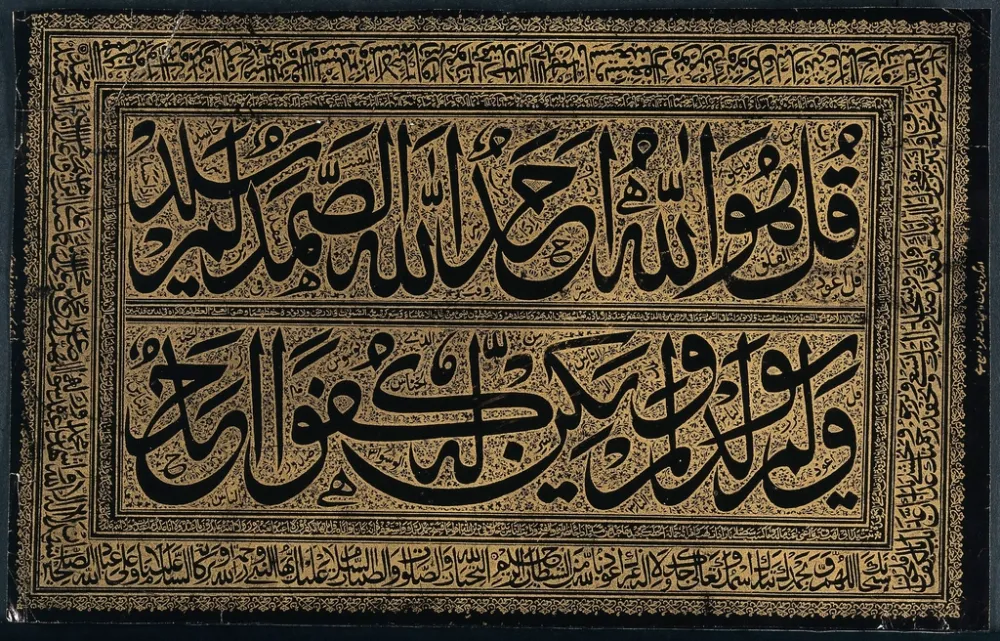
Gold Arabic calligraphy script on dark background, representing the Islamic manuscript tradition that is part of the Bengali-speaking world's written heritage

The fifth most spoken language in the world, with a script unlike any other

Bengali, also called Bangla, is spoken by more than 230 million people, making it the fifth most spoken language globally. It is the official language of Bangladesh, where more than 170 million people speak it, accounting for over 98 percent of the population. In India it is the official language of West Bengal, with around 100 million speakers. Large diaspora communities exist in the United Kingdom, particularly the Sylheti community concentrated in London and Birmingham, as well as in the United States, Italy, Saudi Arabia, and the UAE. The scale of the Bengali-speaking world means that document translation between English and Bengali covers a wide range of purposes: immigration paperwork, academic records, business contracts, and NGO development reports are all common.

The Bengali script itself is one of the more complex scripts in active use today. Unlike Latin-based scripts, it is an abugida: each consonant carries an inherent vowel sound that is modified or suppressed by diacritics attached above, below, before, or after the base character. A single rendered syllable in Bengali can involve a base consonant, a conjunct form fusing two or three consonants, and one or more attached vowel marks. The written standard for documents is consistent whether the document originates in Dhaka or Kolkata: dialectal differences in spoken Bengali do not affect the formal written register, which makes document translation straightforward in terms of register choice.

Documents people translate between English and Bengali

The Bengali-speaking population spans Bangladesh, West Bengal, and large diaspora communities in Europe, North America, and the Gulf. The document types that move between English and Bengali reflect this geography:

  • Bangladesh immigration and visa documents for applicants moving to the UK, US, or Gulf countries
  • Academic transcripts and certificates from Dhaka University, Jahangirnagar University, and other Bangladeshi institutions
  • Birth certificates and marriage certificates for Bangladeshi diaspora communities applying for residency or citizenship abroad
  • NGO and development-sector reports produced in Bangladesh for international donors and agencies
  • West Bengal state government documents, land records, and official correspondence
  • Medical reports and patient records for Bangladeshi patients receiving treatment abroad or in English-language health systems

AI-powered bangla pdf translation works well for reading, internal review, or producing a working draft of a document. When a translated Bengali document needs to be submitted to an immigration authority or government office, it typically must include a signed certification from a qualified human translator. See our 認定翻訳 service for documents submitted to USCIS or other official bodies.

English to Bengali PDF translation pricing

7 日間のトライアルから始めて、翻訳のニーズが高まるにつれてアップグレードしてください。

7日間裁判

最も人気のある作品
今日2ドル

その後、裁判終了後は月額14.99ドルとなります

  • 7日間のフルアクセス試験
  • 試用制限:10ページまたは3,000語
  • $0。005/ワード AI 翻訳
  • 120+言語
  • PDF、DOCX、XLSX、PPTX、IDML、TXT、JPG、PNG、CSV、JSON
  • チームアクセスとカスタム用語集
  • 電子メールサポート

月刊

人気のある
月額14.99ドル

通常価格 $29。99、現在 50% オフ

  • 月100ページまたは30,000語
  • $0。005/ワード AI 翻訳
  • 120+言語
  • 無制限のファイルストレージ
  • PDF、DOCX、XLSX、PPTX、IDML、TXT、JPG、PNG、CSV、JSON
  • チームアクセスとカスタム用語集
  • 優先メールサポート
🎉 最高の価値:年間44。88ドル節約

年間

25%節約
年間135ドル

~$11。25/月、月額と比較して 25% 割引

  • 月100ページまたは30,000語
  • $0。005/ワード AI 翻訳
  • 120+言語
  • 無制限のファイルストレージ
  • PDF、DOCX、XLSX、PPTX、IDML、TXT、JPG、PNG、CSV、JSON
  • チームアクセスとカスタム用語集
  • 優先メールサポート
必要な手順

How to translate your PDF to Bengali

01

無料アカウントを作成する

サインアップ オンライン翻訳ダッシュボードにアクセスするには、電子メールでお問い合わせください。

02

PDFファイルをアップロードする

ファイルをドラッグ&ドロップするか、ブラウズして選択してください。有料プランでは最大1GBまでのファイルに対応しています。

03

Choose Bengali as target language

Select the original language of your PDF and set Bengali as the target language. The translator will handle Bengali script shaping and conjunct rendering automatically.

04

翻訳してダウンロード

Click "Translate" and wait a few moments. Your translated PDF will be ready to download with correctly rendered Bengali script.

English to Bengali PDF translation FAQ

Will Bengali conjunct consonants render correctly in the PDF output?

Yes. Bengali has a large set of conjunct consonant forms called juktakkhors, where two or more consonants merge into a single combined glyph when no vowel separates them. DocTranslator processes Bengali text through an OpenType shaping engine that assembles these conjuncts correctly, so the output does not show broken characters.

Does Bengali use uppercase and lowercase letters?

No. Bengali script has no case distinction at all. Every character exists in a single form regardless of where it appears in a sentence. This means proper nouns, names, and the first word of a sentence are not visually distinguished by capitalisation in Bengali the way they are in English. The translation handles this correctly by following Bengali typographic conventions rather than attempting to carry over English capitalisation rules.

Which Bengali register does the translation use?

The translation outputs chalit bhasha, the modern standard register used in all current documents, news, government correspondence, and media in both Bangladesh and West Bengal. The older sadhu bhasha register is archaic and appears only in classical literature. For any document type, including academic transcripts, immigration papers, and business contracts, chalit bhasha is the correct and expected register.

Can I translate Bangladesh immigration documents from Bengali to English?

Yes. The translation pair works in both directions. Bengali-to-English is commonly used for Bangladesh visa applications, academic transcripts from Dhaka University or Jahangirnagar University, and birth and marriage certificates for diaspora communities applying for residency abroad. For official submissions to immigration authorities, a 認定翻訳 reviewed and signed by a qualified human translator is typically required.

How large a Bengali PDF can I upload?

Up to 1 GB or 5,000 pages on Monthly and Annual plans. The 7-day trial for $2 covers up to 10 pages or 3,000 words, which is enough to verify that the Bengali script and conjuncts are rendering correctly in the output before committing to a full document.

Is the Bengali script related to Devanagari, and does that affect the translation?

Bengali script and Devanagari share a common origin as Brahmic scripts, but they are visually and technically distinct. The most noticeable structural difference is that Devanagari uses a continuous horizontal bar across the tops of words while Bengali letters have a curved top stroke without that joined bar. A Devanagari font cannot substitute for a Bengali font in a PDF. DocTranslator uses a dedicated Bengali font in the output so that the script renders correctly rather than falling back to an unsuitable Devanagari typeface.

Is Bengali the same as Sylheti, and will my document from a UK Bangladeshi community be understood?

Sylheti is a regional variety spoken by the large Bangladeshi community in the UK, particularly in London and Birmingham. It differs significantly from standard Bengali in vocabulary and pronunciation. However, for written documents, the standard written form of Bengali is used universally regardless of spoken dialect. A document translated into standard written Bengali will be fully understood by Sylheti speakers reading it, just as a British English reader understands standard written English regardless of their regional accent.

Translate your PDF to Bengali today

DocTranslator converts PDFs between English and Bengali online, correctly rendering Bengali script conjuncts and vowel diacritics so the output reads as proper Bangla rather than broken fragments. Files up to 1 GB supported.

当社のパートナー

Accenture
Bloomberg
Citrix
P&G
SAP