AI搭載・120+言語

e-Learning Translation Services

World's Best AI Powered Translator At Your Service

最大ファイルサイズ 1 GB オリジナルのフォーマットを保持
無料サインアップ

翻訳のために文書をアップロードまたはドロップする

最大ファイルサイズ 1 GB

.PDF .DOCX .PPTX .XLSX .TXT .JPG .PNG .IDML .EPUB .HTML
アフリカーンス語(アフリカーンス語)
シュキップ(アルバニア語)
አማርኛ(アムハラ語)
العربية(アラビア語)
Հայերեն(アルメニア語)
アゼルバイジャン・ディリ(アゼルバイジャン)
エウスカラ(バスク語)
ベラルスカヤ(ベラルーシ語)
বাংলা(ベンガル語)
ボサンスキ(ボスニア語)
Български(ブルガリア語)
မြန်မာဘာသာ(ビルマ語)
カタルーニャ語(カタルーニャ語)
セブアノ語(セブアノ語)
チチェワ(チチェワ)
中文 简体(Chinese Simplified)
中文 繁體(中国語繁体)
コルス(コルシカ)
フルヴァツキ(クロアチア語)
チェシュティナ(チェコ語)
ダンスク(デンマーク語)
オランダ(オランダ語)
英語(英語)
エスペラント(エスペラント)
エスティ(エストニア語)
スオミ(フィンランド語)
フランス語
フリスク(フリースラント語)
ガレゴ(ガリシア語)
ქართული(ジョージア語)
ドイツ語(ドイツ語)
Ελληνικά(ギリシャ語)
ગુજરાતી(グジャラート語)
クレオール・アイシエン(ハイチ語)
ハウサ(ハウサ)
オレロ・ハワイ(ハワイ語)
עברית(ヘブライ語)
हिंदी(ヒンディー語)
フムーブ(モン族)
マジャール語(ハンガリー語)
アイスレンスカ(アイスランド語)
イボ族(イボ族)
インドネシア語(インドネシア語)
ゲール語(アイルランド語)
イタリアーノ(イタリア語)
日本語(日本語)
バサ・ジャワ(ジャワ語)
ಕನ್ನಡ(カンナダ語)
Қазақ тілі(カザフ語)
ខ្មែរ(クメール語)
イキニヤルワンダ(キニャルワンダ)
韓国어 (韓国語)
クルディ(クルド語)
キルギス語
ລາວ(ラオス語)
ラティーナ(ラテン語)
ラトヴィエシュ(ラトビア語)
リトゥヴィー(リトアニア語)
Lëtzebuergesch (Luxemb)
マケデンスキ(マケドニア語)
マダガスカル(マダガスカル語)
マレー語(マレー語)
മലയാളം(マラヤーラム語)
マルティ(マルタ語)
テ・レオ・マオリ(マオリ語)
मराठी(マラーティー語)
モンゴル語 хэл
नेपाली(ネパール語)
ノルスク(ノルウェー語)
ଓଡ଼ିଆ(オリヤ語)
فارسی(ペルシア語)
Polski(ポーランド語)
ポルトガル語
ਪੰਜਾਬੀ(パンジャブ語)
ロマナ(ルーマニア語)
ロシア語
ガガナ・サモア(サモア語)
ガードリグ(スコットランド)
Српски(セルビア語)
セソト語(セソト語)
ショナ語(ショナ語)
سنڌي(シンド語)
සිංහල(シンハラ語)
スロヴェンチナ(スロバキア語)
スロヴェンシュチナ(スロベニア語)
スーマーリ(ソマリ語)
スペイン語(スペイン語)
バサ・スンダ(スンダ語)
スワヒリ語(スワヒリ語)
スヴェンスカ(スウェーデン語)
タガログ語(タガログ語)
トヒキカ(タジク語)
தமிழ்(タミル語)
タタルチャ(タタール語)
తెలుగు(テルグ語)
ไทย(タイ語)
トゥルクチェ(トルコ語)
トルクメン(トルクメン)
Українська(ウクライナ語)
اردو(ウルドゥー語)
ئۇيغۇرچە(ウイグル語)
オズベクチャ(ウズベク語)
ティエン・ビエット(ベトナム語)
カムレイグ(ウェールズ語)
イシコーサ(コーサ語)
ייִדיש(イディッシュ語)
ヨルバ(ヨルバ語)
isiZulu(ズールー語)
アフリカーンス語(アフリカーンス語)
シュキップ(アルバニア語)
አማርኛ(アムハラ語)
العربية(アラビア語)
Հայերեն(アルメニア語)
アゼルバイジャン・ディリ(アゼルバイジャン)
エウスカラ(バスク語)
ベラルスカヤ(ベラルーシ語)
বাংলা(ベンガル語)
ボサンスキ(ボスニア語)
Български(ブルガリア語)
မြန်မာဘာသာ(ビルマ語)
カタルーニャ語(カタルーニャ語)
セブアノ語(セブアノ語)
チチェワ(チチェワ)
中文 简体(Chinese Simplified)
中文 繁體(中国語繁体)
コルス(コルシカ)
フルヴァツキ(クロアチア語)
チェシュティナ(チェコ語)
ダンスク(デンマーク語)
オランダ(オランダ語)
英語(英語)
エスペラント(エスペラント)
エスティ(エストニア語)
スオミ(フィンランド語)
フランス語
フリスク(フリースラント語)
ガレゴ(ガリシア語)
ქართული(ジョージア語)
ドイツ語(ドイツ語)
Ελληνικά(ギリシャ語)
ગુજરાતી(グジャラート語)
クレオール・アイシエン(ハイチ語)
ハウサ(ハウサ)
オレロ・ハワイ(ハワイ語)
עברית(ヘブライ語)
हिंदी(ヒンディー語)
フムーブ(モン族)
マジャール語(ハンガリー語)
アイスレンスカ(アイスランド語)
イボ族(イボ族)
インドネシア語(インドネシア語)
ゲール語(アイルランド語)
イタリアーノ(イタリア語)
日本語(日本語)
バサ・ジャワ(ジャワ語)
ಕನ್ನಡ(カンナダ語)
Қазақ тілі(カザフ語)
ខ្មែរ(クメール語)
イキニヤルワンダ(キニャルワンダ)
韓国어 (韓国語)
クルディ(クルド語)
キルギス語
ລາວ(ラオス語)
ラティーナ(ラテン語)
ラトヴィエシュ(ラトビア語)
リトゥヴィー(リトアニア語)
Lëtzebuergesch (Luxemb)
マケデンスキ(マケドニア語)
マダガスカル(マダガスカル語)
マレー語(マレー語)
മലയാളം(マラヤーラム語)
マルティ(マルタ語)
テ・レオ・マオリ(マオリ語)
मराठी(マラーティー語)
モンゴル語 хэл
नेपाली(ネパール語)
ノルスク(ノルウェー語)
ଓଡ଼ିଆ(オリヤ語)
فارسی(ペルシア語)
Polski(ポーランド語)
ポルトガル語
ਪੰਜਾਬੀ(パンジャブ語)
ロマナ(ルーマニア語)
ロシア語
ガガナ・サモア(サモア語)
ガードリグ(スコットランド)
Српски(セルビア語)
セソト語(セソト語)
ショナ語(ショナ語)
سنڌي(シンド語)
සිංහල(シンハラ語)
スロヴェンチナ(スロバキア語)
スロヴェンシュチナ(スロベニア語)
スーマーリ(ソマリ語)
スペイン語(スペイン語)
バサ・スンダ(スンダ語)
スワヒリ語(スワヒリ語)
スヴェンスカ(スウェーデン語)
タガログ語(タガログ語)
トヒキカ(タジク語)
தமிழ்(タミル語)
タタルチャ(タタール語)
తెలుగు(テルグ語)
ไทย(タイ語)
トゥルクチェ(トルコ語)
トルクメン(トルクメン)
Українська(ウクライナ語)
اردو(ウルドゥー語)
ئۇيغۇرچە(ウイグル語)
オズベクチャ(ウズベク語)
ティエン・ビエット(ベトナム語)
カムレイグ(ウェールズ語)
イシコーサ(コーサ語)
ייִדיש(イディッシュ語)
ヨルバ(ヨルバ語)
isiZulu(ズールー語)
アラビア語 ポルトガル語 ロシア語 イタリア語 韓国 オランダ語 ポーリッシュ トルコ語 スウェーデン語 英語 スペイン語 フランス語 ドイツ語 中国語 日本語 ヒンディー語 ベンガル語 ベトナム語 タイ ギリシャ語 ヘブライ語 アラビア語 ポルトガル語 ロシア語 イタリア語 韓国 オランダ語 ポーリッシュ トルコ語 スウェーデン語 英語 スペイン語 フランス語 ドイツ語 中国語 日本語 ヒンディー語 ベンガル語 ベトナム語 タイ ギリシャ語 ヘブライ語
e-Learning document translation with DocTranslator

e-Learning Documents

In the e-learning industry, there are many types of documents that may need to be translated into other languages. These can include:

  • Course materials, such as lesson plans, lectures, and assignments
  • Online quizzes and tests
  • User guides and manuals for learning management systems (LMS) or other e-learning software
  • Marketing materials, such as website content and brochures
  • E-mails and other communication with students or other stakeholders
  • Accreditation documents, such as transcripts and diplomas

It is important that all of these documents are translated accurately and effectively in order to provide a seamless learning experience for students who speak different languages.

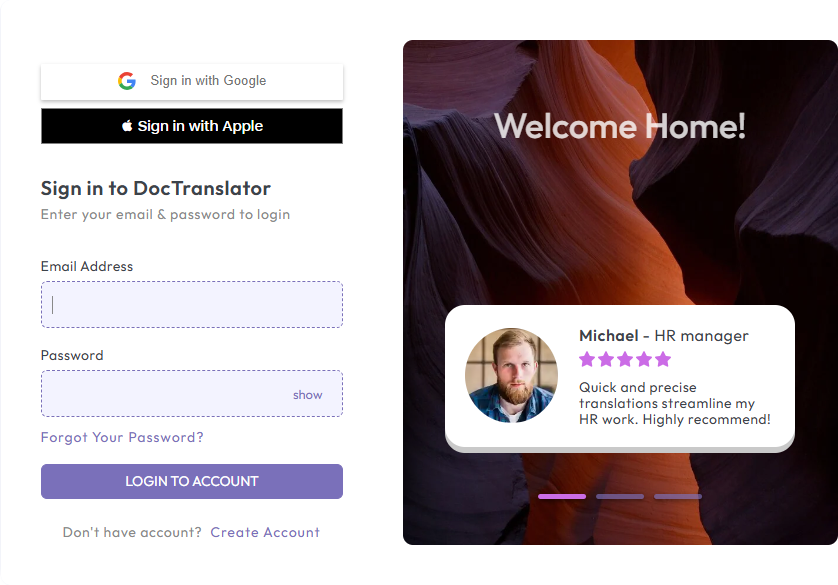
DocTranslator dashboard for translating e-learning documents

DocTranslator に会いましょう!

DocTranslator is specifically designed to by-pass the desktop firewalls and platform dependability. Web-first online translation service for documents is developed to work in any modern web-browser whether it is Google Chrome, Mozilla Firefox or Apple Safari. It even works in Internet Explorer (god bless ;-)).

DocTranslator には次の利点があります。

  • 常にオンになっています。デスクトップでもモバイルでも、どのブラウザーからでもログインできます (アプリは必要ありません)。
  • It supports MS Word (.docx), MS Excel (.xlsx) and Adobe PDF (.pdf)
  • 1,000 ワード未満のドキュメントには無料利用枠があります (ただし、PDF はありません!)。
  • It is priced super competitively for a machine translator: $0.005/word. That's 200% cheaper than industry average.
  • 平均所要時間はわずか数分です。それを数日間の人間の出力と比較してください!
e-Learning courses delivered electronically over the internet

What is eLearning?

E-learning refers to any type of learning that is delivered electronically, typically over the internet. It can be used in a variety of industries, including education, healthcare, government, and business. In the education industry, e-learning is used to deliver educational content to students remotely, either in place of or in addition to traditional classroom-based instruction. In other industries, e-learning may be used to train employees or provide professional development opportunities. E-learning can take many forms, such as online courses, webinars, and virtual classrooms.

What is the difference between e-learning and online learning?

E-learning and online learning are often used interchangeably to refer to any type of learning that is delivered electronically, typically over the internet. However, some people may use the term "e-learning" to refer specifically to self-paced, individualized learning, while "online learning" may be used to refer to more interactive, real-time learning that takes place in a virtual classroom or other online environment.

E-learning can take many forms, including online courses, webinars, and video lectures, and can be self-paced or structured with specific deadlines. Online learning, on the other hand, typically involves real-time interaction between the instructor and students and may involve activities such as virtual discussions, group projects, and live lectures.

Overall, the main difference between e-learning and online learning is the level of interaction and real-time involvement. E-learning is often more self-directed and can be completed at the learner's own pace, while online learning involves more direct instruction and interaction with the instructor and other students.

Growth of the global e-learning industry market

How big is the e-learning industry?

The e-learning industry has grown significantly in recent years and is expected to continue to do so. According to a report by the market research firm Global Industry Analysts, the global e-learning market was valued at $190 billion in 2020 and is expected to reach $375 billion by 2026, growing at a compound annual growth rate (CAGR) of around 15%. The report cites factors such as the increasing adoption of technology in education, the rise of remote work and online learning due to the COVID-19 pandemic, and the growing need for professional development as driving the growth of the e-learning industry.

Different types of e-learning including virtual classrooms and gamification

What are 3 types of eLearning?

E-learning comes in various forms, and the type chosen often depends on the subject matter, learning goals, and learner preferences. Some common types of e-learning include:

  • Self-paced e-learning: Learners work through course material at their own pace, which can include pre-recorded lectures, readings, and activities.
  • Virtual classrooms: Instructors and learners interact in real-time using video conferencing software for live lectures, discussions, and collaborative activities.
  • Gamification: Game design elements, such as points, badges, and leaderboards, are used to enhance engagement and interactivity in e-learning courses.

These are just a few examples of the many types of e-learning available, including blended learning, mobile learning, and microlearning.

e-Learning Translation Pricing

$2 の 7 日間のトライアルから始めて、次に $14。99/月、または年間請求でさらに節約してください

7日間裁判

最も人気のある作品
今日2ドル

その後、裁判終了後は月額14.99ドルとなります

  • 7日間のフルアクセス試験
  • 試用制限:10ページまたは3,000語
  • $0。005/ワード AI 翻訳
  • 120+言語
  • PDF、DOCX、XLSX、PPTX、IDML、TXT、JPG、PNG、CSV、JSON
  • チームアクセスとカスタム用語集
  • メールサポート

月刊

人気者
月額14.99ドル

通常価格 $29。99、現在 50% オフ

  • 月100ページまたは30,000語
  • $0。005/ワード AI 翻訳
  • 120+言語
  • 無制限のファイルストレージ
  • PDF、DOCX、XLSX、PPTX、IDML、TXT、JPG、PNG、CSV、JSON
  • チームアクセスとカスタム用語集
  • 優先メールサポート
🎉 最高の価値:年間44。88ドル節約

年次

25%節約
年間135ドル

~$11。25/月、月額と比較して 25% 割引

  • 月100ページまたは30,000語
  • $0。005/ワード AI 翻訳
  • 120+言語
  • 無制限のファイルストレージ
  • PDF、DOCX、XLSX、PPTX、IDML、TXT、JPG、PNG、CSV、JSON
  • チームアクセスとカスタム用語集
  • 優先メールサポート
必要な手順

How to translate your document?

01

Register at DocTranslator.com

Create your free account to get started with e-learning document translation.

02

Verify your email address

Confirm your email to activate your DocTranslator account.

03

ドキュメントをアップロードする

Drag and drop your course materials, quizzes, manuals, or other e-learning files.

04

Select original and target languages

Choose the source language and the language you want your document translated into.

05

Translate!

Click translate and download your finished document in minutes.

e-Learning Translation Made Easy

DocTranslator delivers fast, accurate AI-powered translation for course materials, quizzes, LMS manuals, and accreditation documents. Provide a seamless learning experience for students who speak different languages — start translating today.

当社のパートナー

Accenture
Bloomberg
Citrix
P&G
SAP