人工智能驱动 · 120+ 种语言

将 PDF 翻译成亚美尼亚语

Convert PDFs to Armenian with the full 39-letter Mashtots alphabet rendered correctly. Eastern and Western dialect registers both supported. Original layout and formatting are preserved. Files up to 1 GB.

最大文件大小 1 GB 保留原格式
免费注册

上传或拖放要翻译的文档

最大文件大小 1 GB

.PDF .DOCX .PPTX .XLSX 。TXT .JPG .PNG .IDML .EPUB .HTML
南非语(Afrikaans)
阿尔巴尼亚语
阿姆哈拉语
阿拉伯
亚美尼亚
阿塞拜疆语(阿塞拜疆)
巴斯克
白俄罗斯
孟加拉
波斯尼亚语(波斯尼亚语)
保加利亚语
缅甸
加泰罗尼亚语
宿务语(Cebuano)
英语(英语)
中文 简体 (Chinese Simplified)
中文繁体(Chinese Traditional)
科西嘉人(Corsican)
克罗地亚语
捷克语(捷克)
丹麦语
荷兰语(荷兰语)
英语(英语)
世界语(Esperanto)
爱沙尼亚(爱沙尼亚语)
芬兰(芬兰语)
法语
弗里西亚人(弗里西亚人)
加利西亚语
格鲁吉亚
德语
希腊语
古吉拉特语
海地克里奥尔语(海地语)
豪萨语(Hausa)
夏威夷
希伯来语
印地语
苗族(Hmong)
匈牙利
冰岛语
伊博语(伊博)
印度尼西亚
爱尔兰语(爱尔兰语)
意大利语(意大利语)
日本人
爪哇语
卡纳达语
哈萨克语(哈萨克语)
高棉语
基尼亚卢旺达语(基尼亚卢旺达语)
韩语(Koean)
库尔德语(Kurdish)
吉尔吉斯语(Kyrgyz)
老挝
拉丁裔
拉脱维亚语(Latvian)
立陶宛语
卢森堡语(卢森堡)
马其顿
马达加斯加语(Malagasy)
马来语(Malay)
马拉雅拉姆语
马耳他语
毛利语(Maori)
马拉地语
蒙古语(蒙古语)
尼泊尔语
挪威
奥里亚语(Odia)
波斯语
抛光
葡萄牙语
旁遮普语
罗马尼亚语
俄语
萨摩亚语(萨摩亚语)
盖尔语(苏格兰语)
塞尔维亚语(塞尔维亚语)
塞索托语(Sesotho)
绍纳语(英语)
信德语
僧伽罗语
斯洛伐克语
斯洛文尼亚语
索马里语(索马里人)
Español(西班牙语)
巽他语(巽他族语)
斯瓦希里语(Swahili)
瑞典
他加禄语(Tagalog)
塔吉克语(Tajik)
泰米尔语(Tamil)
鞑靼
泰卢固语
泰国
土耳其
土库曼人(土库曼语)
乌克兰
乌尔都语
维吾尔族(维吾尔语)
乌兹别克语(Uzbek)
越南语
威尔士语(威尔士语)
科萨语(科萨语)
意第绪语
约鲁巴语(约鲁巴语)
祖鲁语(祖鲁)
南非语(Afrikaans)
阿尔巴尼亚语
阿姆哈拉语
阿拉伯
亚美尼亚
阿塞拜疆语(阿塞拜疆)
巴斯克
白俄罗斯
孟加拉
波斯尼亚语(波斯尼亚语)
保加利亚语
缅甸
加泰罗尼亚语
宿务语(Cebuano)
英语(英语)
中文 简体 (Chinese Simplified)
中文繁体(Chinese Traditional)
科西嘉人(Corsican)
克罗地亚语
捷克语(捷克)
丹麦语
荷兰语(荷兰语)
英语(英语)
世界语(Esperanto)
爱沙尼亚(爱沙尼亚语)
芬兰(芬兰语)
法语
弗里西亚人(弗里西亚人)
加利西亚语
格鲁吉亚
德语
希腊语
古吉拉特语
海地克里奥尔语(海地语)
豪萨语(Hausa)
夏威夷
希伯来语
印地语
苗族(Hmong)
匈牙利
冰岛语
伊博语(伊博)
印度尼西亚
爱尔兰语(爱尔兰语)
意大利语(意大利语)
日本人
爪哇语
卡纳达语
哈萨克语(哈萨克语)
高棉语
基尼亚卢旺达语(基尼亚卢旺达语)
韩语(Koean)
库尔德语(Kurdish)
吉尔吉斯语(Kyrgyz)
老挝
拉丁裔
拉脱维亚语(Latvian)
立陶宛语
卢森堡语(卢森堡)
马其顿
马达加斯加语(Malagasy)
马来语(Malay)
马拉雅拉姆语
马耳他语
毛利语(Maori)
马拉地语
蒙古语(蒙古语)
尼泊尔语
挪威
奥里亚语(Odia)
波斯语
抛光
葡萄牙语
旁遮普语
罗马尼亚语
俄语
萨摩亚语(萨摩亚语)
盖尔语(苏格兰语)
塞尔维亚语(塞尔维亚语)
塞索托语(Sesotho)
绍纳语(英语)
信德语
僧伽罗语
斯洛伐克语
斯洛文尼亚语
索马里语(索马里人)
Español(西班牙语)
巽他语(巽他族语)
斯瓦希里语(Swahili)
瑞典
他加禄语(Tagalog)
塔吉克语(Tajik)
泰米尔语(Tamil)
鞑靼
泰卢固语
泰国
土耳其
土库曼人(土库曼语)
乌克兰
乌尔都语
维吾尔族(维吾尔语)
乌兹别克语(Uzbek)
越南语
威尔士语(威尔士语)
科萨语(科萨语)
意第绪语
约鲁巴语(约鲁巴语)
祖鲁语(祖鲁)
阿拉伯 葡萄牙语 俄语 意大利语 韩国人 荷兰语 抛光 土耳其 瑞典 英语 西班牙语 法语 德语 中国人 日本人 孟加拉 越南语 泰国 希腊语 希伯来语 阿拉伯 葡萄牙语 俄语 意大利语 韩国人 荷兰语 抛光 土耳其 瑞典 英语 西班牙语 法语 德语 中国人 日本人 孟加拉 越南语 泰国 希腊语 希伯来语

What happens when you translate a PDF into Armenian

Armenian is written in an alphabet created in 405 AD by the monk and linguist Mesrop Mashtots. The alphabet has 39 letters and is not related to any other writing system in the world. It was designed specifically for the sounds of Armenian and has remained largely unchanged for over 1,600 years. When a PDF is translated into Armenian, every character in that 39-letter set must be correctly encoded in Unicode and embedded in the output file. PDFs that were originally designed for Latin or Cyrillic typefaces frequently lack the correct font embedding to display the Armenian script, which causes letters to appear as blank rectangles or question marks. DocTranslator generates the translated Armenian text with full Unicode compliance and correct font embedding so the output displays on any modern device without additional font installation.

Armenian grammar presents structural challenges that go well beyond the script. Armenian is a language isolate within the Indo-European family, meaning it belongs to its own branch with no close relatives. It follows subject-object-verb word order, which is the opposite of English subject-verb-object order, so translated sentences must be fully restructured rather than word-substituted. Armenian has seven grammatical cases, no grammatical gender, and attaches the definite article as a suffix to the noun rather than using a separate preceding word. The combination of SOV order, suffixal articles, and a seven-case declension system means that a sentence like "the engineer signed the contract" requires different word endings, different word order, and a different attachment point for the definite marker than any English-like translation approach would produce.

Armenian has two main dialects with distinct written standards. Eastern Armenian is spoken in the Republic of Armenia and by around 3 million speakers there, and is the official standard used in government, education, and media in Armenia. Western Armenian is the dialect of the diaspora, with over 5 million speakers concentrated in communities in the United States (around 500,000 in Los Angeles alone), France, Lebanon, and Argentina. The two dialects differ in phonology, some vocabulary, and certain verb conjugation patterns, and documents produced in one dialect community may need to be rendered in the other for the intended audience.

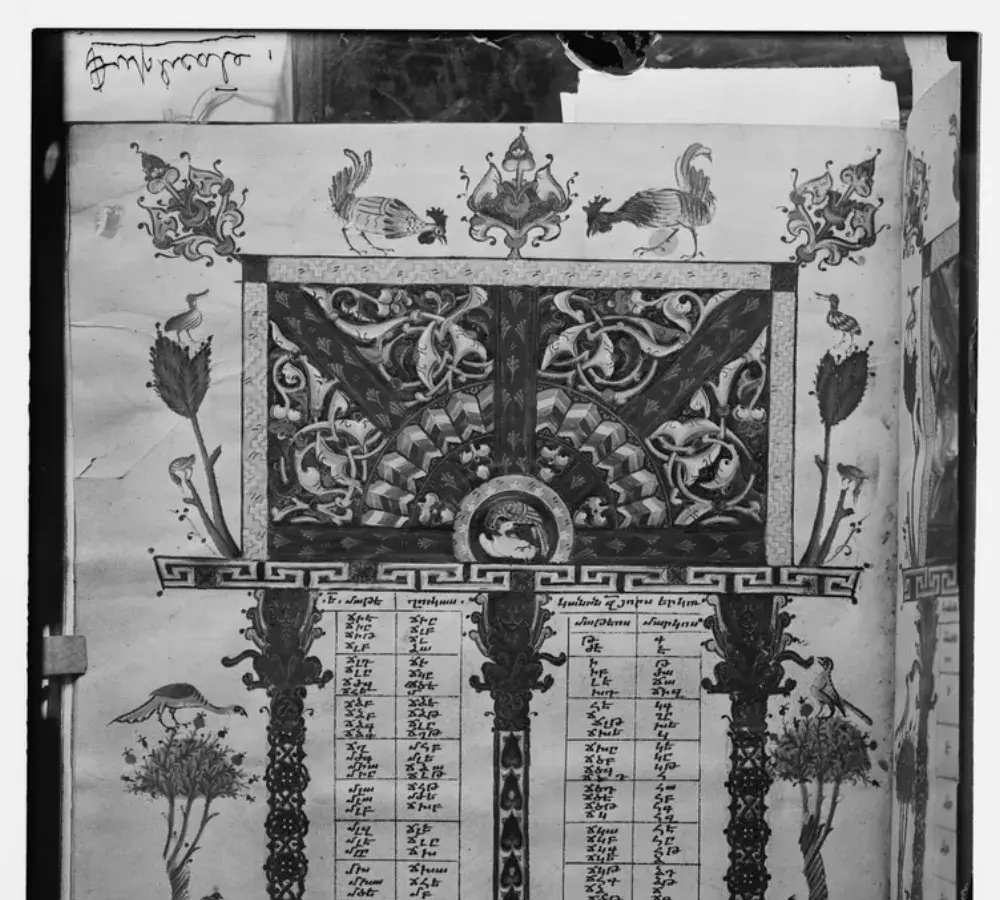
Medieval Armenian illuminated manuscript with the unique Armenian alphabet script

The Mashtots alphabet: 1,600 years of unbroken script tradition

The Armenian alphabet was created in 405 AD by Mesrop Mashtots, a scholar who designed it after studying existing alphabets of the region and concluded that none of them could accurately represent Armenian sounds. He created 36 original letters, with three more added in the 12th century to represent loanword sounds, bringing the total to 39. The alphabet has no relationship to Greek, Syriac, Aramaic, or any other script, despite some superficial visual similarities in a few letterforms. Because it was purpose-built for Armenian, it represents the language's sounds with a precision that adapted scripts rarely achieve.

The 1915 Armenian Genocide displaced hundreds of thousands of survivors into diaspora communities across the Middle East, France, the Americas, and elsewhere. Those communities carried Ottoman-era documents, Arabic administrative records, and French colonial-period papers that later generations need translated for heritage, legal, and immigration purposes. The Western Armenian diaspora in Lebanon in particular has produced generations of Armenians whose official documents were issued in Arabic by Lebanese authorities, creating consistent demand for Armenian-Arabic document translation in both directions. The Los Angeles Armenian community (the largest outside Armenia) regularly works with documents from Armenia, Lebanon, and Nagorno-Karabakh requiring translation into English for US legal and official purposes.

Documents people translate between English and Armenian

The Armenian diaspora in the United States, France, and Lebanon, combined with ongoing migration from the Republic of Armenia, creates demand for document translation in both directions. The most common document types include:

  • Armenian passports and national identity documents submitted for US visa and immigration applications, where a 符合 USCIS 标准的认证翻译 is required
  • Birth certificates, marriage certificates, and divorce decrees from the Republic of Armenia, often needed for spousal or family immigration petitions
  • Diaspora documents issued in Lebanon, France, or Argentina, which may themselves be in Arabic or French and reference Armenian personal names, requiring Armenian-to-English or French-to-English translation with Armenian name handling
  • Nagorno-Karabakh property documents and deeds from displacement events, needed for legal and humanitarian proceedings
  • Academic transcripts and diplomas from Yerevan State University and other Armenian institutions, submitted for credential evaluation by US universities and employers
  • Medical reports and hospital discharge summaries from Armenian hospitals, needed when patients continue care abroad or submit claims to foreign health systems

AI translation is suitable for reading, reviewing, and drafting purposes. For official submissions to US immigration authorities, courts, or government agencies, a certified human translation is required. AI-translated documents are not accepted for USCIS filings without a certification statement from a qualified translator.

Armenian PDF translation pricing

从 7 天的试用开始,随着翻译需求的增长而升级。

7天试用期

最受欢迎
今天2美元

试用期结束后,每月收费 14.99 美元。

  • 7 天完整试用期
  • 试写限制:10页或3000字
  • 0。005美元/字AI翻译
  • 120多种语言
  • PDF、DOCX、XLSX、PPTX、IDML、TXT、JPG、PNG、CSV、JSON
  • 团队访问权限和自定义词汇表
  • 电子邮件支持

月度

受欢迎的
每月 14.99 美元

原价 29。99 美元,现享 50% 折扣

  • 每月100页或3万字
  • 0。005美元/字AI翻译
  • 120多种语言
  • 无限文件存储
  • PDF、DOCX、XLSX、PPTX、IDML、TXT、JPG、PNG、CSV、JSON
  • 团队访问权限和自定义词汇表
  • 优先电子邮件支持
🎉 最超值:每年节省 44。88 美元

年度的

节省25%
每年135美元

~每月 11。25 美元,比每月节省 25%

  • 每月100页或3万字
  • 0。005美元/字AI翻译
  • 120多种语言
  • 无限文件存储
  • PDF、DOCX、XLSX、PPTX、IDML、TXT、JPG、PNG、CSV、JSON
  • 团队访问权限和自定义词汇表
  • 优先电子邮件支持
所需步骤

How to translate your PDF to Armenian

01

创建免费帐户

报名 使用您的电子邮件访问在线翻译仪表板。

02

上传您的 PDF 文件

拖放文件或浏览选择文件。付费套餐支持最大 1GB 的文件。

03

Choose Armenian as target language

Select the original language of your PDF and set Armenian as the target language. The output will include the full 39-letter Mashtots alphabet rendered correctly with proper Unicode encoding.

04

翻译并下载

Click "Translate" and wait a few moments. Your translated PDF will be ready to download in Armenian with the original layout preserved.

Armenian PDF translation FAQ

Will the Armenian alphabet render correctly in the translated PDF?

Yes. The Armenian alphabet has 39 letters created by Mesrop Mashtots in 405 AD. It is not related to any other writing system. DocTranslator outputs all 39 letters using correct Unicode code points and embeds the necessary font data in the PDF so the Armenian script displays on any modern device without requiring additional font installation. Source PDFs designed for Latin or Cyrillic typefaces sometimes lack the font embedding needed for Armenian, which is corrected in the output.

How does Armenian grammar affect translation quality?

Armenian is a language isolate within the Indo-European family and follows subject-object-verb word order, which is the reverse of English. It has seven grammatical cases, no grammatical gender, and attaches the definite article as a suffix to the noun rather than using a separate preceding word. These features mean that noun phrases, verb positions, and article placement must all be restructured rather than substituted word-for-word. AI models trained on Armenian text handle these patterns correctly for most document types, producing output that reads naturally for Armenian speakers.

Which Armenian dialect does DocTranslator use - Eastern or Western?

DocTranslator primarily outputs Eastern Armenian, which is the official standard of the Republic of Armenia and is used in government documents, educational institutions, and formal written communication in Armenia. Western Armenian, spoken by diaspora communities in Lebanon, France, the United States, and Argentina, differs in phonology and some vocabulary. If your document is intended for a specific diaspora community and requires Western Armenian register, this should be reviewed by a human translator familiar with the Western dialect after the initial AI translation.

What Armenian documents are commonly translated for US immigration purposes?

The most frequently translated documents are Armenian passports, birth certificates, marriage certificates, and academic diplomas from Yerevan State University and other Armenian institutions. US immigration filings through USCIS require a 认证翻译 with a signed statement of accuracy from a qualified human translator. AI translation is useful for understanding document content and preparing working drafts, but is not accepted as a certified translation for USCIS submissions on its own.

How large an Armenian PDF can I translate?

Up to 1 GB or 5,000 pages on Monthly and Annual plans. The $2 7-day trial covers up to 10 pages or 3,000 words, which is sufficient to verify how the Armenian alphabet and document formatting are handled before committing to translating a longer file.

Can I translate from Armenian into English as well as from English into Armenian?

Yes. The Armenian-English language pair works in both directions. Translating an Armenian PDF into English is common for diaspora members sharing documents with US employers or government agencies, and for individuals working with Armenian property records, court documents, or Nagorno-Karabakh displacement papers that need to be understood by English-speaking legal or humanitarian professionals.

How are diaspora Armenian documents that originate in Arabic or French handled?

A significant portion of Armenian diaspora documents, particularly those of Lebanese Armenians and communities displaced during and after the 1915 Genocide, were issued by Arabic-speaking or French-speaking administrations. These documents may contain Armenian personal names transliterated into Arabic or French, with the underlying civil records in a non-Armenian language. DocTranslator can translate such documents from Arabic or French into English or Armenian. For documents with mixed scripts or where Armenian names require careful re-transliteration, a human translator review is recommended before using the translation for legal or official purposes.

Translate your PDF to Armenian today

DocTranslator converts PDFs to Armenian online, rendering all 39 letters of the Mashtots alphabet correctly, preserving your document layout, and supporting files up to 1 GB.

我们的伙伴

Accenture
Bloomberg
Citrix
P&G
SAP