Translate PDF to Lao
Convert PDFs to Lao with correct Brahmic glyph stacking: vowels positioned above, below, before, and after consonants, all six tones preserved, and no spaces between words as the script requires. Layout and formatting are preserved. Files up to 1 GB.
Upload or drop document to translate
Max. file size 1 GB
- OCR for scans and photos
- 108 languages
- Original layout kept
What happens when you translate a PDF into Lao
Lao is written in the Lao script, a Brahmic abugida descended from the Khmer script, which itself derives from ancient South Indian writing systems. Unlike alphabets where every letter occupies a simple left-to-right position, the Lao script places vowels in four different positions relative to their base consonant: above, below, before, or after. Some vowels are split, appearing both before and after the consonant at the same time. A PDF renderer that does not fully support Unicode Brahmic shaping will produce broken glyph sequences where vowel marks float to the wrong position or fail to appear entirely. DocTranslator uses a shaping engine that handles the full Lao Unicode block (U+0E80 to U+0EFF), including the 27 initial consonants, 7 final consonants, and all vowel diacritics, so the translated output displays correctly in any PDF viewer with a Lao-capable font.
Lao grammar presents challenges that are different from those of European languages. Lao is an isolating language, meaning it has no case endings, no verb conjugation for person or number, and no grammatical gender. Word meaning depends almost entirely on word order and context rather than inflection. The canonical sentence order is subject-verb-object, the same as English, but tense is expressed through time adverbs and aspect particles rather than changes to the verb form. Lao is also a tonal language with six distinct tones: the meaning of a syllable changes entirely depending on whether the tone is low, mid, high, rising, high falling, or low falling. The tones are indicated in writing through a combination of consonant class (high, mid, or low consonant) and tone marks, of which there are two. A translation engine that conflates tonal distinctions or maps them incorrectly will produce text that is technically readable but semantically wrong in ways that native speakers will immediately notice.
Lao has more than 7 million native speakers. It is the official language of the Lao People's Democratic Republic and is closely related to Thai: Northern Thai dialects and Lao are mutually intelligible to a significant degree, and the two scripts share a common ancestor. Like Thai, Lao is written without spaces between words, which means that word boundary detection is required before any translation or text processing can occur. Large communities of Lao speakers exist outside Laos as a direct consequence of the 1975 Communist takeover, which triggered one of the largest refugee movements in Southeast Asian history. Lao diaspora communities are concentrated in the United States (particularly Minnesota and California), France, and Australia, creating ongoing demand for document translation between Lao and English or French.
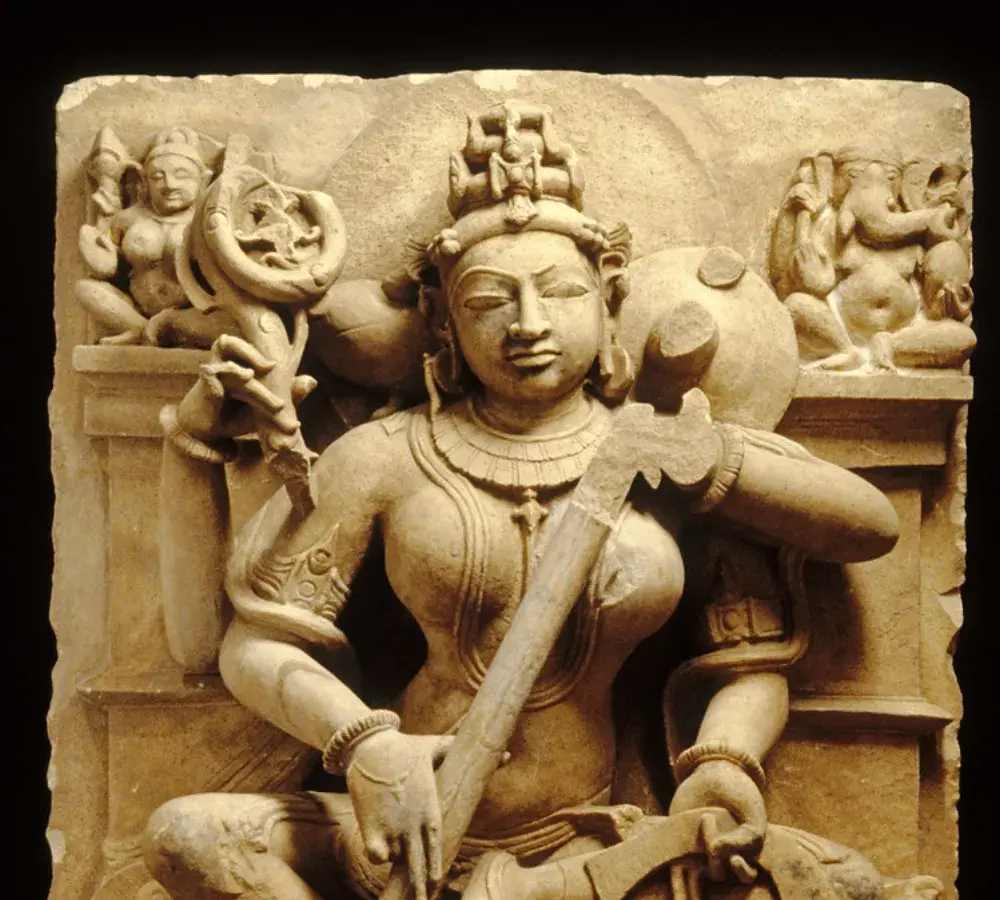
A written tradition carried in palm-leaf manuscripts and diaspora documents
The Lao written tradition is inseparable from Theravada Buddhism. For centuries, Lao religious and legal texts were recorded on dried palm leaves using a stylus, bound into bundles called "nangsu bai lan" and stored in temple libraries. The script used for these manuscripts is a close ancestor of the modern Lao script still in use today. Buddhist temple documents remain an important category of Lao-language material even for diaspora communities in the West, where temples in Minnesota, California, and Paris serve as community and cultural centers. Translation requests involving temple founding documents, religious certificates, or community records often originate from these diaspora institutions.
The 1975 Communist takeover of Laos transformed the document landscape entirely. The new government issued identity documents, land records, and official correspondence in a standardized modern Lao script, while the hundreds of thousands of refugees who fled to Thailand, France, the United States, and Australia carried earlier documents that sometimes predated standardization. UNHCR refugee documents issued in Thai camps during the late 1970s and 1980s are a distinct document category that often requires translation for resettlement status verification decades later. Lao-Americans seeking to document their immigration history or Lao-Australians applying for citizenship-related benefits frequently encounter these older documents and need them translated accurately for government review.
Documents people translate between English and Lao
The combination of an active diaspora, ongoing immigration from Laos, and the growth of the hydropower and tourism sectors within Laos itself produces a steady range of document translation needs. The most common document types include:
- Laotian national identity cards and passports for immigration and visa applications in the United States, France, and Australia
- UNHCR refugee documents issued to post-1975 Lao refugees in Thai border camps, needed for resettlement status verification and benefits eligibility decades after issuance
- National University of Laos transcripts and diplomas for credential recognition at foreign universities and professional licensing bodies
- Birth certificates, marriage certificates, and family registration documents for Lao-Americans and Lao-Australians in immigration and naturalization proceedings
- Buddhist temple founding documents, religious certificates, and community organization records from diaspora institutions in Minnesota, California, Paris, and Melbourne
- Hydropower project contracts and environmental impact documents for the Mekong basin, where Laos is a major site of dam construction involving international investors
- Tourism sector agreements, hotel concession documents, and tour operator licenses as Laos expands its travel industry
AI translation works well for reading a document, preparing a working draft, or understanding the content of an unfamiliar Lao-language PDF. Official submissions to a government office, immigration authority, or court typically require a certified translation reviewed and signed by a qualified human translator. For USCIS filings involving Lao-language documents, see our USCIS certified translation services page for requirements.
English to Lao PDF translation pricing
Sign up free, pay per document, and upgrade as your translation needs grow.
Free
No card needed to sign up
- $0.005/word AI translation
- $1 per page for scans and image PDFs
- 108 languages
- Files up to 20 MB and 20 pages
- DOCX, PDF, XLSX, PPTX, IDML, TXT, JPG, PNG and CSV
- 24-hour file storage only
- PDF editor and PDF to DOCX converter
Basic
Most popularBilled every week · cancel any time
Billed monthly
Billed once a year · save 33%
- AI translation included every month
- Then $0.005/word AI translation
- Files up to 100 MB and 300 pages
- DOCX, PDF, XLSX, PPTX, IDML, TXT, JPG, PNG and CSV
- OCR for scanned documents
- Document storage
- Priority support
- 7-day free trial on the monthly plan
- Cancel any time
Pro
Billed monthly
Billed once a year · save 34%
- AI translation included every month
- Then $0.004/word AI translation
- Files up to 1 GB and 5,000 pages
- DOCX, PDF, XLSX, PPTX, IDML, TXT, JPG, PNG and CSV
- Glossary
- Priority queue
- 5 team seats
- API requests · 1,000 pages a month
- MCP access for AI assistants
- Cancel any time
Business
Billed monthly
Billed once a year · save 33%
- AI translation included every month
- Then $0.003/word AI translation
- Files up to 1 GB and 5,000 pages
- DOCX, PDF, XLSX, PPTX, IDML, TXT, JPG, PNG and CSV
- Glossary
- Priority queue
- 15 team seats
- API requests · 5,000 pages a month
- MCP access for AI assistants
- Cancel any time
Enterprise
Need more volume, invoicing or a custom agreement? Talk to us about an Enterprise plan.
How to translate your PDF to Lao
Create a free account
Sign up with your email to access the online translation dashboard.
Upload your PDF file
Drag and drop your file or browse to select it. Files up to 1 GB are supported on the Pro and Business plans.
Choose Lao as target language
Select the original language of your PDF and set Lao as the target language. The output will include all Lao script vowel diacritics correctly positioned above, below, before, and after their base consonants.
Translate and download
Click "Translate" and wait a few moments. Your translated PDF will be ready to download in Lao with the original layout preserved.
English to Lao PDF translation FAQ
Will Lao script vowel diacritics render correctly in the translated PDF?
Yes. The Lao script places vowels in four different positions relative to the base consonant: above, below, before, and after it. Some vowel forms are split, appearing both before and after the consonant simultaneously. A rendering engine that does not support Unicode Brahmic shaping will produce garbled output. DocTranslator handles the full Lao Unicode block (U+0E80 to U+0EFF) so that all 27 initial consonants, 7 final consonants, and vowel diacritics are correctly positioned and display accurately in standard PDF viewers.
How does the tonal nature of Lao affect PDF translation quality?
Lao has six tones: low, mid, high, rising, high falling, and low falling. The tone of a syllable is determined by the consonant class (high, mid, or low consonant category) combined with the presence or absence of one of two tone marks. A translation that maps tonal distinctions incorrectly will produce text that is readable but semantically wrong. AI models trained on substantial Lao corpora handle tonal distinctions well for most standard document vocabulary, though highly specialized or archaic terminology may require human review.
Why does Lao have no spaces between words, and how does that affect translation?
Like Thai, Lao is written continuously without word-boundary spaces. This means that before any translation or text extraction can begin, a word segmentation step is required to identify where one word ends and the next begins. Errors at the segmentation stage propagate into the translation. DocTranslator applies Lao-specific word boundary detection before translation, reducing segmentation errors that would otherwise cause mistranslations in compound terms or multi-syllable words.
What Lao documents are most commonly needed for US immigration purposes?
The most frequent categories are Laotian national identity cards, passports, birth certificates, and marriage certificates for immigration and visa petitions. A distinct category is UNHCR refugee documents issued to post-1975 Lao refugees in Thai border camps: these are sometimes required decades later for benefits eligibility verification or to document immigration history. For USCIS submissions, AI-translated drafts are useful for review but official filings require a certified translation signed by a qualified human translator.
Is Lao similar enough to Thai that Thai translation handles Lao documents?
No. While Lao and Thai are closely related and share a common script ancestor, they are distinct languages with different vocabulary, grammar patterns, and written conventions. Northern Thai dialects and Lao are mutually intelligible in speech to a significant degree, but the written standard forms differ enough that a Thai translation model will produce incorrect output when applied to a Lao document. Lao and Thai use different Unicode blocks and different orthographic rules. DocTranslator treats Lao as its own language with a dedicated translation model.
Can I translate National University of Laos transcripts using DocTranslator?
Yes. University transcripts, diplomas, and academic records from the National University of Laos and other Lao institutions can be uploaded as PDFs. DocTranslator will translate the text content while preserving the table layout, header structure, and grade columns. The AI output is well suited for understanding the document and preparing a working draft. For submission to a foreign university or professional licensing body, a certified human translation is typically required.
How large a Lao PDF can I translate?
Up to 1 GB or 5,000 pages on Pro and Business, 100 MB and 300 pages on Basic, and 20 MB and 20 pages on Free. Translating a short sample first costs from $0.99 and is sufficient to verify that Lao glyph shaping and vowel positioning are handled correctly on a sample document before committing to a full translation run.
Translate your PDF to Lao today
DocTranslator converts PDFs to Lao online, rendering all vowel diacritics in correct Brahmic positions above, below, before, and after their base consonants, preserving your document layout, and supporting files up to 1 GB.
Related Tools
Translate PDF by Language
Document Types
Our Partners