
Translate PDF to Urdu
Convert PDFs to Urdu with Nastaliq script rendering, full right-to-left layout mirroring, and correct Urdu-specific ligature rules. Preserves your document layout. Files up to 1 GB.
Upload or drop document to translate
Max. file size 1 GB
- OCR for scans and photos
- 108 languages
- Original layout kept
What happens when you translate a PDF into Urdu
Translating a PDF into Urdu involves a set of technical challenges that go beyond simple text substitution. Urdu is written in Nastaliq, a calligraphic style derived from Persian that flows right-to-left in a diagonal, cursive pattern distinctly different from the angular Naskh style used in Arabic and most digital Arabic-script rendering engines. Nastaliq characters connect in complex ways that require the rendering engine to apply Urdu-specific ligature rules, not generic Arabic shaping rules. When a PDF conversion tool applies Naskh shaping to Urdu text, the output looks technically readable but stylistically wrong to native readers, particularly for formal and official documents where Nastaliq is the expected standard in Pakistan. DocTranslator applies proper Urdu ligature handling so the translated output matches the typographic conventions that Pakistani readers expect.
The layout of the entire translated page must mirror the source document. Urdu runs right-to-left, which means columns, paragraph alignments, header positions, and table structures all need to be reversed relative to an English or other left-to-right source. A translated PDF where the text runs right-to-left but the column layout remains left-to-right produces a document that is disorienting and functionally difficult to read. Full RTL mirroring is not optional when the target audience is Pakistani or Urdu-speaking diaspora readers who consume documents in the Nastaliq register. Beyond layout, Urdu uses 38 letters in its alphabet, including 4 letters that do not exist in Arabic or Persian: the aspirated and retroflex consonants that reflect the language's South Asian phonological history. These additional characters must be encoded correctly or the output will contain garbled or substituted letters in positions where these sounds appear.
Urdu has around 70 million native speakers and is the national language of Pakistan. It is also an official language in five Indian states: Jammu and Kashmir, Telangana, Uttar Pradesh, Bihar, and West Bengal. The United Kingdom has a Pakistani diaspora of over 1.6 million people, making it one of the largest concentrations of Urdu speakers outside South Asia, with consistent demand for document translation in both directions for immigration, employment, and family status applications.
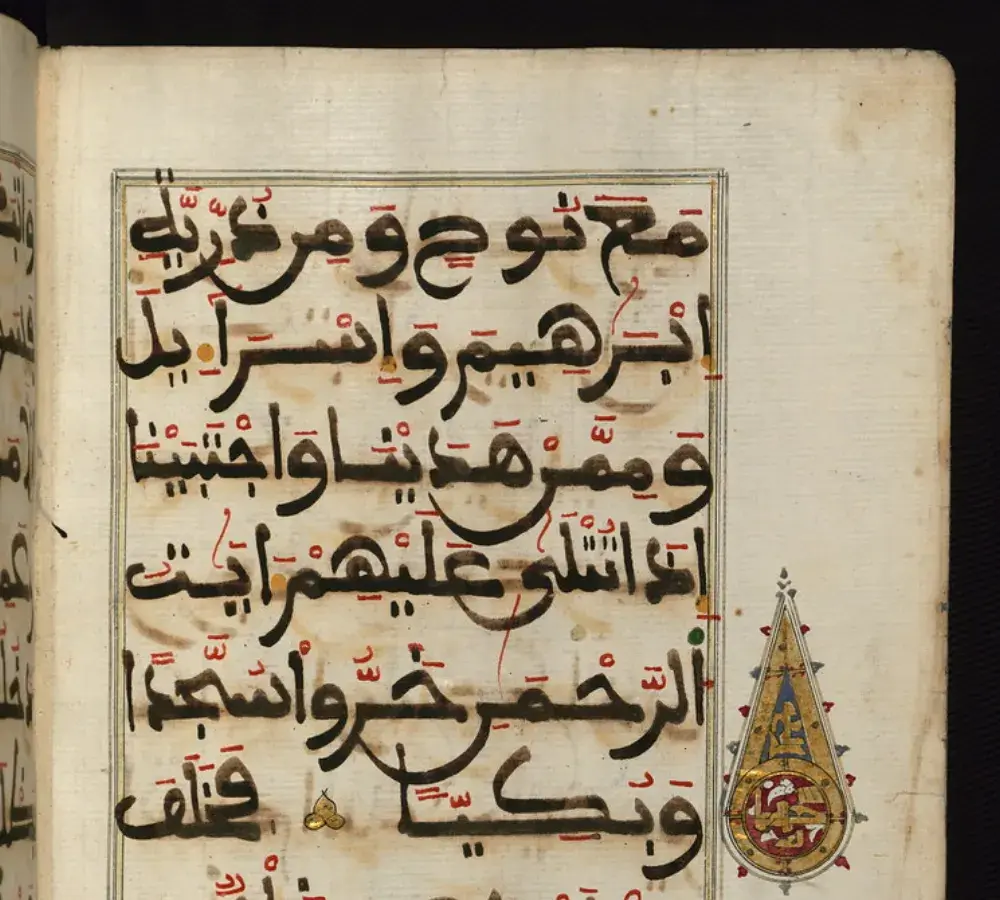
Nastaliq is more complex than standard Arabic digital rendering
Most digital Arabic-script rendering engines are optimized for Naskh, the blocky, upright style used in Arabic newspapers, digital interfaces, and the Quran in its most widely distributed print forms. Nastaliq is a fundamentally different calligraphic tradition: letters hang from an invisible baseline that slopes diagonally downward from right to left, and the connecting strokes between letters follow curves and angles that require a separate set of OpenType ligature tables. Urdu digital typography has historically lagged behind Arabic because the Nastaliq ligature tables are far larger and more complex than Naskh equivalents, and early Unicode implementations did not adequately cover the Urdu-specific characters.
Modern Urdu fonts such as Nafees Nastaleeq, Jameel Noori Nastaleeq, and Faiz Lahori Nastaleeq implement thousands of ligature combinations to achieve correct rendering. When a translated PDF embeds a font without these ligature tables, the text degrades into isolated letters that do not connect properly, producing output that no Urdu reader would accept as a finished document. This is a common failure mode in automated translation pipelines that do not specifically account for Nastaliq requirements. The vocabulary of Urdu formal register is also heavily Persian and Arabic in origin, avoiding the Sanskrit-derived vocabulary that Hindi uses for the same concepts, which means the translation model must be calibrated to the formal Urdu register rather than producing a hybrid that mixes registers.
Documents people translate between English and Urdu
The Pakistani diaspora in the UK, the US, Canada, and the Gulf generates consistent demand for Urdu document translation in both directions. Pakistani citizens applying for visas, submitting family reunification paperwork, or enrolling in foreign educational institutions regularly need Urdu-language official documents rendered into English. The most common document types include:
- Pakistani CNIC (Computerized National Identity Card) for visa applications and right-to-work verification in the UK and other countries
- Pakistani passports and Pakistan Origin Cards for immigration and citizenship applications
- Urdu-language birth certificates and Nikahnama (marriage certificates) for family visa applications and UK spousal visa submissions
- Pakistani academic degrees and transcripts for credential recognition with ECCTIS in the UK and equivalency assessments in Canada and the US
- Urdu-language medical reports and hospital discharge summaries for diaspora patients seeking treatment abroad or insurance reimbursement
- Pakistani driving licenses submitted for exchange or recognition in UK, UAE, and Canadian jurisdictions
AI translation is well-suited for understanding the content of a Pakistani document, preparing a working draft for review, or translating large volumes of Urdu text quickly. Official immigration submissions, court filings, and government applications typically require a certified translation reviewed and signed by a qualified human translator. For USCIS petitions that involve Pakistani sponsors or beneficiaries, see the full guidance on USCIS translation requirements.
English to Urdu PDF translation pricing
Sign up free, pay per document, and upgrade as your translation needs grow.
Free
No card needed to sign up
- $0.005/word AI translation
- $1 per page for scans and image PDFs
- 108 languages
- Files up to 20 MB and 20 pages
- DOCX, PDF, XLSX, PPTX, IDML, TXT, JPG, PNG and CSV
- 24-hour file storage only
- PDF editor and PDF to DOCX converter
Basic
Most popularBilled every week · cancel any time
Billed monthly
Billed once a year · save 33%
- AI translation included every month
- Then $0.005/word AI translation
- Files up to 100 MB and 300 pages
- DOCX, PDF, XLSX, PPTX, IDML, TXT, JPG, PNG and CSV
- OCR for scanned documents
- Document storage
- Priority support
- 7-day free trial on the monthly plan
- Cancel any time
Pro
Billed monthly
Billed once a year · save 34%
- AI translation included every month
- Then $0.004/word AI translation
- Files up to 1 GB and 5,000 pages
- DOCX, PDF, XLSX, PPTX, IDML, TXT, JPG, PNG and CSV
- Glossary
- Priority queue
- 5 team seats
- API requests · 1,000 pages a month
- MCP access for AI assistants
- Cancel any time
Business
Billed monthly
Billed once a year · save 33%
- AI translation included every month
- Then $0.003/word AI translation
- Files up to 1 GB and 5,000 pages
- DOCX, PDF, XLSX, PPTX, IDML, TXT, JPG, PNG and CSV
- Glossary
- Priority queue
- 15 team seats
- API requests · 5,000 pages a month
- MCP access for AI assistants
- Cancel any time
Enterprise
Need more volume, invoicing or a custom agreement? Talk to us about an Enterprise plan.
How to translate your PDF to Urdu
Create a free account
Sign up with your email to access the online translation dashboard.
Upload your PDF file
Drag and drop your file or browse to select it. Files up to 1 GB are supported on the Pro and Business plans.
Choose Urdu as target language
Select the original language of your PDF and set Urdu as the target language. The output will apply Nastaliq script rendering with full RTL layout mirroring and correct Urdu-specific ligature handling.
Translate and download
Click "Translate" and wait a few moments. Your translated PDF will be ready to download in Urdu with the original layout preserved in right-to-left format.
English to Urdu PDF translation FAQ
How is Nastaliq different from the Arabic script used in Arabic-language PDFs?
Nastaliq and Naskh are both Arabic-script styles, but they render very differently. Naskh is upright and angular, and most digital rendering engines are optimized for it because Arabic, Persian, and most South Asian script processing has historically used Naskh in digital contexts. Nastaliq is diagonal and cursive, with letters hanging below an invisible sloping baseline. It requires a distinct set of OpenType ligature tables that are far larger and more complex than Naskh equivalents. Applying Naskh shaping rules to Urdu text produces output that is technically legible but visually unacceptable to Pakistani readers. DocTranslator applies Urdu-specific Nastaliq ligature rules rather than defaulting to generic Arabic shaping.
Does the translated PDF support full right-to-left layout mirroring?
Yes. Urdu is a right-to-left language, which means that page layout, column order, paragraph alignment, and table structures all need to be mirrored relative to a left-to-right source document. A PDF where the text direction is correct but the column layout is not reversed produces a document that is disorienting for Urdu readers. DocTranslator handles full RTL layout mirroring so the structural flow of the translated document matches Urdu reading conventions.
What are the 4 Urdu letters not found in Arabic or Persian?
Urdu has 38 letters in its alphabet. Four of them are unique to Urdu and do not appear in Arabic or Persian: the aspirated retroflex stops and fricatives that represent South Asian phonological sounds with no equivalent in Arabic or Persian phonology. These include letters for sounds like the aspirated retroflex d and t, which appear frequently in words of South Asian origin that entered Urdu through contact with regional languages. These characters must be encoded with correct Unicode code points or they appear as substitution characters or garbled output in the translated PDF.
Why does formal Urdu use Persian and Arabic vocabulary instead of Sanskrit-derived words?
Urdu and Hindi share the same spoken grammar and everyday conversational vocabulary, but they diverged in their formal written registers along religious and cultural lines. Formal Urdu draws its prestige vocabulary from Persian and Arabic, reflecting the influence of Mughal court culture and Islamic literary tradition. Hindi formal register uses Sanskrit-derived vocabulary for the same concepts. A translation model that conflates Hindi and Urdu or uses the wrong register will produce text that reads as technically correct but culturally misaligned. Urdu speakers receiving official Pakistani documents or correspondence expect the Persian-Arabic formal register, not Sanskrit-derived alternatives.
What Pakistani identity documents are most commonly translated for UK immigration purposes?
The most frequently translated Pakistani documents for UK immigration are the CNIC (Computerized National Identity Card), the Pakistani passport, the Nikahnama (Islamic marriage certificate), and birth certificates issued by Pakistani municipal authorities such as NADRA or Union Council offices. The UK Pakistani diaspora of over 1.6 million generates steady demand for these documents in the context of spousal visa applications, family reunification, citizenship by descent, and right-to-work verification. For official UK Home Office submissions, a certified translation is required rather than an AI draft.
Can I translate from Urdu into English as well as from English into Urdu?
Yes. The Urdu-English pair works in both directions. Translating a Urdu PDF into English is the more common direction for diaspora members sharing Pakistani documents with UK, US, or Canadian authorities, employers, or educational institutions. Translating English into Urdu is common for companies distributing materials to Pakistani staff or customers, for NGOs working in Pakistan, and for government agencies preparing documents for Urdu-speaking communities in the UK or the five Indian states where Urdu holds official status.
How large a Urdu PDF can I translate?
Up to 1 GB or 5,000 pages on Pro and Business, 100 MB and 300 pages on Basic, and 20 MB and 20 pages on Free. Translating a short sample first costs from $0.99 and is enough to verify that Nastaliq rendering, RTL layout mirroring, and Urdu-specific ligature handling are correct on a sample before committing to a full document such as a Pakistani passport or academic transcript.
Translate your PDF to Urdu today
DocTranslator converts PDFs to Urdu online, applying Nastaliq script rendering with full RTL layout mirroring, correct Urdu-specific ligature rules, and support for all 38 Urdu letters including the 4 unique to Urdu. Files up to 1 GB.
Related Tools
Translate PDF by Language
Document Types
Our Partners