
Translate PDF to Hebrew
Convert PDFs to Hebrew with right-to-left script rendering, correct final letter forms, and full layout preservation. The 22-letter Hebrew alphabet and its five word-final variants are output accurately. Files up to 1 GB.
Upload or drop document to translate
Max. file size 1 GB
- OCR for scans and photos
- 108 languages
- Original layout kept
What happens when you translate a PDF into Hebrew
Hebrew is written in a 22-letter alphabet that runs right to left, which means a translated PDF must reverse the entire text flow direction while preserving the original layout structure. Five of those 22 letters have a separate final form used exclusively when the letter appears at the end of a word. The standard forms of kaf, mem, nun, pe, and tsadi each become a visually distinct character at a word boundary. A translation system that does not apply these final forms correctly produces text that looks wrong to any native reader, even when the underlying translation is otherwise accurate. DocTranslator applies the correct Unicode code points for both standard and final forms throughout the output file.
Standard written Hebrew does not include vowels. The 22 letters are all consonants, and readers infer the correct vowels from context, grammatical knowledge, and familiarity with the root system. Vowel marks, called nikud, are a separate diacritic system placed above and below consonants, but they appear only in children's books, prayer books, poetry, and texts intended for learners. Official documents, newspapers, government correspondence, legal filings, and academic papers are all written without nikud. This means that a single written sequence of consonants can correspond to several different words depending on grammatical context, and a translation engine must resolve that ambiguity at the morphological level before producing output.
Hebrew grammar organizes nearly all vocabulary around three-letter root sequences called shoresh. Each root carries a core semantic meaning, and words are formed by inserting that root into one of seven conjugation patterns called binyanim. The root k-t-v, for example, relates to writing: it produces the verb "to write," the noun for a written document, the noun for a writer, and several derived forms depending on which binyan pattern is applied. This root-based morphology means that a single English noun or verb may map to several possible Hebrew forms, and the correct form depends on tense, voice, gender, number, and grammatical function. Hebrew has more than 9 million speakers and is the official language of Israel, where it serves as the language of law, government, higher education, and daily life.
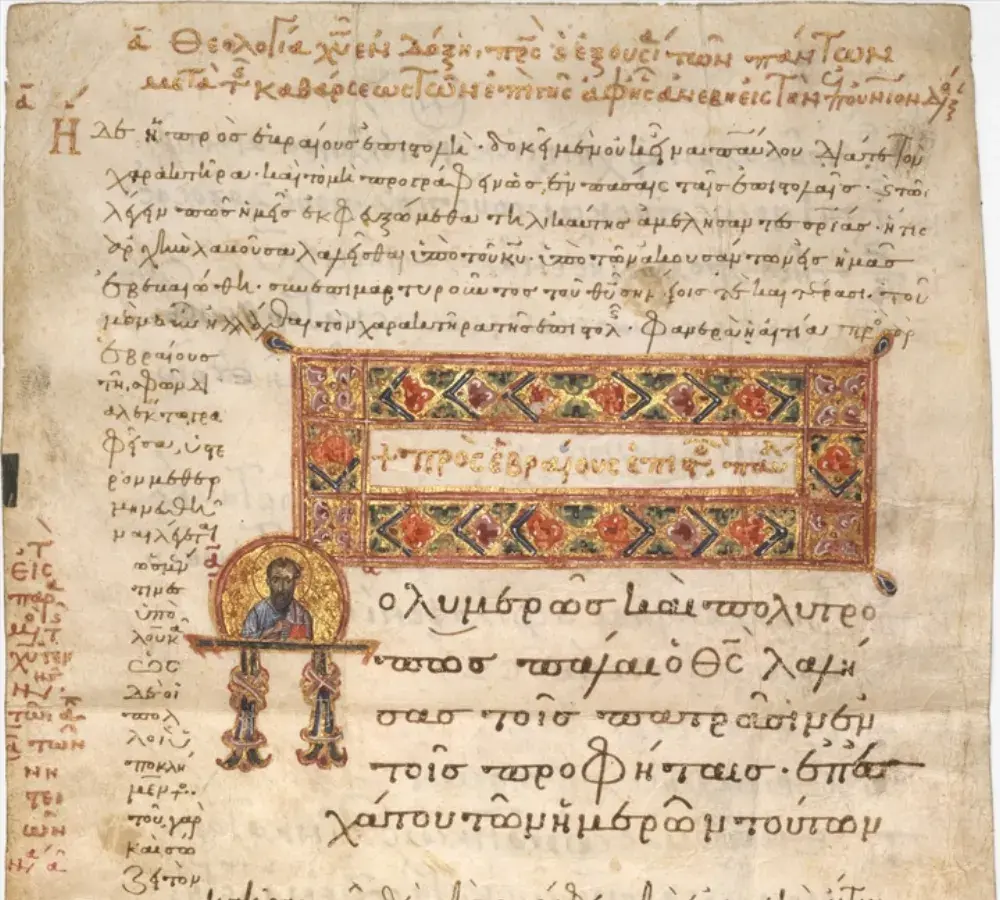
Three distinct writing systems within one language
Hebrew is written in three different scripts depending on context, all sharing the same 22-letter alphabet but with substantially different letterforms. Block print, called Assyrian or square script, is the standard form used in printed books, newspapers, official documents, and digital text. Rashi script is a cursive-style letterform developed in the medieval period and still used today in Talmudic commentaries and some religious texts. Cursive Hebrew is the handwritten form used in everyday writing, notes, and informal correspondence, with letterforms that differ considerably from the printed block characters.
For PDF translation purposes, the relevant script is block print, which covers all modern official, legal, and administrative documents issued in Israel. Scanned historical documents may be in Rashi script or older handwritten forms that require specialist handling before automated processing. Modern digital PDFs from Israeli government agencies, courts, universities, and businesses all use standard block-print Hebrew, and DocTranslator outputs translated text in the same standard block-print Unicode Hebrew that is accepted by document processing systems worldwide.
Documents people translate between English and Hebrew
Hebrew-language document translation covers a wide range of situations: Israeli citizens and diaspora communities across the United States, France, and Argentina frequently need documents translated for immigration, employment, or family proceedings. The most common document types include:
- The teudat zehut (Israeli national identity card) submitted for immigration and residency applications in the United States, France, Argentina, and other countries with large Jewish diaspora communities
- Israeli passports and travel documents translated for visa applications and border crossing procedures
- Notarial documents, powers of attorney, and apostilled certificates issued by Israeli notaries for use in international legal proceedings
- Diplomas and academic transcripts from Hebrew University of Jerusalem, Tel Aviv University, and other Israeli institutions for credential recognition abroad
- Holocaust-era documents in Hebrew, Yiddish, or mixed-language formats, often required for restitution claims, citizenship applications in Germany and Austria, or genealogical research
- Birth, marriage, and divorce certificates issued by Israeli religious courts (rabbinic courts) or civil registries for family law proceedings internationally
- Hebrew-language medical reports and hospital discharge summaries for patients seeking treatment or insurance reimbursement outside Israel
AI translation works well for reading, reviewing, or preparing a working draft from a Hebrew PDF. Official immigration submissions, court filings, and government applications require a certified translation reviewed and signed by a qualified human translator. For USCIS submissions specifically, all Hebrew-language supporting documents must be accompanied by a USCIS-compliant certified translation with a signed statement of translator competence.
Hebrew PDF translation pricing
Sign up free, pay per document, and upgrade as your translation needs grow.
Free
No card needed to sign up
- $0.005/word AI translation
- $1 per page for scans and image PDFs
- 108 languages
- Files up to 20 MB and 20 pages
- DOCX, PDF, XLSX, PPTX, IDML, TXT, JPG, PNG and CSV
- 24-hour file storage only
- PDF editor and PDF to DOCX converter
Basic
Most popularBilled every week · cancel any time
Billed monthly
Billed once a year · save 33%
- AI translation included every month
- Then $0.005/word AI translation
- Files up to 100 MB and 300 pages
- DOCX, PDF, XLSX, PPTX, IDML, TXT, JPG, PNG and CSV
- OCR for scanned documents
- Document storage
- Priority support
- 7-day free trial on the monthly plan
- Cancel any time
Pro
Billed monthly
Billed once a year · save 34%
- AI translation included every month
- Then $0.004/word AI translation
- Files up to 1 GB and 5,000 pages
- DOCX, PDF, XLSX, PPTX, IDML, TXT, JPG, PNG and CSV
- Glossary
- Priority queue
- 5 team seats
- API requests · 1,000 pages a month
- MCP access for AI assistants
- Cancel any time
Business
Billed monthly
Billed once a year · save 33%
- AI translation included every month
- Then $0.003/word AI translation
- Files up to 1 GB and 5,000 pages
- DOCX, PDF, XLSX, PPTX, IDML, TXT, JPG, PNG and CSV
- Glossary
- Priority queue
- 15 team seats
- API requests · 5,000 pages a month
- MCP access for AI assistants
- Cancel any time
Enterprise
Need more volume, invoicing or a custom agreement? Talk to us about an Enterprise plan.
How to translate your PDF to Hebrew
Create a free account
Sign up with your email to access the online translation dashboard.
Upload your PDF file
Drag and drop your file or browse to select it. Files up to 1 GB are supported on the Pro and Business plans.
Choose Hebrew as target language
Select the source language of your PDF and set Hebrew as the target language. The output will render right-to-left Hebrew script with all five final letter forms applied correctly.
Translate and download
Click "Translate" and wait a few moments. Your translated PDF will be ready to download in Hebrew with the original layout preserved and text direction correctly set.
Hebrew PDF translation FAQ
Will right-to-left Hebrew script render correctly in the translated PDF?
Yes. Hebrew is written right to left using the 22-letter Hebrew alphabet. DocTranslator sets the correct Unicode bidirectional text direction in the output file, so the translated text flows right to left as it should. Mixed documents that contain both Hebrew and English, which is common in Israeli official documents, are handled with the correct bidirectional algorithm so that each language block flows in its natural direction.
Are the five final letter forms applied correctly in the output?
Yes. Five Hebrew letters have a distinct final form used only at the end of a word: kaf, mem, nun, pe, and tsadi. Each of these has a separate Unicode code point for its final form, and using the standard form in a word-final position is an obvious error to any reader of Hebrew. DocTranslator applies the correct final forms throughout the translated output.
Does the translation include nikud vowel marks?
No, and this is intentional. Standard written Hebrew, as used in official documents, newspapers, legal texts, and academic publications, does not include nikud. Vowel marks appear only in children's books, prayer books, and texts for learners. Outputting nikud on a standard document would be unusual and would look incorrect in a formal context. The translated Hebrew output matches the standard unvoweled form used in all official Israeli documents.
What Israeli identity documents are commonly translated for US immigration purposes?
The most frequently translated Israeli documents for US immigration are the teudat zehut (national identity card), Israeli passport, birth certificate, marriage certificate, and military service records. All Hebrew-language documents submitted to USCIS must be accompanied by a certified English translation with a signed statement that the translator is competent in both Hebrew and English. AI translation can produce the working draft, but the certified version requires human review and signature.
How large a Hebrew PDF can I translate?
Up to 1 GB or 5,000 pages on Pro and Business, 100 MB and 300 pages on Basic, and 20 MB and 20 pages on Free. Translating a short sample first costs from $0.99 and is enough to verify how right-to-left layout, final letter forms, and Hebrew-specific formatting are handled on a sample before committing to a full document.
Can I translate from Hebrew into English as well as from English into Hebrew?
Yes. The Hebrew-English pair works in both directions. Translating a Hebrew PDF into English is common for diaspora community members sharing Israeli documents with English-speaking employers, schools, or government agencies. Translating an English PDF into Hebrew is typical for companies distributing materials to Israeli employees, partners, or customers, and for individuals preparing documents for submission to Israeli authorities.
How does the three-letter root system affect translation quality?
Hebrew organizes vocabulary around three-letter shoresh roots, with words formed by inserting the root into one of seven binyan conjugation patterns. This means that a single English word may map to several possible Hebrew forms depending on grammatical function, and the AI must select the correct binyan for the context. Modern neural translation models trained on Hebrew handle this root-and-pattern morphology well for standard document types. Specialized legal or medical terminology may occasionally require review by a professional translator familiar with the relevant Hebrew register.
Translate your PDF to Hebrew today
DocTranslator converts PDFs to Hebrew online, rendering right-to-left script, all five final letter forms, and unvoweled standard text correctly, while preserving your document layout and supporting files up to 1 GB.
Related Tools
Translate PDF by Language
Document Types
Our Partners