
Translate PDF to Turkish
Convert English PDFs into Turkish while preserving the dotted i and dotless ı distinction that separates Turkish sounds, or translate Turkish documents back into English. Because Turkish builds very long words by stacking suffixes onto roots, the layout reflows so those words fit inside tables and text boxes without overflowing. Files up to 1 GB.
Upload or drop document to translate
Max. file size 1 GB
- OCR for scans and photos
- 108 languages
- Original layout kept
What happens when you translate a PDF to or from Turkish
Turkish replaced its Arabic-script Ottoman writing system with a Latin-based alphabet in 1928. Modern Turkish documents all use this Latin script, which shares most letters with English but adds several characters that English lacks. The most important is the distinction between the dotted i (i/I) and the dotless ı (ı/I). These are two entirely separate letters in Turkish with different sounds and different grammatical roles. Collapsing them into a single English-style "i" produces misspelled Turkish words. The translation engine and the output font preserve the distinction throughout the document.
Turkish is an agglutinative language, meaning it builds meaning by attaching suffixes directly onto a root word one after another. A sequence of grammatical ideas that English expresses with a phrase of several short words can appear in Turkish as a single long compound word. Turkish also follows subject-object-verb word order, the reverse of English subject-verb-object, so translated sentences are restructured from the ground up rather than just swapping individual words. Vowel harmony is another grammatical rule: the vowels within a word and its suffixes must belong to the same front-or-back vowel group, which the translation engine handles automatically.
The practical consequence for PDF translation is that Turkish words are often longer than their English equivalents. A table column or text box sized for English text may not fit the Turkish word that replaces it without overflowing. DocTranslator reflows the text so the layout stays intact: column widths, table cells, and line breaks all adjust to hold the Turkish output cleanly without clipping.
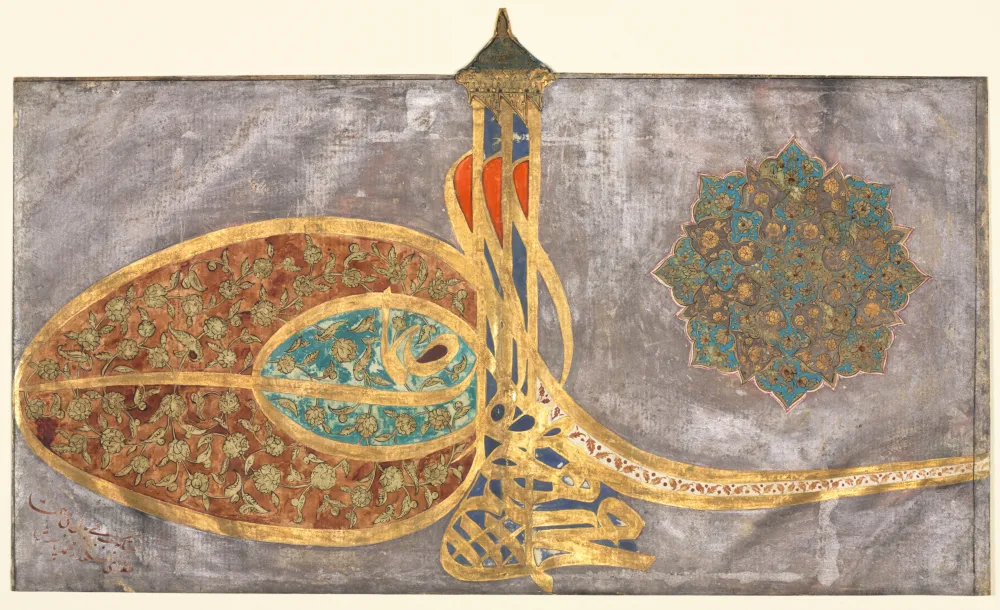
Modern Turkish and its Ottoman past
Turkish is spoken by about 88 million people in Turkey and by several million more across diaspora communities, with Germany alone home to over 3 million Turkish speakers. In 1928, Turkey replaced the Arabic-script Ottoman writing system with a Latin-based alphabet tailored to Turkish sounds. Modern Turkish documents all use this Latin script. Older Ottoman documents from before the reform use the Arabic-script system and require specialized Ottoman translators. For contemporary Turkish PDFs, the Latin-based script is standard throughout.
Turkish is an agglutinative language, meaning it builds complex meanings by stacking suffixes onto a root word. A single Turkish word can correspond to an entire English clause. For example, "Türkiyeli olduğunuzu söylediniz" (you said you are from Turkey) compresses several grammatical elements into the verb form. This stacking means Turkish sentences can be shorter than English ones in word count but longer in individual word length. Table cells and text boxes sized for English text may need reflowing to fit the longer Turkish words.
Documents people translate between Turkish and English
The Turkish diaspora in Europe and the volume of trade between Turkey and international markets generate a steady flow of documents that need translating in both directions:
- Immigration documents for Turkish nationals applying for German, Dutch, or other European residence
- Personal documents such as birth, marriage, and divorce certificates for the large Turkish diaspora in Europe
- Business contracts and supplier agreements between Turkish and international companies
- Technical documentation for Turkish manufacturers exporting to Europe or North America
- Medical records for Turkish patients seeking treatment abroad
- Academic certificates for Turkish students applying to foreign universities
AI translation is the fast, low-cost option when you need to read a document, share it internally, or produce a working draft. Official submissions to German, EU, or other immigration offices typically require certified translation with a human reviewer. See the linked page for those cases.
English to Turkish PDF translation pricing
Sign up free, pay per document, and upgrade as your translation needs grow.
Free
No card needed to sign up
- $0.005/word AI translation
- $1 per page for scans and image PDFs
- 108 languages
- Files up to 20 MB and 20 pages
- DOCX, PDF, XLSX, PPTX, IDML, TXT, JPG, PNG and CSV
- 24-hour file storage only
- PDF editor and PDF to DOCX converter
Basic
Most popularBilled every week · cancel any time
Billed monthly
Billed once a year · save 33%
- AI translation included every month
- Then $0.005/word AI translation
- Files up to 100 MB and 300 pages
- DOCX, PDF, XLSX, PPTX, IDML, TXT, JPG, PNG and CSV
- OCR for scanned documents
- Document storage
- Priority support
- 7-day free trial on the monthly plan
- Cancel any time
Pro
Billed monthly
Billed once a year · save 34%
- AI translation included every month
- Then $0.004/word AI translation
- Files up to 1 GB and 5,000 pages
- DOCX, PDF, XLSX, PPTX, IDML, TXT, JPG, PNG and CSV
- Glossary
- Priority queue
- 5 team seats
- API requests · 1,000 pages a month
- MCP access for AI assistants
- Cancel any time
Business
Billed monthly
Billed once a year · save 33%
- AI translation included every month
- Then $0.003/word AI translation
- Files up to 1 GB and 5,000 pages
- DOCX, PDF, XLSX, PPTX, IDML, TXT, JPG, PNG and CSV
- Glossary
- Priority queue
- 15 team seats
- API requests · 5,000 pages a month
- MCP access for AI assistants
- Cancel any time
Enterprise
Need more volume, invoicing or a custom agreement? Talk to us about an Enterprise plan.
How to translate your PDF to Turkish
Create a free account
Sign up with your email to access the online translation dashboard.
Upload your PDF file
Drag and drop your file or browse to select it. Files up to 1 GB are supported on the Pro and Business plans.
Choose Turkish as target language
Select the original language of your PDF and set Turkish as the target language.
Translate and download
Click "Translate" and wait a few moments. Your translated PDF will be ready to download in Turkish, with formatting preserved.
English to Turkish PDF translation FAQ
Does the dotless ı (capital I without a dot) appear correctly in the PDF?
Yes. Turkish has two distinct "i" letters: the dotted i/I and the dotless ı/I. They represent different sounds and are never interchangeable. The output font and translation engine treat them as separate characters, so the distinction is preserved rather than collapsed into a single letter.
Can DocTranslator handle Ottoman Turkish documents (Arabic-script)?
DocTranslator translates modern Turkish, which uses the Latin-based alphabet introduced in 1928. Ottoman documents written in the Arabic-script Ottoman system before the reform require specialized Ottoman Turkish expertise and are outside the scope of standard AI translation.
Can I translate Turkish into English?
Yes. The pair works in both directions. Turkish-to-English also adjusts the layout for the change in text density.
What documents do Turkish diaspora communities need translated?
Birth, marriage, and divorce certificates for German and other European residence or citizenship applications; property documents from Turkey; educational certificates; and medical records.
Is AI translation sufficient for Turkish immigration documents?
For reading and preparation, yes. Official submissions to German, EU, or other immigration offices typically require certified translation. See certified translation for official submissions.
How large a Turkish PDF can I upload?
Per document, Free accepts 20 MB and 20 pages, Basic 100 MB and 300 pages, and Pro or Business as much as 1 GB and 5,000 pages.
Will long agglutinative Turkish words overflow my PDF layout?
Turkish can produce very long compound words through suffix stacking. DocTranslator reflows the text so long words fit within columns and table cells rather than overflowing.
Translate your PDF to Turkish today
DocTranslator converts PDFs between English and Turkish with correct dotted and dotless i rendering, agglutinative word reflowing, and preserved formatting, supporting files up to 1 GB.
Related Tools
Translate PDF by Language
Document Types
Our Partners