
Translate PDF to Amharic
Convert PDFs to Amharic with the full Ethiopic Fidel syllabary rendered correctly. Each of the 33 base characters has 7 vowel-order forms, producing 231 core syllables plus additional characters totaling 345 or more. Layout and formatting are preserved. Files up to 1 GB.
Upload or drop document to translate
Max. file size 1 GB
- OCR for scans and photos
- 108 languages
- Original layout kept
What happens when you translate a PDF into Amharic
Amharic is written in the Ethiopic script, also called Ge'ez or Fidel. Unlike an alphabet, where each character represents a single consonant or vowel, Fidel is an abugida: each character represents a consonant-vowel syllable. There are 33 base consonantal forms, and each one has 7 vowel-order variations called "orders," producing 231 core syllabic characters. Beyond those, Amharic also uses labialized consonant forms, numerals, punctuation marks, and additional characters for loanword sounds, bringing the total to 345 or more distinct glyphs. For any PDF translation system, this means that the font selected for Amharic output must cover all required Unicode code points in the Ethiopic block (U+1200 to U+137F and extensions), and the rendering engine must position these characters correctly without substituting missing glyphs with boxes or question marks. DocTranslator handles Ethiopic font embedding in the output PDF so that every syllabic character displays as intended on any device.
Amharic belongs to the Semitic language family, placing it in the same broad linguistic group as Arabic and Hebrew. However, one of the most important practical distinctions for PDF layout is that Amharic is written left-to-right. Arabic and Hebrew are right-to-left, and their bidirectional text requirements impose a specific set of formatting challenges. Amharic avoids those challenges because the Ethiopic script runs in the same direction as Latin text. This means a translated Amharic PDF does not require mirroring of columns, reversal of table cell order, or bidirectional text embedding. The column structure, header placement, and reading direction of the original English PDF can be preserved in the Amharic output without reflow. Amharic words tend to be longer than English equivalents due to verb morphology, so line breaks and text box widths may expand in the translated version, but the directionality itself is not a complicating factor.
Amharic has around 35 million native speakers and over 90 million total speakers when second-language users are included. It is the official working language of the Federal Democratic Republic of Ethiopia, the second most populous country in Africa. The language is used in federal government, courts, national media, and education. Ethiopia has no other single official federal language, which makes Amharic the de facto administrative and documentary standard across a country of more than 120 million people. Large Ethiopian diaspora communities in Washington DC, Minneapolis, Seattle, and other North American cities, as well as in Israel, Sweden, and the Gulf states, generate steady demand for translating official Ethiopian documents into English and for translating immigration and government forms back into Amharic for family members still in Ethiopia.
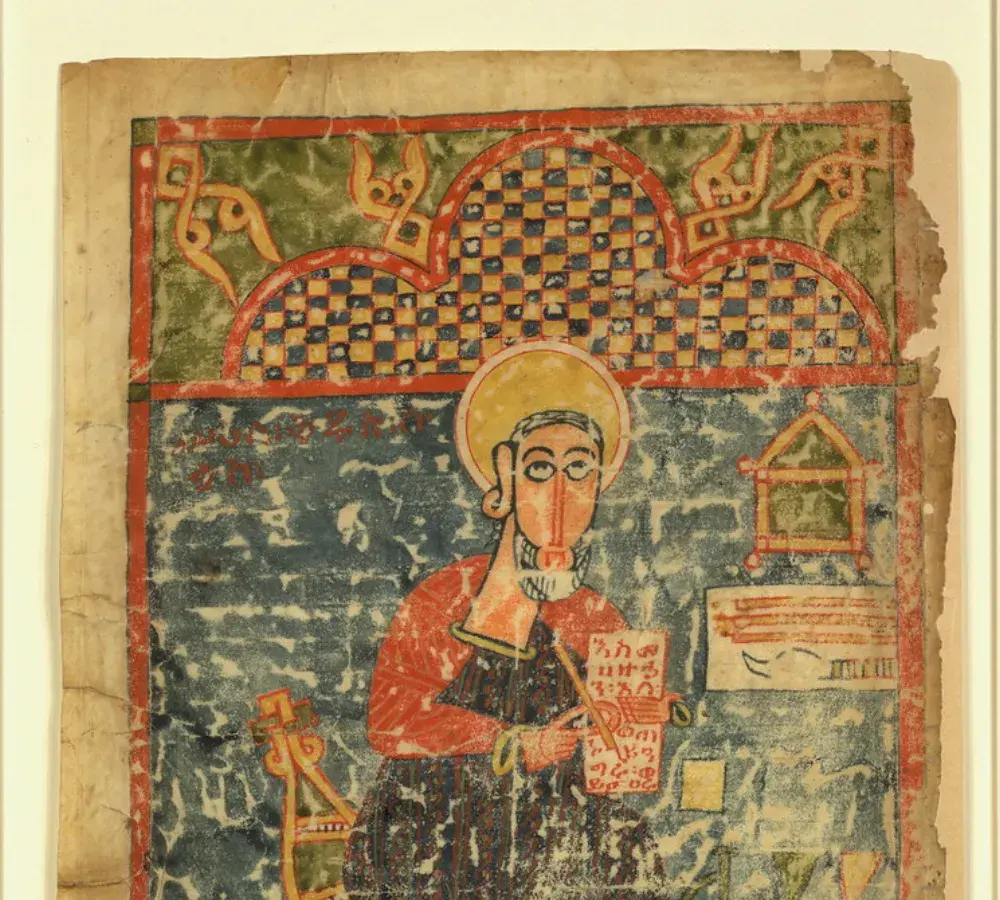
The Ethiopic script and why it is among the most complex in PDF translation
The Ge'ez script used for Amharic is one of the world's oldest continuously used writing systems. It has been in documented use for over 2,000 years, first for the Ge'ez liturgical language of the Ethiopian Orthodox Church and later for Amharic, Tigrinya, and other Ethiopic languages. The Ethiopian Orthodox Church canon includes books not found in Catholic, Protestant, or Eastern Orthodox Bibles, and these texts were preserved in Ge'ez manuscripts. The continuous literary tradition means that modern Amharic orthography is stable and standardized, which helps translation models produce consistent output.
From a technical standpoint, the Ethiopic block in Unicode is large and well-defined, but many default system fonts and PDF viewers only include partial coverage of it. A PDF generated without deliberate Ethiopic font embedding will display correctly on a system that has Noto Sans Ethiopic or a similar font installed, but will show blank boxes on systems without that font. When DocTranslator produces a translated PDF in Amharic, it embeds the required Ethiopic characters so the output is self-contained and portable. The syllabic nature of the script also means that the character count in an Amharic PDF is substantially lower than the equivalent English version, even though the information density is similar. This can mislead word count tools that are not calibrated for syllabic scripts.
Documents people translate between English and Amharic
The Ethiopian diaspora in North America and Europe, combined with the steady flow of UNHCR-processed refugees and immigration applicants from Ethiopia, creates high and consistent demand for Amharic document translation in both directions. The most common document types include:
- Ethiopian national identity documents (Kebele ID) and passports for immigration, asylum, and visa applications in the United States, Canada, and EU countries
- UNHCR refugee registration documents and resettlement letters for Ethiopian refugees applying for entry through the US Refugee Admissions Program
- Birth certificates and family status documents issued by Ethiopian civil registration authorities for use in US immigration proceedings, including family petitions filed with USCIS
- Academic transcripts and diplomas from Addis Ababa University and other Ethiopian institutions for credential evaluation by NACES-member agencies in the US and ENIC-NARIC in Europe
- Ethiopian court documents, including custody orders and inheritance rulings, needed by diaspora members managing legal matters across borders
- Medical records from Ethiopian hospitals for patients who have resettled in the US or Europe and are registering with new healthcare providers
- US government forms and notices translated into Amharic for diaspora community members in Washington DC, Minneapolis, and Seattle who have limited English proficiency
AI translation is well suited for understanding the content of an Amharic document, preparing a working draft, or translating informational materials into Amharic for community outreach. Official submissions to USCIS, immigration courts, or federal agencies require a certified translation that meets the completeness and accuracy attestation requirements set by federal immigration regulations. A certified translator familiar with Amharic and Ethiopic script requirements must sign the attestation. For more on what USCIS requires, see the USCIS translation services page.
English to Amharic PDF translation pricing
Sign up free, pay per document, and upgrade as your translation needs grow.
Free
No card needed to sign up
- $0.005/word AI translation
- $1 per page for scans and image PDFs
- 108 languages
- Files up to 20 MB and 20 pages
- DOCX, PDF, XLSX, PPTX, IDML, TXT, JPG, PNG and CSV
- 24-hour file storage only
- PDF editor and PDF to DOCX converter
Basic
Most popularBilled every week · cancel any time
Billed monthly
Billed once a year · save 33%
- AI translation included every month
- Then $0.005/word AI translation
- Files up to 100 MB and 300 pages
- DOCX, PDF, XLSX, PPTX, IDML, TXT, JPG, PNG and CSV
- OCR for scanned documents
- Document storage
- Priority support
- 7-day free trial on the monthly plan
- Cancel any time
Pro
Billed monthly
Billed once a year · save 34%
- AI translation included every month
- Then $0.004/word AI translation
- Files up to 1 GB and 5,000 pages
- DOCX, PDF, XLSX, PPTX, IDML, TXT, JPG, PNG and CSV
- Glossary
- Priority queue
- 5 team seats
- API requests · 1,000 pages a month
- MCP access for AI assistants
- Cancel any time
Business
Billed monthly
Billed once a year · save 33%
- AI translation included every month
- Then $0.003/word AI translation
- Files up to 1 GB and 5,000 pages
- DOCX, PDF, XLSX, PPTX, IDML, TXT, JPG, PNG and CSV
- Glossary
- Priority queue
- 15 team seats
- API requests · 5,000 pages a month
- MCP access for AI assistants
- Cancel any time
Enterprise
Need more volume, invoicing or a custom agreement? Talk to us about an Enterprise plan.
How to translate your PDF to Amharic
Create a free account
Sign up with your email to access the online translation dashboard.
Upload your PDF file
Drag and drop your file or browse to select it. Files up to 1 GB are supported on the Pro and Business plans.
Choose Amharic as target language
Select the source language of your PDF and set Amharic as the target. The output will use the Ethiopic Fidel syllabary with all required vowel-order forms embedded in the PDF font.
Translate and download
Click "Translate" and wait a few moments. Your translated PDF will be ready to download in Amharic with the original layout preserved and Ethiopic characters correctly rendered.
English to Amharic PDF translation FAQ
Will the Ethiopic Fidel characters render correctly in the translated PDF?
Yes. The Ethiopic script used for Amharic has 33 base consonantal forms each with 7 vowel orders, producing 231 core syllabic characters, plus additional labialized and extended forms totaling 345 or more distinct glyphs. DocTranslator embeds the required Ethiopic Unicode characters directly into the output PDF so they display correctly on any device, regardless of whether the recipient has an Ethiopic font installed on their system.
Is Amharic written right-to-left like Arabic and Hebrew?
No. Although Amharic belongs to the Semitic language family alongside Arabic and Hebrew, the Ethiopic script runs left-to-right. This means translated Amharic PDFs do not require column mirroring, bidirectional text embedding, or table cell reversal. The left-to-right reading direction is preserved from the original English layout, which simplifies the formatting of the translated document considerably compared to Arabic or Hebrew translations.
How does Amharic verb morphology affect the length of a translated PDF?
Amharic verbs carry a large amount of grammatical information, including subject agreement, tense, aspect, negation, and sometimes object marking, all encoded within a single word form. This morphological density means that a single Amharic verb can correspond to several English words. The translated PDF will have more text per sentence in some passages. Text boxes in the original layout may need to expand slightly to accommodate Amharic output, particularly in tables and form fields.
What Ethiopian documents are most commonly translated for US immigration purposes?
The most frequently translated documents for Ethiopian immigrants and refugees are the Kebele identity card, Ethiopian passport, birth certificate, marriage certificate, and UNHCR refugee registration or resettlement letter. These are used in applications to USCIS for family petitions, asylum claims, and refugee admission. For all official submissions to USCIS or immigration courts, a certified translation with a signed completeness and accuracy attestation is required, not an AI-generated draft.
Can I translate Amharic text that was scanned from a printed document?
Scanned Amharic PDFs require optical character recognition calibrated for the Ethiopic script before translation can occur. Standard OCR engines optimized for Latin, Cyrillic, or CJK scripts may not recognize Ethiopic syllabic characters reliably. DocTranslator processes scanned documents through OCR before translation. The accuracy of OCR output depends on the quality and resolution of the original scan. Clearly printed Amharic text at 300 DPI or above produces the best results.
What is the difference between Amharic and Ge'ez, and does it affect translation?
Ge'ez is the ancient Semitic language of the Ethiopian Orthodox Church and the ancestor of modern Ethiopic languages including Amharic and Tigrinya. It is now a liturgical language, not a spoken one, comparable to Latin in the Catholic tradition. Ge'ez uses the same Ethiopic script as Amharic but has different vocabulary, grammar, and morphology. If a PDF contains Ge'ez liturgical text rather than modern Amharic prose, standard Amharic translation models will not produce accurate output. DocTranslator is designed for modern written Amharic.
How large an Amharic PDF can I translate?
Up to 1 GB or 5,000 pages on Pro and Business, 100 MB and 300 pages on Basic, and 20 MB and 20 pages on Free. Translating a short sample first costs from $0.99 and is enough to verify that Ethiopic Fidel characters render correctly and that the layout of your specific document type is preserved before committing to a larger translation job.
Translate your PDF to Amharic today
DocTranslator converts PDFs to Amharic online, rendering all 345+ Ethiopic Fidel syllabic characters correctly, preserving your document layout, and supporting files up to 1 GB.
Related Tools
Translate PDF by Language
Document Types
Our Partners