
Translate PDF to Malay
Translate PDFs to and from Bahasa Melayu online. Rumi Latin script is the primary official script, while Jawi Arabic-derived script appears in religious, legal, and government documents. Both are handled correctly. Files up to 1 GB.
Upload or drop document to translate
Max. file size 1 GB
- OCR for scans and photos
- 108 languages
- Original layout kept
What happens when you translate a PDF into Malay
Malay, officially called Bahasa Melayu, is written in two co-existing scripts. Rumi is the Latin-based script used in most printed documents, newspapers, and formal publications, and it is the primary official script in Malaysia, Brunei, and Singapore. Jawi is derived from the Arabic alphabet and remains co-official in Malaysia, where it appears in religious education, sharia court documents, and public signage. Many official Malaysian documents are printed in both scripts side by side. When you translate a PDF into Malay using Rumi, the rendering challenge is relatively straightforward because the Latin alphabet maps cleanly onto existing PDF font infrastructure. Jawi output requires Arabic-derived glyph rendering, right-to-left text direction within the Jawi block, and a font that covers the additional characters unique to Malay, including some that do not appear in standard Arabic.
Malay grammar presents a different kind of challenge for automated translation: the language is agglutinative. A single root word can expand significantly through the addition of prefixes and suffixes. The affix system includes me-, di-, ber-, ke-, -kan, -an, and -i, among others. The root word "terjemah" (translate) can become "menterjemahkan" (to translate something), "diterjemahkan" (to be translated), or "terjemahan" (a translation). This means that Malay words in the output can be considerably longer than their English equivalents, which affects line breaks, table cell widths, and text flow inside fixed-width PDF layouts. DocTranslator reflows text blocks to accommodate this word length expansion rather than forcing the longer Malay words to overflow their containers.
Malay also has no grammatical tenses or grammatical gender. Plural number is often implied by context or expressed through reduplication, where a word is repeated to indicate plurality (e.g., "buku-buku" for books). There is also a formal royal register called Bahasa Diraja, used in communications involving Malaysia's royalty and in some government communications, where entirely different vocabulary replaces everyday words. For most Malay document translation tasks, the standard formal register of written Bahasa Melayu is the correct target, but government documents addressed to or from the Malaysian royal household require awareness of this register distinction.
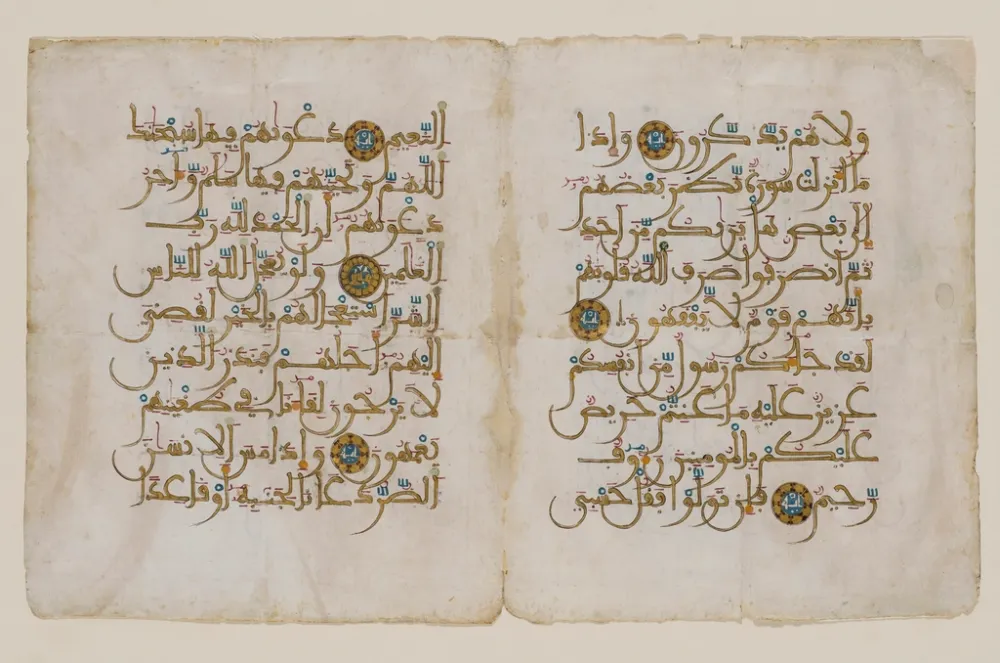
Jawi script, Rumi script, and why Malay documents use both
Bahasa Melayu is the official language of Malaysia, Brunei, and Singapore, with around 33 million native speakers in Malaysia alone. Across Brunei, Singapore, and the wider region including Indonesia (where a closely related standardized form is called Bahasa Indonesia), the language is used by more than 77 million people. Brunei uses Bahasa Melayu as its sole official language, which means all Bruneian government documents are issued in Malay. The distinction between Malay and Indonesian matters for translation: while the two varieties are formally very close, vocabulary diverges in everyday usage. "Kereta" means car in Malay, while Indonesians say "mobil." The second-person pronoun "awak" in Malay corresponds to "kamu" in Indonesian. Translating to Bahasa Melayu targets the Malaysian and Bruneian formal standard, not the Indonesian standard.
The Jawi script was the primary writing system for Malay for centuries before colonial-era standardization brought Rumi into wide use. Today Jawi remains co-official in Malaysia and is actively taught in religious schools. Sharia court documents in Malaysia are often issued in Jawi, and many signboards in Peninsular Malaysia display text in both scripts. When translating PDFs that include Jawi content, the Arabic-derived characters require a font with the correct Unicode Jawi extensions, and the directionality of the Jawi text block must be set to right-to-left even when the surrounding Rumi text runs left to right.
Documents people translate between English and Malay
Malay document translation arises in a wide range of practical situations: immigration, trade within the ASEAN free-trade zone, religious legal matters, and the needs of the Malaysian diaspora in the UK, Australia, and Canada. The most common document types include the following.
- Malaysian immigration documents including MyKad identity card applications, visa letters, and work permit supporting materials
- Sharia court documents issued in Jawi script, including marriage, divorce, and inheritance records
- ASEAN business agreements and trade contracts where Malay is the working language of the Malaysian or Bruneian party
- Academic transcripts and qualification certificates from Malaysian universities, required for overseas study or employment applications
- Medical reports and clinical records for Malaysian patients seeking treatment abroad, or for foreign patients treated in Malaysia
- Personal documents for Malaysian diaspora communities, including birth certificates, marriage certificates, and statutory declarations
AI translation works well for reading a document, understanding its content, or producing a working draft. Official submissions to immigration authorities or courts typically require a human-reviewed certified translation signed by a qualified translator.
English to Malay PDF translation pricing
Sign up free, pay per document, and upgrade as your translation needs grow.
Free
No card needed to sign up
- $0.005/word AI translation
- $1 per page for scans and image PDFs
- 108 languages
- Files up to 20 MB and 20 pages
- DOCX, PDF, XLSX, PPTX, IDML, TXT, JPG, PNG and CSV
- 24-hour file storage only
- PDF editor and PDF to DOCX converter
Basic
Most popularBilled every week · cancel any time
Billed monthly
Billed once a year · save 33%
- AI translation included every month
- Then $0.005/word AI translation
- Files up to 100 MB and 300 pages
- DOCX, PDF, XLSX, PPTX, IDML, TXT, JPG, PNG and CSV
- OCR for scanned documents
- Document storage
- Priority support
- 7-day free trial on the monthly plan
- Cancel any time
Pro
Billed monthly
Billed once a year · save 34%
- AI translation included every month
- Then $0.004/word AI translation
- Files up to 1 GB and 5,000 pages
- DOCX, PDF, XLSX, PPTX, IDML, TXT, JPG, PNG and CSV
- Glossary
- Priority queue
- 5 team seats
- API requests · 1,000 pages a month
- MCP access for AI assistants
- Cancel any time
Business
Billed monthly
Billed once a year · save 33%
- AI translation included every month
- Then $0.003/word AI translation
- Files up to 1 GB and 5,000 pages
- DOCX, PDF, XLSX, PPTX, IDML, TXT, JPG, PNG and CSV
- Glossary
- Priority queue
- 15 team seats
- API requests · 5,000 pages a month
- MCP access for AI assistants
- Cancel any time
Enterprise
Need more volume, invoicing or a custom agreement? Talk to us about an Enterprise plan.
How to translate your PDF to Malay
Create a free account
Sign up with your email to access the online translation dashboard.
Upload your PDF file
Drag and drop your file or browse to select it. Files up to 1 GB are supported on the Pro and Business plans.
Choose Malay as target language
Select the original language of your PDF and set Malay (Bahasa Melayu) as the target language. The engine will output standard written Malay in Rumi script.
Translate and download
Click "Translate" and wait a few moments. Your translated PDF will be ready to download in Malay, with agglutinative word forms and text reflow applied.
English to Malay PDF translation FAQ
Does DocTranslator output Rumi or Jawi script for Malay?
The default output is Rumi, the Latin-based script that is the primary official writing system in Malaysia, Brunei, and Singapore, and the script used in most printed Malay documents. Jawi, the Arabic-derived co-official script, appears in religious, sharia court, and some government documents. If your source PDF contains Jawi text, the engine detects and renders it using the correct Arabic-derived Unicode block with right-to-left directionality.
How does Malay agglutination affect PDF layout?
Malay builds words by attaching prefixes and suffixes to roots. A short English word can become a significantly longer Malay word after affixes like me-, di-, ber-, -kan, and -an are added. This word length expansion can push text outside table cells or break line lengths in narrow columns. DocTranslator reflows the translated text to fit the PDF layout rather than leaving Malay words to overflow their containers.
Is Bahasa Melayu the same as Bahasa Indonesia?
The two languages are closely related and mutually intelligible in most contexts, but they are distinct standardized varieties with vocabulary differences. "Kereta" means car in Malay while Indonesians say "mobil." "Awak" is the second-person pronoun in Malay while Indonesian uses "kamu." Translating to Bahasa Melayu targets the Malaysian and Bruneian formal standard, which is the correct choice for Malaysian immigration documents, Bruneian government papers, and ASEAN business agreements involving Malaysian parties.
What Malay documents are typically needed for Malaysian immigration or visa applications?
Malaysian immigration processes often require translated versions of MyKad identity card details, birth certificates, marriage certificates, academic transcripts, and employment letters. If you are submitting documents to a foreign government authority, a human-reviewed certified translation is usually required rather than an AI-only output.
Does Malay have tenses or gendered nouns that affect translation?
No. Malay has no grammatical tenses and no grammatical gender. Time is expressed through time markers and context rather than verb conjugation. Plural number is often conveyed through context or through reduplication, where a noun is written twice (e.g., "buku-buku" for books). This makes Malay grammar less inflected than European languages, but the agglutinative affix system still requires careful handling to produce natural-sounding Malay output.
Can I translate a Malay PDF into English as well as English into Malay?
Yes. The translation pair works in both directions. English to Malay and Malay to English are both supported. For Jawi source text, the engine detects the Arabic-script Malay and translates it into English output, applying the necessary script conversion in the process.
What is Bahasa Diraja and does it affect Malay PDF translation?
Bahasa Diraja is the royal or ultra-formal register of Malay used in communications involving Malaysian royalty and in certain high-level government communications. It uses entirely different vocabulary from everyday Malay for concepts like eating, speaking, and health. For most Malay document translation tasks, including business, immigration, and medical documents, the standard formal register of written Bahasa Melayu is the appropriate target and what DocTranslator produces.
Translate your PDF to Malay today
DocTranslator converts PDFs between English and Bahasa Melayu online, handling Rumi Latin script by default and Jawi Arabic-derived script where present, with agglutinative word forms reflowed correctly and file support up to 1 GB.
Related Tools
Translate PDF by Language
Document Types
Our Partners