
Translate PDF to Macedonian
Convert PDFs to Macedonian with all 31 Cyrillic letters rendered correctly, including the 3 letters unique to Macedonian script. The three-way definite article system and zero-case grammar are handled accurately. Layout and formatting are preserved. Files up to 1 GB.
Upload or drop document to translate
Max. file size 1 GB
- OCR for scans and photos
- 108 languages
- Original layout kept
What happens when you translate a PDF into Macedonian
Macedonian uses a Cyrillic alphabet that was standardized in 1945, giving it one of the most precisely codified orthographies of any Slavic language. The alphabet contains 31 letters, including three that exist only in Macedonian Cyrillic and appear in no other language's script. These are "Gje" (a soft g sound), "Dze" (a dz affricate), and "Kje" (a soft k sound). A PDF translation pipeline that treats Macedonian as interchangeable with Bulgarian or Serbian Cyrillic will produce incorrect output for any word containing these three letters, since neither Bulgarian nor Serbian has them. DocTranslator applies Macedonian-specific character mapping so that every letter in the 31-character alphabet, including the three unique ones, is rendered accurately in the translated document.
Macedonian grammar presents a distinctive challenge for translation engines: it has one of the most unusual definite article systems of any Slavic language. While Bulgarian - the language most closely related to Macedonian - has a single postpositive definite article attached to the end of a noun, Macedonian has three separate postpositive articles that encode spatial proximity. The article "-ot" marks a noun as distal (far from both speaker and listener), "-ov" marks it as proximate (near the speaker), and "-on" marks it as medial or near the listener. This three-way distinction is visible in written text and must be handled correctly for a translated document to read naturally. At the same time, Macedonian has no grammatical cases, unlike Russian or Serbian, which removes an entire layer of inflectional complexity. Nouns do not change their form based on grammatical role in the sentence, which simplifies some aspects of translation while the three-way article system adds a different kind of precision requirement.
Macedonian is spoken by approximately 1.5 million people, with the main concentration in North Macedonia, where it is the sole official language. North Macedonia joined NATO in 2020 and has been an EU candidate country since 2005, making Macedonian-language documents increasingly relevant in European administrative and legal contexts. Macedonian has two grammatical genders (masculine and feminine for animate nouns, with neuter also present for some categories) and a subject-object-verb default word order, though word order is relatively flexible. A significant diaspora community in Melbourne, Australia, representing one of the largest concentrations of Macedonian speakers outside the Balkans, generates steady demand for translating immigration, education, and identity documents between Macedonian and English.
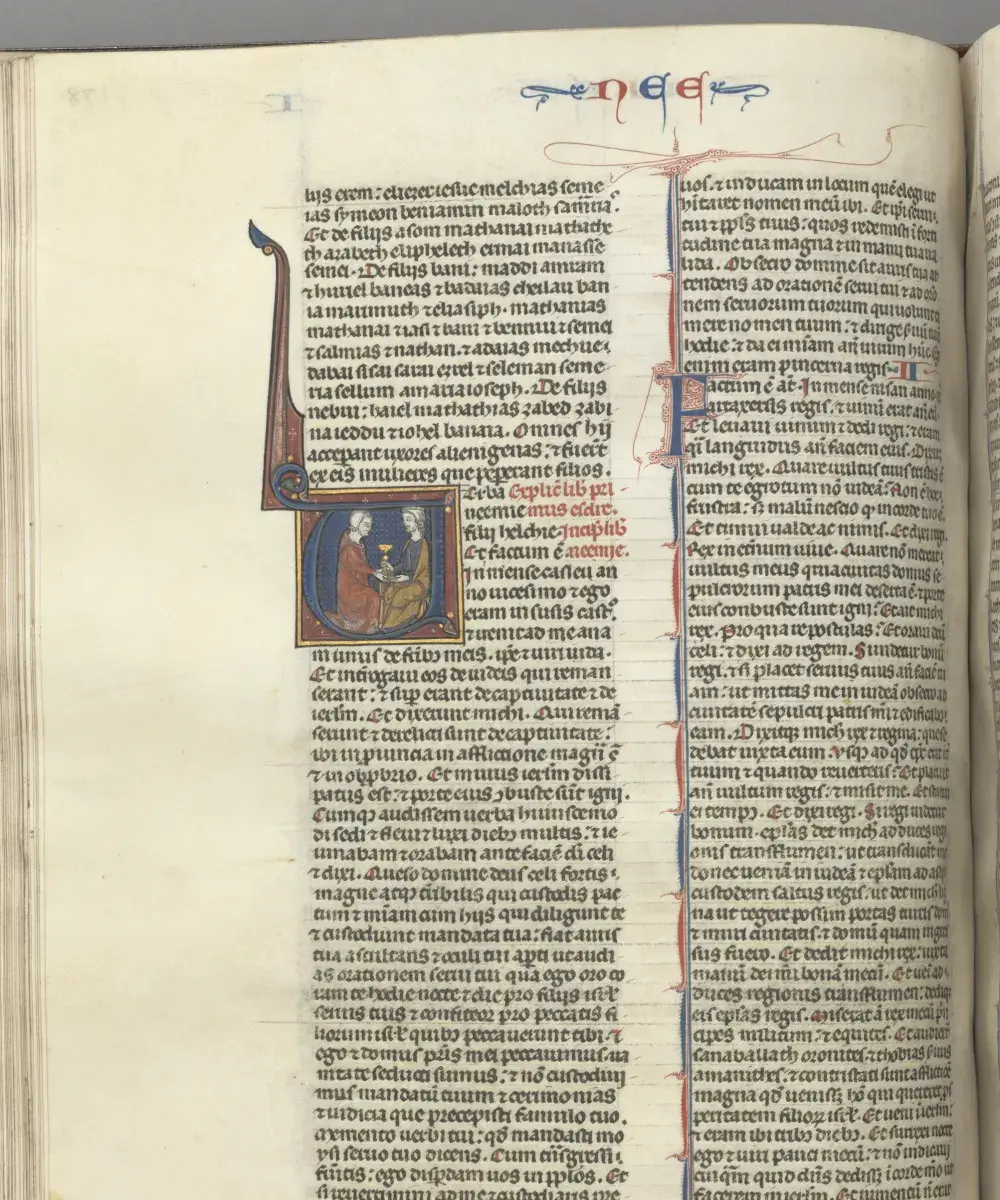
Macedonian Cyrillic and its connection to Ss. Cyril and Methodius University
The Macedonian Cyrillic alphabet standardized in 1945 draws directly on the Old Church Slavonic tradition traced back to Saints Cyril and Methodius, who created the Glagolitic script in the 9th century in the territory of present-day North Macedonia. The country's primary research institution, Ss. Cyril and Methodius University in Skopje, is named after this heritage. Academic degrees and transcripts issued by this university are among the most commonly translated Macedonian documents for credential recognition abroad, particularly for Macedonian professionals and students seeking employment or further study in EU countries and English-speaking countries such as Australia. The standardized 1945 orthography is fully consistent and has not undergone major reform since its codification, which means that documents from the past eight decades use the same letter set and spelling rules.
The close relationship between Macedonian and Bulgarian at the grammatical level means that some automated translation systems default to Bulgarian models when processing Macedonian text. The practical consequence is that the three letters unique to Macedonian Cyrillic may be mishandled or dropped, and the three-way definite article system may be collapsed into the single Bulgarian form. For North Macedonia's national identity documents - the biometric passport, national ID card, and driving license - this kind of substitution produces a translated PDF that misrepresents both character rendering and grammatical structure. DocTranslator maintains a separate Macedonian language model so that the output reflects the language as it is actually written in official North Macedonian documents.
Documents people translate between English and Macedonian
North Macedonia's NATO membership since 2020 and its active EU accession process since 2005 mean that Macedonian-language documents are increasingly required in multilateral administrative settings. The Melbourne-based Macedonian diaspora in Australia and communities in Germany, Switzerland, and the United States generate consistent demand for translating personal and official documents in both directions. The most commonly translated document types include:
- North Macedonia national identity cards and biometric passports for immigration applications, residence registration, and visa processing in EU countries, Australia, and the United States
- EU accession documents and bilateral agreements being reviewed by Macedonian government bodies and international organizations
- Degrees and academic transcripts from Ss. Cyril and Methodius University in Skopje for credential recognition by overseas universities and professional licensing bodies
- Birth certificates, marriage certificates, and family status documents for civil registration procedures in host countries
- North Macedonia driving licenses submitted for exchange in EU member states following the country's ongoing accession alignment
- Medical reports and clinical records for Macedonian patients seeking treatment abroad or for diaspora members sharing health history with providers in Australia or Germany
- Business contracts and commercial agreements between North Macedonian companies and EU or US partners
AI translation is well suited to reading, reviewing, and drafting working versions of Macedonian PDFs. Submissions to immigration authorities, courts, and government offices typically require a certified translation reviewed and signed by a qualified human translator. For USCIS petitions and similar official filings, see our USCIS translation services page for guidance on certification requirements.
English to Macedonian PDF translation pricing
Sign up free, pay per document, and upgrade as your translation needs grow.
Free
No card needed to sign up
- $0.005/word AI translation
- $1 per page for scans and image PDFs
- 108 languages
- Files up to 20 MB and 20 pages
- DOCX, PDF, XLSX, PPTX, IDML, TXT, JPG, PNG and CSV
- 24-hour file storage only
- PDF editor and PDF to DOCX converter
Basic
Most popularBilled every week · cancel any time
Billed monthly
Billed once a year · save 33%
- AI translation included every month
- Then $0.005/word AI translation
- Files up to 100 MB and 300 pages
- DOCX, PDF, XLSX, PPTX, IDML, TXT, JPG, PNG and CSV
- OCR for scanned documents
- Document storage
- Priority support
- 7-day free trial on the monthly plan
- Cancel any time
Pro
Billed monthly
Billed once a year · save 34%
- AI translation included every month
- Then $0.004/word AI translation
- Files up to 1 GB and 5,000 pages
- DOCX, PDF, XLSX, PPTX, IDML, TXT, JPG, PNG and CSV
- Glossary
- Priority queue
- 5 team seats
- API requests · 1,000 pages a month
- MCP access for AI assistants
- Cancel any time
Business
Billed monthly
Billed once a year · save 33%
- AI translation included every month
- Then $0.003/word AI translation
- Files up to 1 GB and 5,000 pages
- DOCX, PDF, XLSX, PPTX, IDML, TXT, JPG, PNG and CSV
- Glossary
- Priority queue
- 15 team seats
- API requests · 5,000 pages a month
- MCP access for AI assistants
- Cancel any time
Enterprise
Need more volume, invoicing or a custom agreement? Talk to us about an Enterprise plan.
How to translate your PDF to Macedonian
Create a free account
Sign up with your email to access the online translation dashboard.
Upload your PDF file
Drag and drop your file or browse to select it. Files up to 1 GB are supported on the Pro and Business plans.
Choose Macedonian as target language
Select the original language of your PDF and set Macedonian as the target language. The output will include all 31 Macedonian Cyrillic letters, the three unique to Macedonian, and the three-way definite article system rendered correctly.
Translate and download
Click "Translate" and wait a few moments. Your translated PDF will be ready to download in Macedonian with the original layout preserved.
English to Macedonian PDF translation FAQ
Will the three letters unique to Macedonian Cyrillic render correctly in the translated PDF?
Yes. The three letters found only in Macedonian Cyrillic - Gje, Dze, and Kje - are mapped to their correct Unicode code points in the output. Translation pipelines that default to Bulgarian or Serbian Cyrillic models may drop or substitute these characters, since neither of those alphabets contains them. DocTranslator uses a Macedonian-specific character set so that all 31 letters are rendered accurately.
How does the Macedonian three-way definite article system affect translation quality?
Macedonian attaches a definite article suffix to the end of a noun, but unlike Bulgarian, which has a single article, Macedonian has three forms based on spatial proximity: one for objects near the speaker, one near the listener, and one distal from both. In formal written documents such as legal texts and official reports, the article choice is determined by textual context rather than physical proximity, and AI models trained on Macedonian text handle this correctly. The result is that translated noun phrases read as natural written Macedonian rather than as a simplified approximation.
Is Macedonian the same language as Bulgarian?
Macedonian and Bulgarian are closely related South Slavic languages with significant lexical overlap, but they are distinct languages with different standardized forms, different writing conventions, and structural differences including the three-way versus one-way definite article system. North Macedonia's national standard, codified in 1945, is the authoritative reference for official documents. Using a Bulgarian language model for Macedonian documents will produce output that differs from the official written standard in vocabulary, article forms, and character use.
What North Macedonian identity documents are commonly translated for immigration purposes?
The most frequently translated documents are the North Macedonia biometric passport, national identity card, and driving license. Macedonian diaspora members in Australia (particularly in Melbourne), Germany, Switzerland, and the United States regularly need these documents translated for immigration applications, residence registration, and official enrollment. For submissions to immigration authorities such as USCIS, a certified translation is required in addition to any AI-generated working draft.
Can I translate Macedonian academic documents from Ss. Cyril and Methodius University?
Yes. Degrees, transcripts, and supplementary documents from Ss. Cyril and Methodius University in Skopje are among the most commonly translated Macedonian documents. These are used for credential recognition at overseas universities, for professional licensing applications in EU countries, and for qualification assessments in Australia. The university's documents use the standard 1945 Macedonian orthography, which DocTranslator handles correctly. For formal submissions to licensing bodies, a certified human translator review is advisable after generating the AI draft.
How large a Macedonian PDF can I translate?
Up to 1 GB or 5,000 pages on Pro and Business, 100 MB and 300 pages on Basic, and 20 MB and 20 pages on Free. Translating a short sample first costs from $0.99 and is sufficient to verify how Macedonian Cyrillic characters and definite article forms are handled on a sample document before translating a full file.
Can I translate from Macedonian into English as well as from English into Macedonian?
Yes. The Macedonian-English pair works in both directions. Translating a Macedonian PDF into English is common for diaspora members in Australia and elsewhere who need to share official documents with English-speaking employers, universities, or government offices. Translating from English into Macedonian is common for North Macedonian government bodies and businesses working with EU accession materials and international contracts.
Translate your PDF to Macedonian today
DocTranslator converts PDFs to Macedonian online, rendering all 31 Cyrillic letters correctly including the 3 unique to Macedonian, handling the three-way definite article system accurately, and supporting files up to 1 GB.
Related Tools
Translate PDF by Language
Document Types
Our Partners