AI 기반 · 120+ 언어

Translate PDF to Persian

Convert PDFs to Persian (Farsi) with full right-to-left layout mirroring. Columns switch sides, margins reverse, and the Perso-Arabic script renders correctly for Iranian, Afghan Dari, and Tajik documents. Files up to 1 GB.

최대 파일 크기 1GB 원본 형식 유지함
무료 가입

번역을 위해 문서를 업로드하거나 드롭하세요

최대. 파일 크기 1GB

.PDF .DOCX .PPTX . XLSX .TXT .JPG .PNG . IDML . EPUB .HTML
아프리칸스어 (아프리칸스어)
쉬킵 (알바니아어)
አማርኛ (암하라어)
العربية (아랍어)
Հայերեն (아르메니아어)
아제르바이잔 딜리 (아제르바이잔)
에우스카라 (바스크어)
벨라루스카야 (벨라루스어)
বাংলা (벵골어)
보산스키 (보스니아어)
Български (불가리아어)
မြန်မာဘာသာ (버마어)
카탈라(카탈루냐어)
세부아노어 (세부아노)
치체와(치체와)
中文 简体 (중국어 간체)
中文 繁體 (중국어 번체)
코르수(코르시카)
흐르바츠키 (크로아티아어)
체슈티나 (체코어)
덴마크어 (Dansk)
네덜란드(네덜란드어)
영어 (영어)
에스페란토 (에스페란토)
에스티 (에스토니아어)
수오미 (핀란드어)
프랑스어 (프랑스어)
프리스크 (프리슬란트어)
갈레고(갈리시아어)
ქართული (조지아어)
독일어 (독일어)
Ελληνικά (그리스어)
ગુજરાતી (구자라트어)
크레올 아이시옌 (아이티어)
하우사(하우사)
하와이 오렐로 (하와이어)
עברית (히브리어)
हिंदी (힌디어)
흐붑 (몽족)
마자르어 (헝가리어)
이슬렌스카 (아이슬란드어)
이그보족 (이그보족)
인도네시아 바하사 (인도네시아어)
게일어(아일랜드어)
이탈리아어(이탈리아어)
일본어 (일본어)
바사 자와(자바어)
ಕನ್ನಡ (칸나다어)
Қазақ тілі (카자흐어)
ខ្មែរ (크메르어)
이키냐르완다 (키냐르완다)
한국어 (한국어)
쿠르디 (쿠르드어)
키르기스어 Кыргызча
ລາວ (라오스어)
라티나 (라틴어)
라트비에슈 (라트비아어)
리투비우 (리투아니아어)
Lëtzebuergesch (룩셈브)
마케도니아어 마케덴어(Македонски)
마다가스카르 (말다가스카르)
말레이어 말라유어(말레이어)
മലയാളം (말라얄람어)
몰티 (몰타어)
테 레오 마오리(마오리)
मराठी (마라티어)
Монгол хэл (몽골어)
नेपाली (네팔어)
노르스크 (노르웨이어)
ଓଡ଼ିଆ (오디아어)
فارسی (페르시아어)
폴스키 (폴란드어)
포르투게스 (포르투갈어)
ਪੰਜਾਬੀ (펀자브어)
로마나 (루마니아어)
루시스키(러시아어)
가가나 사모아 (사모아)
가이들리그 (스코틀랜드어)
Српски (세르비아어)
세소토 (세소토)
쇼나 (쇼나)
سنڌي (신드어)
සිංහල (신할라어)
슬로벤치나 (슬로바키아어)
슬로벤슈치나 (슬로베니아어)
수말리 (소말리)
에스파뇰 (스페인어)
바사 순다 (순다어)
스와힐리어 (스와힐리어)
스벤스카 (스웨덴어)
타갈로그어 (타갈로그)
토치코 (타지크)
தமிழ் (타밀어)
타트아르차(타타르)
తెలుగు (텔루구어)
ไทย (태국어)
튀르크체 (터키어)
튀르크멘체 (투르크멘)
우크라이나 어(우크라이나어)
اردو (우르두어)
ئۇيغۇرچە (위구르어)
오즈벡차 (우즈벡어)
티앙 비엣 (베트남어)
쿰레이그 (웨일스어)
이시코사(코사)
ייִדיש (이디시어)
요루바 (요루바)
isiZulu (줄루)
아프리칸스어 (아프리칸스어)
쉬킵 (알바니아어)
አማርኛ (암하라어)
العربية (아랍어)
Հայերեն (아르메니아어)
아제르바이잔 딜리 (아제르바이잔)
에우스카라 (바스크어)
벨라루스카야 (벨라루스어)
বাংলা (벵골어)
보산스키 (보스니아어)
Български (불가리아어)
မြန်မာဘာသာ (버마어)
카탈라(카탈루냐어)
세부아노어 (세부아노)
치체와(치체와)
中文 简体 (중국어 간체)
中文 繁體 (중국어 번체)
코르수(코르시카)
흐르바츠키 (크로아티아어)
체슈티나 (체코어)
덴마크어 (Dansk)
네덜란드(네덜란드어)
영어 (영어)
에스페란토 (에스페란토)
에스티 (에스토니아어)
수오미 (핀란드어)
프랑스어 (프랑스어)
프리스크 (프리슬란트어)
갈레고(갈리시아어)
ქართული (조지아어)
독일어 (독일어)
Ελληνικά (그리스어)
ગુજરાતી (구자라트어)
크레올 아이시옌 (아이티어)
하우사(하우사)
하와이 오렐로 (하와이어)
עברית (히브리어)
हिंदी (힌디어)
흐붑 (몽족)
마자르어 (헝가리어)
이슬렌스카 (아이슬란드어)
이그보족 (이그보족)
인도네시아 바하사 (인도네시아어)
게일어(아일랜드어)
이탈리아어(이탈리아어)
일본어 (일본어)
바사 자와(자바어)
ಕನ್ನಡ (칸나다어)
Қазақ тілі (카자흐어)
ខ្មែរ (크메르어)
이키냐르완다 (키냐르완다)
한국어 (한국어)
쿠르디 (쿠르드어)
키르기스어 Кыргызча
ລາວ (라오스어)
라티나 (라틴어)
라트비에슈 (라트비아어)
리투비우 (리투아니아어)
Lëtzebuergesch (룩셈브)
마케도니아어 마케덴어(Македонски)
마다가스카르 (말다가스카르)
말레이어 말라유어(말레이어)
മലയാളം (말라얄람어)
몰티 (몰타어)
테 레오 마오리(마오리)
मराठी (마라티어)
Монгол хэл (몽골어)
नेपाली (네팔어)
노르스크 (노르웨이어)
ଓଡ଼ିଆ (오디아어)
فارسی (페르시아어)
폴스키 (폴란드어)
포르투게스 (포르투갈어)
ਪੰਜਾਬੀ (펀자브어)
로마나 (루마니아어)
루시스키(러시아어)
가가나 사모아 (사모아)
가이들리그 (스코틀랜드어)
Српски (세르비아어)
세소토 (세소토)
쇼나 (쇼나)
سنڌي (신드어)
සිංහල (신할라어)
슬로벤치나 (슬로바키아어)
슬로벤슈치나 (슬로베니아어)
수말리 (소말리)
에스파뇰 (스페인어)
바사 순다 (순다어)
스와힐리어 (스와힐리어)
스벤스카 (스웨덴어)
타갈로그어 (타갈로그)
토치코 (타지크)
தமிழ் (타밀어)
타트아르차(타타르)
తెలుగు (텔루구어)
ไทย (태국어)
튀르크체 (터키어)
튀르크멘체 (투르크멘)
우크라이나 어(우크라이나어)
اردو (우르두어)
ئۇيغۇرچە (위구르어)
오즈벡차 (우즈벡어)
티앙 비엣 (베트남어)
쿰레이그 (웨일스어)
이시코사(코사)
ייִדיש (이디시어)
요루바 (요루바)
isiZulu (줄루)
아랍어 포르투갈어 러시아어 이탈리아어 한국 네덜란드어 폴란드어 터키어 스웨덴어 영어 스페인어 프랑스어 독일어 중국어 일본어 힌디어 벵골어 베트남어 태국 그리스어 히브리어 아랍어 포르투갈어 러시아어 이탈리아어 한국 네덜란드어 폴란드어 터키어 스웨덴어 영어 스페인어 프랑스어 독일어 중국어 일본어 힌디어 벵골어 베트남어 태국 그리스어 히브리어

What happens when you translate a PDF into Persian

Persian, also called Farsi, uses the Perso-Arabic script, which runs from right to left. This means that translating a PDF into Persian is not simply a word-for-word replacement. The entire visual structure of the document must mirror: columns that ran left to right in English switch sides, margins that were wide on the left become wide on the right, and the reading order reverses so that a reader moving from right to left encounters the content in the correct sequence. DocTranslator handles this layout transformation automatically, producing a properly oriented Farsi PDF rather than Persian text awkwardly forced into an English shell.

Persian is not the same language as Arabic, even though both use a right-to-left script. Persian is Indo-European, placing it in the same broad language family as English, French, and Hindi. It follows Subject-Object-Verb word order rather than the Verb-Subject-Object pattern of Arabic. Persian has no grammatical gender and no definite article. It uses the Ezafe construction to link nouns and adjectives: for example, "ketab-e farsi" means "Persian book," with the suffix "-e" connecting the two words. Persian also adds four letters absent from Arabic: the letters for p, ch, zh, and g. A translator or translation engine must handle these structural and character-level differences, not simply apply Arabic rules to Persian text.

Font and numeral handling matter as well. Persian formal documents typically use the Naskh typeface for digital and printed body text, while the flowing Nastaliq style appears in literary manuscripts and traditional calligraphy. In traditional contexts, Persian uses its own numeral set, though modern Iranian PDFs frequently use Western numerals alongside Persian script. Before 1979, some Iranian technical documents used Latin script for specialized content. Since the revolution, Persian script is mandatory in all official Iranian documents, so any Farsi PDF translation today must be in the full Perso-Arabic script.

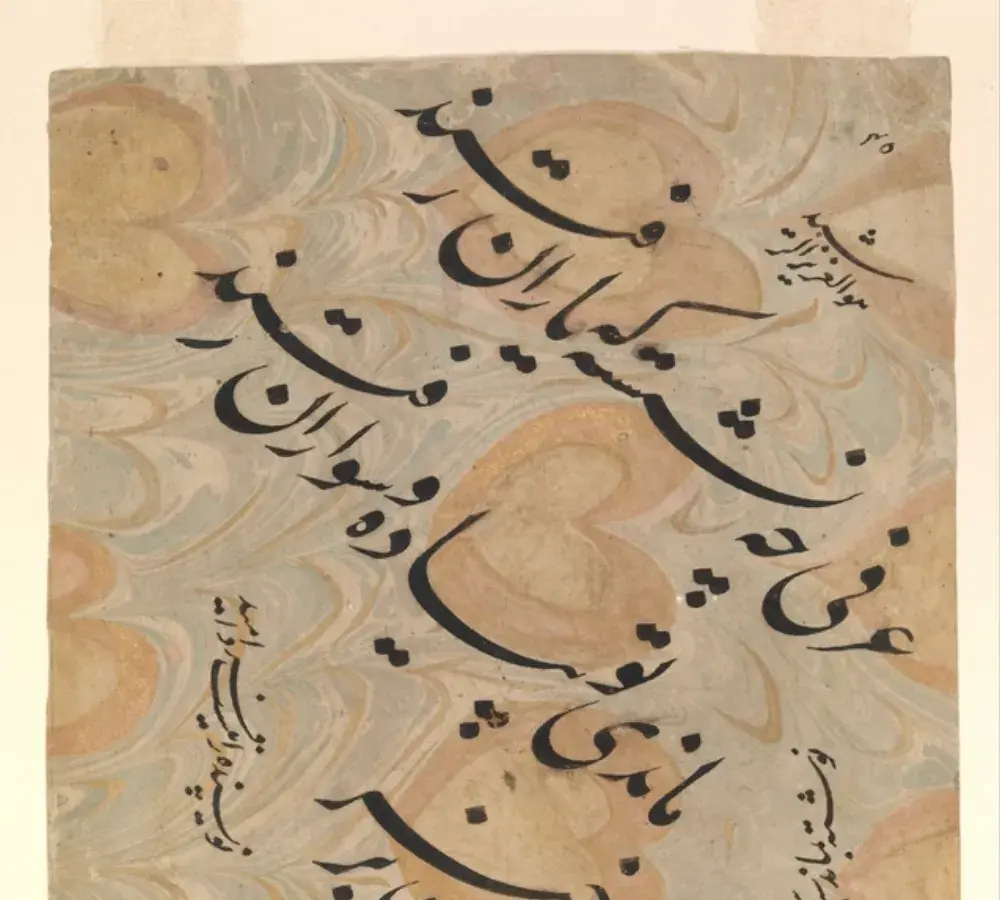
Persian Nastaliq calligraphy on aged paper, the flowing cursive script style used in formal Farsi documents and literary manuscripts

Persian spans three countries and 80 million speakers

Persian is the native language of more than 80 million people. Iran accounts for the largest share, with over 70 million Farsi speakers. Afghanistan uses a form officially called Dari, spoken by approximately 8 million people, and Tajikistan uses Tajik, also spoken by around 8 million. All three are mutually intelligible in their written forms, meaning a formal document written in Iranian Farsi can be read by an educated Dari or Tajik speaker without significant difficulty. For document translation, this matters because an Iranian passport, an Afghan university transcript, or a Tajik government certificate all share the same underlying written language structure, even if the issuing country names the language differently.

The Persian diaspora creates additional translation demand. More than 1.5 million Persian speakers live in the United States, around 700,000 in Germany, and roughly 300,000 in Canada. These communities regularly need to translate Iranian identity documents, university degrees from Tehran University, marriage and divorce certificates, and immigration files. Afghan refugees and immigrants similarly need Dari-language documents rendered into English for official use. The shared written standard across Farsi, Dari, and Tajik means that a single Farsi PDF translation engine covers all three written varieties without needing separate models.

Documents people translate between English and Persian

The Iranian and Afghan diaspora communities in the US, Europe, and Canada generate a constant flow of document translation requests. The most common document types for Farsi PDF translation include:

  • Iranian national identity cards and passports for immigration and visa applications
  • University transcripts and diplomas from Tehran University and other Iranian institutions
  • Iranian marriage and divorce certificates for family reunification and immigration petitions
  • Afghan government documents in Dari for refugee and asylum applications
  • Notarial and civil registry documents issued by Iranian authorities
  • Business contracts and financial agreements with Iranian or Afghan companies

AI translation works well for reading a document, sharing it internally, or preparing a working draft. Official submissions to immigration authorities or government offices typically require a 인증 번역 자격을 갖춘 인간 번역가가 검토하고 서명했습니다.

English to Persian PDF translation pricing

7 일 평가판부터 시작하여 번역 요구 사항이 증가함에 따라 업그레이드하십시오.

7일 시험

가장 인기 있는 작품
오늘 2달러

재판 종료 후 월 14.99달러

  • 7일간의 완전 접근 시험
  • 시험 제한: 10페이지 또는 3,000단어
  • $0.005/단어 AI 번역
  • 120+ 언어
  • PDF, DOCX, XLSX, PPTX, IDML, TXT, JPG, PNG, CSV, JSON
  • 팀 접근 및 맞춤 용어집
  • 이메일 지원

월간

인기
월 $14.99

정가 $29.99, 현재 50% 할인

  • 월 100페이지 또는 30,000단어
  • $0.005/단어 AI 번역
  • 120+ 언어
  • 무제한 파일 저장
  • PDF, DOCX, XLSX, PPTX, IDML, TXT, JPG, PNG, CSV, JSON
  • 팀 접근 및 맞춤 용어집
  • 우선 이메일 지원
🎉 최고의 가치: $44.88/년 절약

연감

25% 절약
연간 135달러

~$11.25/월, 월 대비 25% 할인

  • 월 100페이지 또는 30,000단어
  • $0.005/단어 AI 번역
  • 120+ 언어
  • 무제한 파일 저장
  • PDF, DOCX, XLSX, PPTX, IDML, TXT, JPG, PNG, CSV, JSON
  • 팀 접근 및 맞춤 용어집
  • 우선 이메일 지원
필요한 단계

How to translate your PDF to Persian

01

무료 계정을 만드세요

가입하기 온라인 번역 대시보드에 액세스하려면 이메일을 사용하세요.

02

PDF 파일을 업로드하세요

파일을 드래그 앤 드롭하거나 탐색해서 선택하세요. 유료 요금제에서는 최대 1GB까지 파일을 지원합니다.

03

Choose Persian as target language

Select the original language of your PDF and set Persian as the target language. Persian covers Iranian Farsi and is also correct for Afghan Dari documents.

04

번역 및 다운로드

Click "Translate" and wait a few moments. Your translated PDF will be ready to download in Persian, with the right-to-left layout applied.

English to Persian PDF translation FAQ

Does the PDF layout flip to right-to-left for Persian?

Yes. Persian runs right to left, so the translated PDF mirrors the original: reading order, margins, and column flow are reversed. Text that was left-aligned in English becomes right-aligned in Persian, and multi-column layouts switch their columns automatically.

Is Persian the same as Arabic in terms of script rendering?

They share the same right-to-left direction and a similar base script, but Persian is a separate language with four additional letters not present in Arabic. Persian is Indo-European, while Arabic is Semitic. The grammar differs fundamentally, including word order (Subject-Object-Verb in Persian versus Verb-Subject-Object in Arabic) and the Ezafe construction that links nouns and adjectives. The translation engine handles Persian as its own language, not as a variant of Arabic.

Will the output use Naskh or Nastaliq script?

The translated PDF uses Naskh, the standard typeface for digital and formal printed Persian documents. Nastaliq is the traditional calligraphic style seen in literary manuscripts and ornamental texts, but it is not standard in formal document PDFs. Naskh ensures clean, readable output that matches the conventions of modern Iranian and Afghan official documents.

Can I use this to translate Afghan Dari documents?

Yes. Dari is the official name for Persian as used in Afghanistan, and the written form is virtually identical to Iranian Farsi. Afghan government documents, university transcripts, and civil registry records in Dari are handled correctly by the same Persian translation settings.

Is AI translation enough for Iranian immigration documents?

For reading and internal use, AI translation works well. Submissions to immigration authorities, including USCIS petitions involving Iranian marriage certificates or academic transcripts, require a 인증 번역 reviewed and signed by a qualified human translator. Use AI translation to understand the document first, then order a certified version for official submission.

How large a Farsi PDF can I upload?

Up to 1 GB or 5,000 pages on Monthly and Annual plans. The $2 7-day trial covers up to 10 pages or 3,000 words, which is enough to check the Persian output on a sample document before committing to a full translation.

Does the output use Persian numerals or Western numerals?

Persian has its own traditional numeral set, but modern Iranian PDFs commonly use Western numerals alongside Persian script. The translated PDF preserves the numeral format as it appears in the source document. If a specific numeral style is required for a particular official document, you can note that when uploading.

Translate your PDF to Persian today

DocTranslator converts PDFs between English and Persian online, mirroring the right-to-left layout automatically, rendering the Perso-Arabic script with correct Naskh fonts, and supporting files up to 1 GB.

우리의 파트너들

Accenture
Bloomberg
Citrix
P&G
SAP