
PDF vertalen naar Hindi
Converteer Engelse PDF's naar het Hindi en laat het Devanagari-schrift correct weergeven, inclusief conjunct consonant glyphs en de shirorekha-balk die letters aan de bovenkant van elk woord verbindt. Bestanden tot 1 GB.
Upload of laat document vallen om te vertalen
Max. bestandsgrootte 1 GB
- OCR voor scans en foto's
- 108 talen
- Originele lay-out behouden
Wat gebeurt er als u een Engelse PDF omzet naar het Hindi
Het Hindi gebruikt het Devanagari-schrift, dat van links naar rechts loopt en is opgebouwd uit 11 klinkers en 33 medeklinkers, plus een grote set conjuncte vormen die verschijnen wanneer twee of meer medeklinkers naast elkaar staan zonder een tussenliggend klinkergeluid. Die conjuncten zijn geen afzonderlijke tekens die na elkaar worden getypt; het zijn samengevoegde glyphs die een Devanagari-bewuste lettertype tekent als één eenheid. Een lettertype dat de conjunct set mist, breekt die clusters in losse stukken, waardoor de tekst onleesbaar wordt voor een Hindi-spreker. De uitvoer-PDF gebruikt een lettertype dat het volledige conjunct-inventaris bevat, zodat woorden worden weergegeven zoals ze zouden moeten zijn.
Een van de meest zichtbare kenmerken van geschreven Hindi is de shirorekha, een horizontale lijn die over de bovenkant van de meeste Devanagari-letters loopt en ze verbindt tot een woord. Het wordt door het lettertype zelf weergegeven, niet als een apart element toegevoegd, dus het kiezen van het juiste lettertype is wat het uiterlijk van de vertaalde pagina maakt of breekt. Devanagari heeft ook geen hoofdletters; het schrift heeft slechts één geval, en nadruk in een zin wordt uitgedrukt door woordvolgorde in plaats van hoofdlettergebruik. Hindi volgt doorgaans een onderwerp-object-werkwoord-volgorde, wat het omgekeerde is van het Engels, dus de vertaalde zinnen worden structureel geherorganiseerd in plaats van woord voor woord vervangen.
Formeel Hindi haalt zijn woordenschat uit het Sanskriet, het klassieke register dat wordt gebruikt in overheidsdocumenten, certificaten en juridische contracten. Alledaagse spraak leent vrij uit het Engels en Urdu, maar officiële papieren blijven in het uit het Sanskriet afgeleide register. De vertaling richt zich op dat formele register, wat de meeste documentvertalingen vereisen.
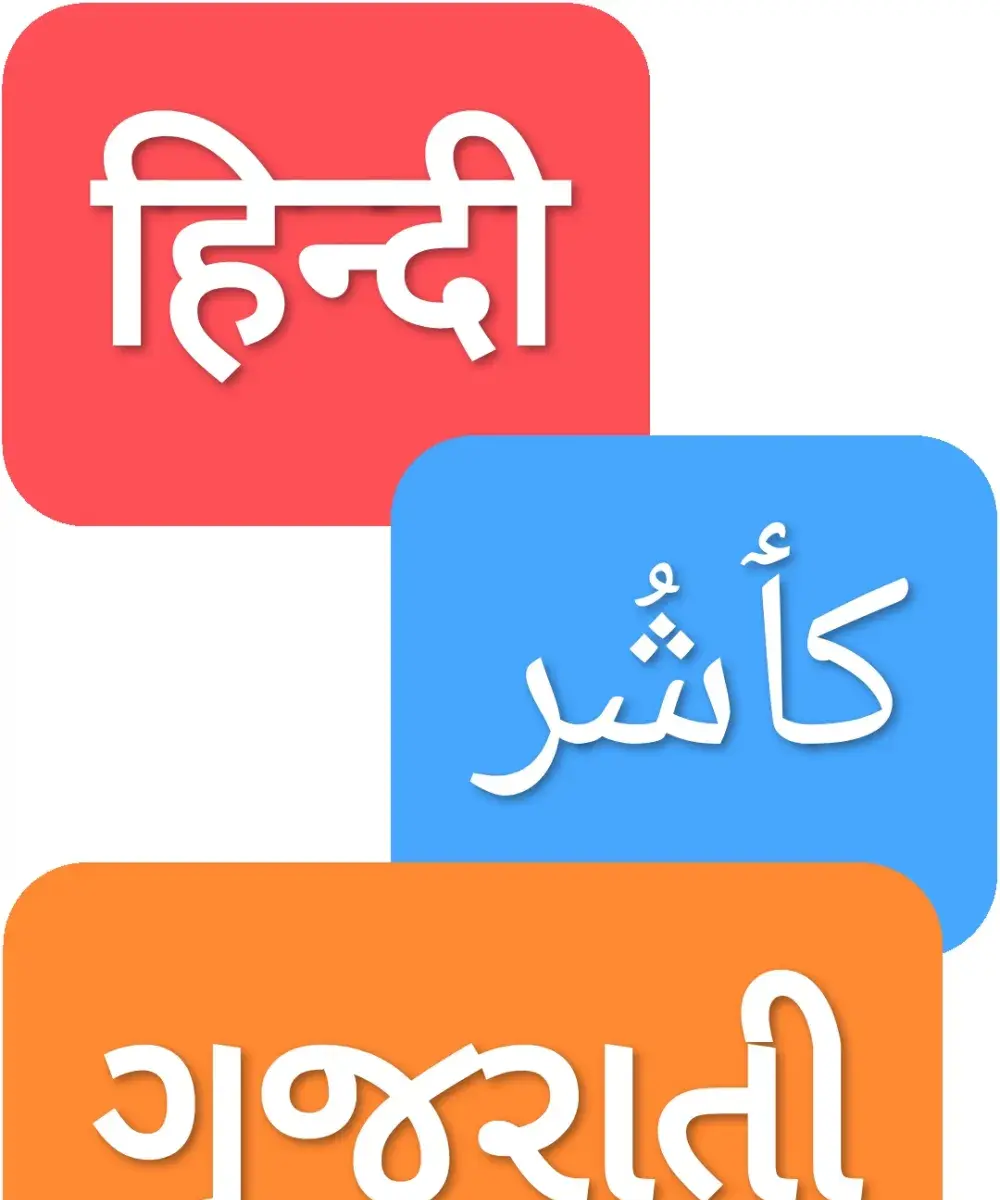
Devanagari en de talen die het draagt
Devanagari wordt niet alleen voor Hindi gebruikt, maar ook voor Sanskriet, Marathi, Nepalees en verschillende andere Zuid-Aziatische talen. Het schrift is herkenbaar aan de horizontale balk die langs de bovenkant van de meeste karakters loopt en letters tot woorden verbindt. Binnen een Hindi-woord vormen medeklinkers die zonder tussenliggende klinker voorkomen conjuncten, twee of meer medeklinkers samengevoegd tot één gecombineerde glyph. Een lettertype dat deze conjuncten niet bevat, geeft de tekst onjuist weer, met afzonderlijke karakters waar een samengevoegde vorm zou moeten verschijnen. De vertaalde PDF gebruikt een Devanagari-compatibel lettertype dat de volledige conjunct set bevat.
Hindi bevindt zich op een spectrum van formeel, Sanskriet-rijk Shuddh Hindi gebruikt in officiële documenten tot spreektaal dat vrij mengt met Engelse en Urdu-woorden. Overheidscertificaten, juridische contracten en onderwijscertificaten gebruiken het formele register. Voor die documenten produceert AI-vertaling uitvoer die een Hindi-sprekende lezer zal herkennen als officiële taal, niet als informele spraak. Voor marketing- en consumenteninhoud gericht op Indiase doelgroepen, kan een native reviewer de formulering aanpassen aan de toon van de doelregio.
Documenten die mensen vertalen tussen Engels en Hindi
Met meer dan 600 miljoen sprekers is Hindi een van de meest gesproken talen ter wereld, en het papierwerk dat tussen Engels en Hindi beweegt, weerspiegelt de omvang van die gemeenschap:
- Immigratiedocumenten voor gezinshereniging en visumaanvragen uit India
- Geboorte-, huwelijks- en onderwijscertificaten nodig voor Indiase gemeenschappen in het buitenland
- Juridische overeenkomsten en eigendomsdocumenten voor zaken in India
- Medische dossiers en ontslagbrieven voor patiënten die tussen India en het buitenland reizen
- Overheids- en administratieve formulieren vereist door Indiase autoriteiten
- Producthandleidingen en conformiteitsdocumenten voor goederen die de Indiase markt betreden
AI-vertaling dekt efficiënt het lezen, interne beoordeling en eerste concepten. Documenten die bij overheidsinstanties, immigratiebureaus of rechtbanken worden ingediend, vereisen over het algemeen een gecertificeerde vertaling met de attestatie van een menselijke beoordelaar.
Prijzen voor PDF-vertaling van Engels naar Hindi
Meld u gratis aan, betaal per document en upgrade naarmate uw vertaalbehoeften groeien.
Free
Geen kaart nodig om u aan te melden
- €0,005/woord AI-vertaling
- $1 per pagina voor scans en afbeeldings-PDF's
- 108 talen
- Bestanden tot 20 MB en 20 pagina's
- DOCX, PDF, XLSX, PPTX, IDML, TXT, JPG, PNG en CSV
- Alleen 24-uurs bestandsopslag
- PDF-editor en PDF naar DOCX-converter
Basis
Meest populairWekelijks gefactureerd · annuleer op elk moment
Maandelijks gefactureerd
Eenmalige jaarlijkse facturering · bespaar 33%
- AI-vertalingen inbegrepen per maand
- Daarna €0,005/woord AI-vertaling
- Bestanden tot 100 MB en 300 pagina's
- DOCX, PDF, XLSX, PPTX, IDML, TXT, JPG, PNG en CSV
- OCR voor gescande documenten
- Documentopslag
- Prioriteitsondersteuning
- 7 dagen gratis proefperiode op het maandelijkse abonnement
- Annuleer op elk moment
Pro
Maandelijks gefactureerd
Eenmalige jaarlijkse facturering · bespaar 34%
- AI-vertalingen inbegrepen per maand
- Daarna €0,004/woord AI-vertaling
- Bestanden tot 1 GB en 5.000 pagina's
- DOCX, PDF, XLSX, PPTX, IDML, TXT, JPG, PNG en CSV
- Glosssarium
- Prioriteitswachtrij
- 5 teamleden
- API-verzoeken · 1.000 pagina's per maand
- MCP-toegang voor AI-assistenten
- Annuleer op elk moment
Zakelijk
Maandelijks gefactureerd
Eenmalige jaarlijkse facturering · bespaar 33%
- AI-vertalingen inbegrepen per maand
- Daarna €0,003/woord AI-vertaling
- Bestanden tot 1 GB en 5.000 pagina's
- DOCX, PDF, XLSX, PPTX, IDML, TXT, JPG, PNG en CSV
- Glosssarium
- Prioriteitswachtrij
- 15 teamleden
- API-verzoeken · 5.000 pagina's per maand
- MCP-toegang voor AI-assistenten
- Annuleer op elk moment
Zakelijk
Meer volume, facturering of een aangepaste overeenkomst nodig? Neem contact met ons op voor een Enterprise-abonnement.
Hoe u uw PDF naar het Hindi vertaalt
Gratis account aanmaken
Meld u aan met uw e-mailadres om toegang te krijgen tot het online vertalingsdashboard.
Upload uw PDF-bestand
Sleep uw bestand hierheen of blader om het te selecteren. Bestanden tot 1 GB worden ondersteund op de Pro- en Zakelijk-abonnementen.
Kies Hindi als doeltaal
Selecteer de oorspronkelijke taal van uw PDF en stel Hindi in als doeltaal.
Vertalen en downloaden
Klik op "Vertalen" en wacht een paar momenten. Uw vertaalde PDF is klaar om te downloaden in het Hindi, met behoud van Devanagari-schrift en opmaak.
Veelgestelde vragen over PDF-vertaling van Engels naar Hindi
Worden Devanagari conjuncte medeklinkers correct weergegeven in de PDF?
Ja. Conjuncten zijn medeklinkerclusters die samengevoegd zijn tot één enkele glyph (bijvoorbeeld, de cluster "ksha" vormt zijn eigen gecombineerde teken). De uitvoer gebruikt een lettertype dat de volledige set Devanagari conjuncten bevat, zodat de tekst schoon leest in plaats van gebroken of gescheiden componenten te tonen.
Kan ik ook van Hindi naar Engels vertalen?
Ja. Het paar werkt in beide richtingen. Hindi naar Engels verwerkt ook de scriptconversie en past de lay-out aan, aangezien Hindi-tekst in PDF's doorgaans met een andere dichtheid wordt weergegeven dan het Engelse equivalent.
Is de uitvoer formeel Hindi of informeel?
AI-vertaling richt zich op standaard, formeel Hindi dat geschikt is voor officiële documenten, juridische teksten en zakelijke correspondentie. Formeel Hindi volgt de uit het Sanskriet afgeleide woordenschat die wordt gebruikt in overheidsformulieren, certificaten en juridische overeenkomsten.
Welke documenten vertalen mensen gewoonlijk tussen Engels en Hindi?
Geboortebewijzen, academische transcripties en huwelijksakten voor visumaanvragen; juridische en zakelijke overeenkomsten voor handel in India; medische dossiers voor patiënten; en productdocumentatie voor goederen die de Indiase markt betreden of verlaten.
Verwerkt DocTranslator de shirorekha (de bovenste balk in Devanagari)?
Ja. De shirorekha is een weergavefunctie op lettertype-niveau: deze wordt door het lettertype getekend en niet afzonderlijk toegevoegd. De uitvoer gebruikt een Devanagari-lettertype dat de balk correct weergeeft en letters verbindt zoals verwacht.
Hoe groot is een Hindi PDF die ik kan uploaden?
Free accepteert 20 MB en 20 pagina's per document, Basic 100 MB en 300 pagina's, en Pro en Business tot 1 GB of 5.000 pagina's. Voor initiële tests is één kort document voldoende, en het kost vanaf $0,99.
Zijn er gecertificeerde vertalingen beschikbaar voor Hindi documenten die bij USCIS worden ingediend?
Ja. Documenten die bij USCIS of andere overheidsinstanties worden ingediend, vereisen doorgaans een gecertificeerde, door mensen beoordeelde vertaling. Zie gecertificeerde vertaling voor die vereisten.
Vertaal vandaag uw PDF naar het Hindi
DocTranslator converteert PDF's tussen Engels en Hindi met volledige ondersteuning voor het Devanagari-schrift, inclusief conjunct medeklinkers en de shirorekha-balk, en verwerkt bestanden tot 1 GB.
Gerelateerde Tools
PDF vertalen per taal
Documenttypes
Onze Partners